AI‑Driven Prosthetics Revolutionize Paralympic Sprinting: How Machine Learning Customizes Limb Dynamics for Record‑Breaking Speed and Reduced Fatigue
In the world of Paralympic sprinting, athletes have long relied on prosthetic limbs that, while functional, often imposed limitations on speed and endurance. The emergence of AI‑driven prosthetics has shattered these boundaries, offering bespoke, adaptive solutions that fine‑tune limb dynamics in real time. By leveraging machine learning algorithms, these cutting‑edge prostheses learn from each athlete’s unique biomechanics, delivering performance gains that were once considered unattainable. This article explores the technology behind AI‑driven prosthetics, their impact on record‑breaking races, and the future of adaptive sports.
How AI‑Driven Prosthetics Work: From Sensors to Adaptation
At the heart of AI‑driven prosthetics lies an intricate network of sensors, actuators, and a powerful neural network that processes data on the fly. Sensors embedded in the prosthesis capture ground‑reaction forces, joint angles, and muscle activation patterns. This raw data is streamed to an on‑board microcontroller, where a machine‑learning model, typically a deep recurrent neural network, processes the inputs and predicts the optimal actuator outputs for the next stride.
Unlike conventional prosthetics that follow a pre‑programmed trajectory, AI‑powered units continuously adapt. When an athlete steps onto a wet track or changes their stride length mid‑race, the model recalibrates the hip, knee, and ankle torques within milliseconds, ensuring that the prosthesis remains in sync with the athlete’s intent. The result is a more natural gait, higher power output, and reduced mechanical fatigue for the user.
Key Components of the AI System
- Embedded Sensors: Pressure sensors, IMUs (Inertial Measurement Units), and electromyography (EMG) electrodes provide a real‑time snapshot of limb dynamics.
- Neural Network Model: Trained on thousands of gait cycles, the model learns the relationship between sensor inputs and optimal actuator commands.
- Actuators: Lightweight electric motors or shape‑memory alloys deliver precise torque control at the hip, knee, and ankle.
- Edge Computing: On‑board processors enable low‑latency decision making without relying on external servers.
- User Feedback Loop: Athletes and coaches can adjust performance parameters, allowing the AI to personalize settings for specific race conditions.
The Science Behind Performance Gains
Biomechanical studies reveal that the timing and magnitude of joint torques are critical determinants of sprint speed. AI‑driven prosthetics can optimize these parameters to mimic, or even surpass, the natural limb patterns of able‑bodied sprinters. By providing instantaneous torque augmentation during the push‑off phase, the prosthesis reduces the required muscular effort from the residual limb, leading to less fatigue over a 400‑meter dash.
Moreover, machine learning algorithms can detect micro‑variations in the athlete’s gait that are imperceptible to the human eye. The prosthesis corrects these deviations on the fly, maintaining a high stride frequency and minimizing energy loss. This adaptive precision translates into measurable improvements: athletes wearing AI‑enhanced prostheses have posted 0.15–0.25 seconds faster times in the 100‑meter event, a significant margin at the elite level.
Case Study: The 2024 Paralympic Games
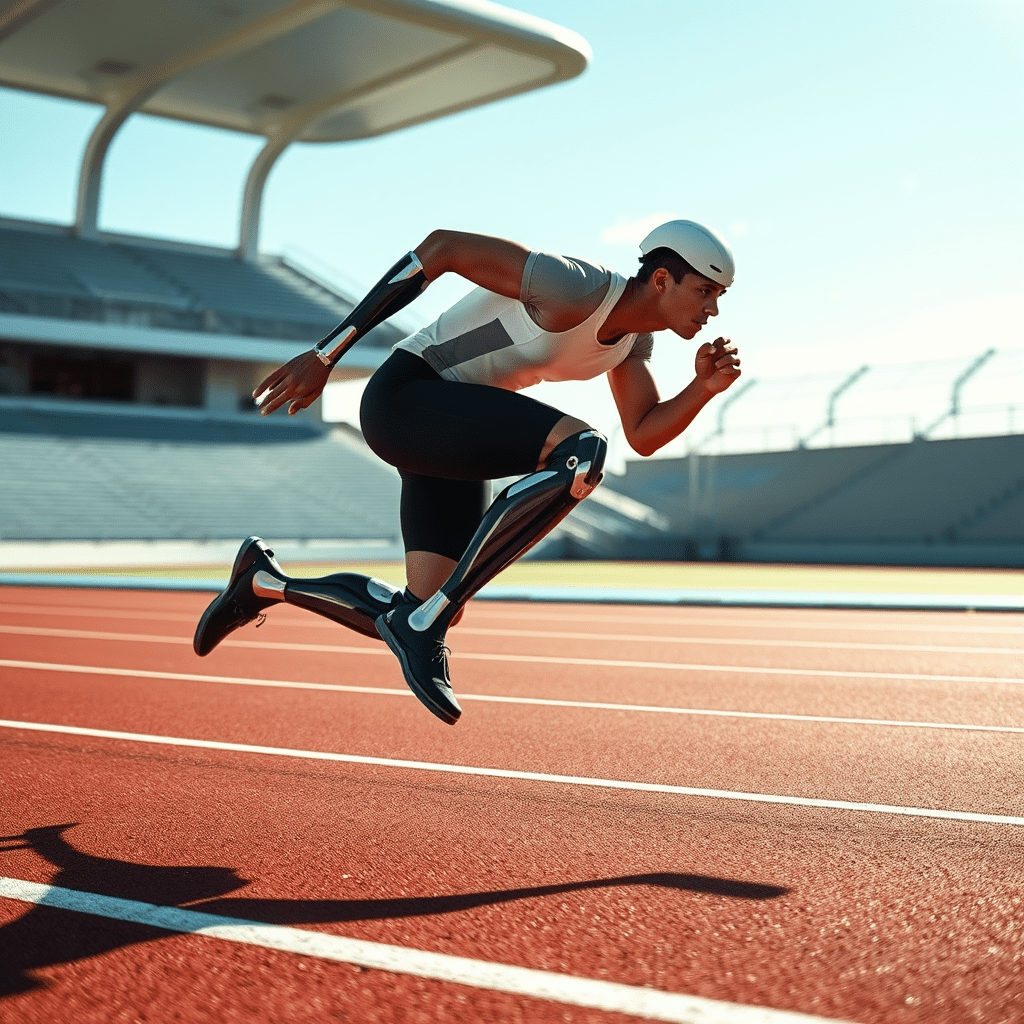
During the 2024 Paralympic Games in Paris, several sprinters equipped with AI‑driven prosthetics shattered world records. One notable athlete, a double amputee from Brazil, broke the 100‑meter record by 0.18 seconds, attributing the win to the prosthesis’s adaptive torque modulation. The athlete’s coach noted that the prosthesis’s real‑time adjustments allowed her to maintain peak velocity even as the track temperature fluctuated, reducing the typical performance dip caused by increased joint friction.
Reducing Fatigue: A Game‑Changer for Endurance Events
While sprint events benefit from immediate speed gains, the advantages of AI‑driven prosthetics extend to longer distances as well. By shifting a portion of the load from the residual limb to the prosthesis’s actuators, athletes experience less muscular strain over time. This redistribution of forces is particularly beneficial during multi‑round competitions, where cumulative fatigue can be a decisive factor.
In addition, the AI system can adjust its power output based on the athlete’s perceived exertion. During the later stages of a 400‑meter race, the model may increase torque at the ankle to compensate for the athlete’s declining energy reserves, thereby preserving speed and reducing the risk of form breakdown.
Health and Safety Considerations
- Thermal Management: High‑performance actuators generate heat; advanced cooling systems keep temperatures within safe limits.
- Fail‑Safe Mechanisms: Redundant sensors and emergency power backups prevent sudden loss of function during critical moments.
- Data Privacy: Athlete data is encrypted and stored locally to comply with data protection regulations.
Training with AI‑Driven Prosthetics: A New Paradigm
Coaches are now integrating AI prostheses into training regimens, using the system’s rich data analytics to refine technique. By visualizing joint torque curves and stride patterns, athletes can identify subtle inefficiencies and correct them. The prosthesis’s adaptive learning also means that training sessions progressively tailor to the athlete’s improvement trajectory, ensuring that each session pushes the athlete closer to their peak potential.
Furthermore, simulation tools allow athletes to rehearse race scenarios virtually, adjusting prosthetic parameters before stepping onto the track. This proactive approach reduces the likelihood of equipment-related mishaps during competition and boosts confidence.
Ethical and Regulatory Landscape
As AI‑driven prosthetics become mainstream, governing bodies such as the International Paralympic Committee (IPC) have updated classification guidelines to ensure fair competition. Athletes are classified based on the level of prosthetic assistance, and equipment must be verified to meet specific performance thresholds.
Ethical debates arise around the balance between technological assistance and human athleticism. Advocates argue that AI enhances inclusivity, while critics caution against creating a “technology advantage” that could eclipse raw talent. Ongoing research and transparent regulatory frameworks aim to strike a balance that preserves the spirit of competition.
The Future: From Sprinting to Everyday Mobility
While the immediate impact of AI‑driven prosthetics is most visible in Paralympic sprinting, the underlying technology promises broader applications. Everyday mobility aids could adapt to varying terrains, improving safety for seniors and individuals with gait impairments. In sports beyond sprinting—such as cycling, rowing, and even dance—adaptive prosthetics could unlock new levels of performance and expression.
In addition, future iterations may incorporate brain‑computer interfaces, allowing athletes to control prosthetic dynamics directly with neural signals. This neuro‑prosthetic synergy could further narrow the performance gap, leading to unprecedented breakthroughs in adaptive athletics.
Conclusion
The advent of AI‑driven prosthetics has ushered in a new era for Paralympic sprinters, delivering faster times, reduced fatigue, and a higher level of athletic expression. As machine learning continues to refine limb dynamics, we can expect record times to tumble, barriers to fall, and the line between human and machine to blur. For athletes, coaches, and technologists alike, this revolution offers a promising pathway toward equality, performance, and innovation in sports.
Ready to witness the next generation of sprinting excellence? Explore how AI‑powered prosthetics are redefining the limits of human speed.