AI-Powered Adaptive Trials: SaMD Accelerates Precision Oncology Studies
1. The SaMD Revolution in Oncology
Software‑as‑a‑Medical‑Device (SaMD) platforms are reshaping how oncology trials are designed, monitored, and executed. By integrating advanced artificial intelligence (AI) algorithms with real‑world data streams, these systems can adapt protocols on the fly, identify emerging biomarkers, and refine patient selection—all while maintaining rigorous safety and efficacy standards. The result is a faster, more precise path from discovery to approval, turning the traditional, linear clinical trial model into a dynamic, data‑driven process that mirrors the complexity of cancer biology itself.
2. How AI‑Powered Adaptive Trials Work
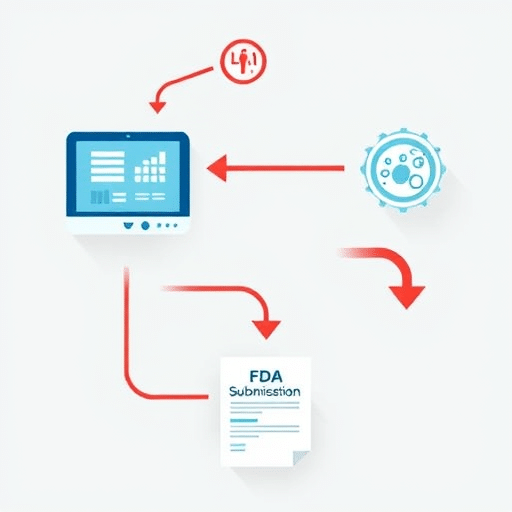
At the core of an AI‑powered adaptive trial is a closed‑loop architecture that continuously ingests data from electronic health records, imaging, genomic sequencing, wearable devices, and patient‑reported outcomes. Machine learning models analyze these inputs to detect patterns, forecast responses, and suggest protocol adjustments in real time. The key steps include:
- Data Aggregation: Harmonizing heterogeneous data sources into a unified, privacy‑preserving dataset.
- Predictive Modeling: Using supervised and unsupervised learning to predict treatment outcomes and identify high‑value subpopulations.
- Decision Engine: Translating model outputs into actionable protocol changes—dose adjustments, cohort expansions, or early stopping rules.
- Regulatory Oversight: Maintaining audit trails and ensuring all adaptations meet regulatory thresholds.
Real‑Time Decision Making
One of the most transformative capabilities is the ability to modify trial parameters midstream. For instance, if an AI model flags a subcohort that exhibits a robust response to a novel immunotherapy, the protocol can be amended to enroll additional patients in that group. Conversely, if toxicity signals emerge in a specific demographic, the algorithm can trigger dose reductions or even halt enrollment for that segment. These adaptations happen in minutes, not weeks, dramatically shortening the trial timeline.
3. Faster Biomarker Validation
Biomarkers are the compass of precision oncology, guiding therapeutic choices and predicting outcomes. Traditionally, biomarker validation required separate studies and prolonged timelines. SaMD platforms accelerate this by:
- Simultaneous Collection: Capturing biomarker data alongside clinical endpoints within the same trial arm.
- Adaptive Cohort Design: Enriching the study with patients who express the biomarker of interest, thereby increasing statistical power.
- Automated Data Harmonization: Standardizing assay results across multiple laboratories to reduce variability.
- Predictive Analytics: Estimating biomarker predictive value in real time, allowing early go/no‑go decisions.
The net effect is a reduction in validation time from years to months, enabling quicker clinical translation.
4. Case Studies: From Bench to Bedside
Case Study A: Adaptive Immunotherapy for Metastatic Melanoma
A phase II trial using a SaMD platform began with a broad enrollment of metastatic melanoma patients. Within the first 60 days, AI analyses identified a subset with high tumor mutational burden (TMB) who responded exceptionally well to a checkpoint inhibitor. The protocol was swiftly amended to expand this high‑TMB cohort, doubling enrollment in the subgroup and generating statistically robust efficacy data in just 12 weeks.
Case Study B: Targeted Therapy in Non‑Small Cell Lung Cancer
In a multi‑arm study evaluating a new EGFR inhibitor, the SaMD system detected emerging resistance mutations after 4 cycles of therapy. The algorithm recommended a switch to a combination regimen for patients exhibiting these mutations. This adaptive switch preserved clinical benefit, and the data contributed to a rapid regulatory filing, shortening the approval window by six months.
5. Regulatory Landscape and Challenges
Regulators such as the FDA and EMA are increasingly recognizing the value of adaptive designs but require robust governance. Key considerations include:
- Transparency: Full disclosure of algorithm logic and training data.
- Validation: Independent verification of predictive models through simulation and real‑world data.
- Patient Safety: Ensuring that any protocol change preserves or enhances safety profiles.
- Data Security: Adherence to HIPAA, GDPR, and other privacy standards.
While the regulatory pathway is evolving, early engagement with authorities and clear documentation of adaptive processes can streamline approvals.
6. Future Outlook
As AI models grow more sophisticated and data ecosystems expand, the next generation of SaMD will bring even greater agility:
- Federated Learning: Collaborative model training across institutions without sharing raw patient data.
- Multimodal Integration: Combining imaging, genomics, proteomics, and metabolomics for a holistic view of tumor biology.
- Real‑World Evidence (RWE) Fusion: Seamlessly incorporating post‑marketing surveillance data to refine trial adaptations.
- Patient‑Centric Platforms: Enabling remote monitoring and adaptive interventions that minimize clinical site visits.
These advances promise not only faster trial timelines but also more personalized treatment pathways that adapt to each patient’s evolving disease profile.
Conclusion
AI‑powered adaptive trials powered by SaMD represent a paradigm shift in precision oncology. By enabling real‑time protocol modifications and expediting biomarker validation, these platforms shorten the drug development cycle and improve patient outcomes. Stakeholders—academia, industry, regulators, and patients—are poised to reap the benefits of this technology, ushering in an era where clinical trials are as dynamic as the cancers they target.
Explore how SaMD can transform your oncology trials.