Federated Learning for Multi-Center SaMD Trials: Harnessing Distributed AI to Preserve Patient Privacy and Accelerate Data-Driven Decision Making
Introduction: The Challenge of Multi-Center SaMD Trials
Software as a Medical Device (SaMD) trials often span multiple hospitals, imaging centers, and outpatient clinics. While this geographic diversity enhances generalizability, it introduces a paradox: richer data streams collide with stringent privacy regulations and proprietary data silos. Traditional approaches require pooling raw data into a central repository, exposing sensitive health information to potential breaches and regulatory scrutiny. Federated learning (FL) offers a paradigm shift by enabling collaborative model training without exchanging raw data, thereby preserving privacy while still leveraging the collective knowledge embedded across centers.
What Is Federated Learning and Why It Matters for SaMD
Core Principles
Federated learning is a distributed machine‑learning framework in which each participating node (e.g., a hospital) trains a local model on its own data. The node then sends only model updates—gradients or weight differences—to a central server that aggregates them to form a global model. Because raw patient records never leave the local environment, FL satisfies many privacy requirements, including the principles of data minimization and “privacy by design.”
Benefits Over Traditional Centralized Data Sharing
- Regulatory Alignment: Meets GDPR, HIPAA, and emerging national privacy statutes that restrict cross‑border data movement.
- Scalable Collaboration: Enables inclusion of hundreds of centers without costly data transfer agreements.
- Reduced Data Transfer Costs: Sends only lightweight model parameters rather than bulky datasets.
- Real‑Time Learning: Facilitates continuous model refinement as new data accrue, supporting adaptive SaMD solutions.
Implementing Federated Learning in a Multi-Center SaMD Trial
Step 1: Define the Clinical Question and Model Objectives
Begin with a clear, clinically actionable hypothesis—e.g., “Can a convolutional neural network predict early diabetic retinopathy from retinal fundus images?” Align model metrics (accuracy, sensitivity, specificity) with regulatory endpoints. Document data requirements, feature extraction pipelines, and acceptable model update frequencies.
Step 2: Establish the Federated Architecture
Choose an FL framework that supports your technology stack: TensorFlow Federated, PySyft, or Microsoft Flower are popular options. Decide between horizontal, vertical, or federated transfer learning based on data heterogeneity. For most SaMD trials, horizontal FL—where each center contributes similar feature sets—is sufficient.
Step 3: Secure Data and Model Transfer
- Local Encryption: All data must reside in a secure enclave, with AES‑256 or equivalent encryption at rest.
- Secure Aggregation: Employ cryptographic protocols like Secure Multiparty Computation (SMPC) or Homomorphic Encryption to protect model updates during transmission.
- Audit Trails: Log every model upload and download with immutable timestamps and digital signatures.
Step 4: Training Loops and Aggregation Protocols
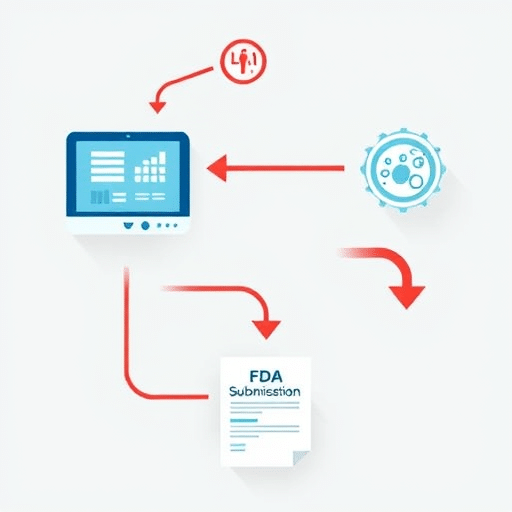
Define the number of local epochs, batch sizes, and learning rates. The central server aggregates updates using algorithms such as FedAvg or FedProx to mitigate data heterogeneity. Periodically, the server sends the updated global model back to each node for further local training, creating a cyclical learning loop.
Step 5: Regulatory and Ethical Considerations
- Consent Management: Verify that patient consent covers the use of their data for distributed AI training.
- Explainability: Provide interpretable model outputs—e.g., heatmaps or confidence intervals—to satisfy FDA’s “medical device” classification requirements.
- Post‑Market Surveillance: Embed mechanisms for continuous monitoring of model performance across centers, allowing for rapid post‑deployment updates.
Case Study: A Federated Learning SaMD Trial for Diabetic Retinopathy Detection
In 2024, a consortium of 25 ophthalmology centers across North America and Europe conducted a federated learning SaMD trial. Each center maintained its own retinal imaging database, with an average of 3,000 high‑resolution fundus photographs per year. The objective was to develop a deep learning model that flags early non‑proliferative diabetic retinopathy (NPDR) with >90% sensitivity.
The trial employed the Flower FL framework with a lightweight ResNet‑18 architecture. Each center ran 5 local epochs per communication round, and the global model was updated every 48 hours. Secure aggregation was achieved through an SMPC protocol that ensured no single party could reconstruct another’s gradients.
Results: After 12 communication rounds, the global model achieved 92.3% sensitivity and 87.5% specificity across the aggregated dataset, outperforming any single-center model by 4–7 percentage points. The distributed approach eliminated the need for cross‑border data transfer agreements, cutting trial initiation time from 18 to 8 weeks. Regulatory submissions to the FDA highlighted the privacy‑preserving nature of FL, expediting the 510(k) clearance process.
Key Metrics and Evaluation Strategies
- Performance Metrics: Accuracy, AUC‑ROC, sensitivity, specificity, and calibration curves.
- Fairness Analysis: Evaluate model performance across subpopulations (age, sex, ethnicity) to detect bias.
- Privacy Audits: Use differential privacy budgets and membership inference testing to ensure no reidentification risk.
- Robustness Checks: Perform adversarial testing and evaluate model resilience to distribution shifts.
- Operational Metrics: Training time, communication overhead, and bandwidth usage per round.
Future Outlook: Federated Learning in Adaptive SaMD Clinical Trials
Federated learning is poised to become the backbone of adaptive SaMD trials, where the trial design evolves in response to interim data. Continuous FL cycles allow real‑time updating of predictive models, enabling early stopping for safety or efficacy and dynamic dose‑finding protocols. Coupled with synthetic data generation, FL can also bridge gaps in rare disease datasets, where individual centers may lack sufficient cases.
Moreover, edge‑AI devices—such as implantable glucose monitors or wearable ECG patches—can perform local inference and periodically send model updates, creating a closed feedback loop between the device and the cloud. This convergence will accelerate the transition from static clinical trials to continuous learning healthcare systems.
Conclusion
Federated learning transforms multi‑center SaMD trials from data‑sharing bottlenecks into collaborative innovation engines. By keeping raw patient data local, preserving regulatory compliance, and accelerating model development, FL unlocks the full potential of distributed AI. Embracing this technology means more inclusive trials, faster regulatory approvals, and ultimately, better patient outcomes.
Ready to integrate federated learning into your next SaMD trial? Let’s discuss how to make it happen.