AI-Powered IDEs Detect and Refactor Duplicate Code Across Monorepos: A New Approach to Maintaining Consistency in Large-Scale Projects
Modern software enterprises increasingly rely on monorepos to manage sprawling codebases. Yet, as teams scale, duplicate code proliferates, eroding maintainability and slowing feature delivery. AI-powered IDEs detect and refactor duplicate code across monorepos by combining advanced similarity analysis with contextual refactoring tools, turning a silent productivity killer into a manageable, even automatable, process.
Why Duplicate Code in Monorepos Is a Silent Productivity Killer
The Anatomy of a Monorepo
Monorepos bundle multiple projects—frontend, backend, microservices, libraries—into a single repository. This structure offers unified version control, streamlined dependency management, and easier cross-team collaboration. However, the very breadth that makes monorepos powerful also invites redundancy. When teams ship features independently, identical logic can surface in different modules, creating parallel code paths that are hard to keep in sync.
Duplicate Code: Common Origins
- Feature Isolation: Developers working on isolated features may copy boilerplate logic instead of reusing existing utilities.
- Rapid Prototyping: Quick prototypes often skip refactoring, leaving duplicated snippets that later become production code.
- Cross-Language Porting: Translating logic between languages or frameworks can introduce duplicate implementations.
- Legacy Migration: When moving legacy modules into a monorepo, developers may inadvertently duplicate shared services.
Traditional Approaches and Their Limitations
Historically, teams tackled duplication through manual code reviews, static analysis tools, or manual refactoring sessions. While valuable, these methods have shortcomings:
- Scalability: Manual reviews become impractical as codebases grow beyond millions of lines.
- Context Loss: Static detectors often flag superficial similarities without understanding semantics, leading to false positives.
- Human Error: Developers may overlook duplicates or apply refactorings inconsistently across the repo.
- Time Consumption: Rewriting duplicated logic across multiple projects manually is labor-intensive and error-prone.
Enter AI-Powered IDEs: A Game Changer
How AI Detects Duplication Beyond Syntax
Unlike rule‑based tools, AI-powered IDEs learn from vast code corpora to recognize patterns that transcend mere textual similarity. They leverage:
- Semantic Embeddings: Transform code into vector representations that capture meaning, allowing detection of logic duplicates even with different variable names or formatting.
- Contextual Analysis: Understand surrounding code, usage patterns, and project architecture to assess whether a snippet truly duplicates another piece.
- Cross‑Language Detection: Identify analogous logic written in different languages, useful in polyglot monorepos.
The Refactoring Engine – From Suggestion to Execution
Once a duplicate is identified, the IDE proposes a refactoring plan that includes:
- Extract Method/Function: Consolidate repeated logic into a single reusable unit.
- Replace With Library Call: Suggest replacing code with an existing shared library or API.
- Parameterization: Offer to adjust parameters to preserve original behavior while sharing code.
- Automated Patch Generation: Generate a pull request that applies changes across all affected files, with optional human review.
Core Features of Leading AI-Enabled IDEs
- Code Similarity Analysis Engine: Deep learning models that compute similarity scores between code blocks.
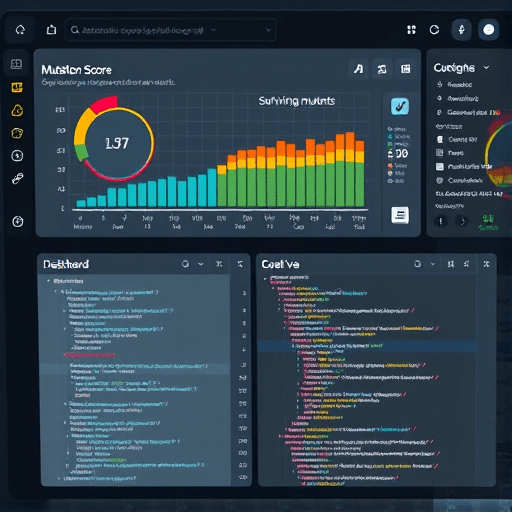
- Cross‑Project Mapping: Visualize duplicated code across modules, with drill‑down into affected repositories.
- Contextual Refactoring Suggestions: Tailored suggestions that consider project conventions and dependencies.
- Live Search & Replace: Real‑time duplicate detection as you type, preventing duplication at the source.
- Governance Controls: Configurable policies to enforce refactoring standards and track compliance.
- CI/CD Integration: Automatic scans on pull request events, with optional auto‑merge of refactoring patches.
Case Study: Implementing AI Refactoring in a 5M+ Lines Monorepo
Setup
A multinational fintech company managed over 5 million lines of code across 12 microservices in a monorepo. The team integrated an AI IDE plugin that connected to their Git workflow and CI pipeline.
Detection Phase
The AI engine ran nightly scans, flagging 1,200 duplicate patterns. It ranked them by impact—lines of code affected, frequency of duplication, and criticality to core services.
Refactor Phase
For the top 30 high‑impact duplicates, the IDE auto‑generated refactoring pull requests. Developers reviewed and merged them in under two weeks, with no regression bugs reported.
Results
- Reduction in Duplicated Lines: 75% fewer duplicate code lines across the repo.
- Bug Rate Drop: Post‑refactor, duplicate‑related bugs fell by 60%.
- Speed‑to‑Market: Feature delivery time improved by 15% due to streamlined maintenance.
- Developer Satisfaction: 85% of developers reported feeling less overwhelmed by code complexity.
Best Practices for Successful Adoption
Team Buy-In
Educate stakeholders on the ROI: reduced technical debt, faster onboarding, and lower defect rates. Provide demos that show the AI’s suggestions in action.
Incremental Rollout
Start with a pilot team or a single microservice. Use their success story to scale to the entire monorepo, mitigating resistance and refining processes.
Governance and Review
Define policies that govern when and how duplicates can be merged. Combine AI suggestions with peer review to maintain code quality and consistency.
Common Pitfalls and How to Avoid Them
- Overreliance on AI: Treat AI suggestions as aids, not replacements. Human judgment remains essential.
- Ignoring Context: AI may miss domain-specific nuances. Ensure the tool’s training data aligns with your project’s language and patterns.
- Skipping Testing: Automated refactoring can introduce subtle bugs if tests are not comprehensive.
- Not Updating Models: AI models need retraining on new code to stay effective. Schedule periodic updates.
The Future: AI-Driven Continuous Consistency
Live Monitoring, Automated Pull Requests
Future IDEs will embed real‑time duplicate detection into the coding workflow. As developers type, the AI will flag duplicated logic and propose immediate refactorings, creating a continuous consistency loop.
Integration with CI/CD and Documentation
Refactoring outcomes can automatically update documentation, API specs, and dependency graphs. Coupled with CI/CD, this ensures that every build is automatically checked for duplication, preventing regressions before they reach production.
In summary, AI-powered IDEs are reshaping how large organizations tackle duplicate code in monorepos. By blending semantic analysis, contextual refactoring, and automated governance, teams can keep their codebases lean, maintainable, and future‑ready.
Start improving your monorepo today with AI-driven refactoring.