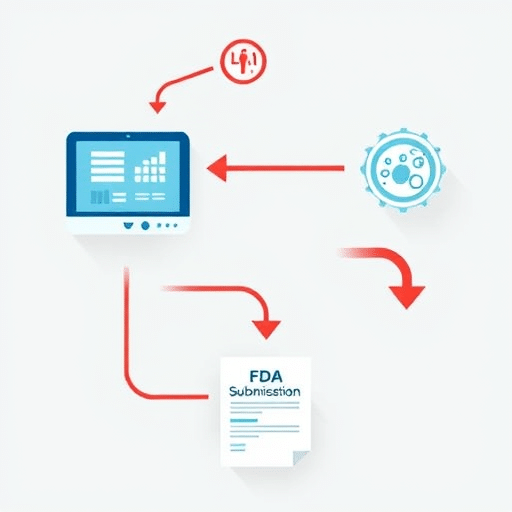
The shift to decentralized clinical trials (DCTs) creates a unique opportunity to use software as a medical device (SaMD) as primary outcome measures; adopting SaMD as Primary Outcome Measures demands a rigorous, patient-centric framework for validation, monitoring, and regulation that ensures scientific credibility, safety, and regulatory acceptability.
Why SaMD Endpoints Matter in DCTs
Digital biomarkers and AI-driven SaMD endpoints enable continuous, real-world measurement of patient function, adherence, and symptoms with high granularity. In decentralized settings—where patients interact with the study from home—SaMD can increase sensitivity to treatment effects, reduce site burden, and improve participant retention. However, when SaMD is elevated from exploratory to primary outcome status, sponsors and investigators must address new technical, statistical, clinical, and regulatory obligations.
Core Principles of the Framework
- Pre-specification: Define endpoints, algorithms, and analysis plans before unblinding or deployment.
- Transparency: Document algorithm provenance, training data, and intended use.
- Robust validation: Combine analytical, clinical, and computational validation to demonstrate fitness for purpose.
- Safety and privacy: Ensure cybersecurity, data governance, and patient consent align with regulatory expectations.
- Lifecycle management: Plan for algorithm updates, drift detection, and post-market surveillance.
Step 1 — Design and Protocol Integration
Embed the SaMD endpoint into the protocol from the outset, not as an afterthought. Key elements to include:
- Clear description of the digital biomarker and the SaMD’s intended clinical use.
- Inclusion/exclusion criteria tailored to device use (e.g., smartphone ownership, sensor access).
- Operational workflows for onboarding, training, and technical support.
- Data-flow diagrams showing edge processing, cloud transmission, and storage.
- Statistical analysis plan (SAP) that handles missingness, signal aggregation, and multiplicity.
Step 2 — Validation: Analytical, Clinical, and Computational
Validation must be multi-dimensional to support SaMD as a primary outcome.
Analytical Validation
- Assess accuracy, precision, sensitivity, specificity, and limits of detection using reference standards or gold-standard assessments.
- Test across devices, operating systems, sensor variants, and environmental conditions.
- Report performance stratified by demographic and clinical subgroups to detect bias.
Clinical Validation
- Demonstrate that the SaMD-derived measure correlates with meaningful clinical outcomes or changes (construct validity).
- Use prospective bridging studies or embedded sub-studies in the DCT to show treatment effect detection capability.
- Define minimally clinically important differences (MCIDs) for interpretation.
Computational Validation
- For ML-driven endpoints, document training/validation/test splits, cross-validation schemes, and external validation cohorts.
- Apply adversarial and robustness testing to evaluate model stability to noise, adversarial inputs, and distributional shift.
- Lock models intended for primary endpoint use, or adopt pre-specified controlled update protocols with change-control documentation.
Step 3 — Monitoring and Quality Assurance in Real Time
Monitoring must ensure signal integrity and participant safety across distributed contexts.
- Automated telemetry: Implement health checks, data completeness dashboards, and device connectivity alerts.
- Risk-based monitoring: Prioritize critical data and participants at higher risk of protocol deviations.
- Drift detection: Monitor statistical properties of incoming data and model outputs to detect population or sensor drift early.
- Remote troubleshooting: Provide in-app guided fixes, remote logs, and rapid technical support workflows to minimize data loss.
Step 4 — Regulatory Engagement and Documentation
Engage regulators early and often to align expectations and de-risk approval paths.
- Request pre-submission meetings (e.g., FDA Q-Sub, EMA scientific advice) to discuss the SaMD’s intended use as a primary endpoint.
- Prepare a comprehensive dossier: validation reports, SAP, clinical study reports, cybersecurity risk assessments, and human factors/usability studies.
- Map the regulatory pathway: SaMD may require device clearance/approval in addition to drug/therapy approvals when used as a primary measure.
- Consider leveraging recognized standards (e.g., ISO 13485, IEC 62304, ISO 14971) and FDA guidance on digital health and clinical outcome assessments.
Step 5 — Data Governance, Privacy, and Ethics
Strengthen trust by safeguarding patient data and demonstrating ethical use of AI.
- Obtain informed consent that explains algorithmic processing, secondary use, and data sharing transparently.
- Implement least-privilege data access, encryption at rest and in transit, and clear data retention policies.
- Conduct fairness audits and bias mitigation to ensure equitable endpoint performance across populations.
Step 6 — Statistical and Regulatory Considerations for Analysis
Ensure the statistical approach reflects the nature of continuous, high-frequency digital endpoints.
- Predefine aggregation windows, feature engineering rules, and missing data imputation strategies in the SAP.
- Use simulation studies during planning to estimate power and sensitivity given realistic noise and adherence scenarios.
- Adjust multiplicity controls and hierarchical testing when a SaMD endpoint is co-primary or part of a composite.
Step 7 — Post-market Surveillance and Continuous Learning
Post-approval responsibilities persist: maintain vigilance for safety, performance drift, and real-world effectiveness.
- Establish a post-market performance monitoring plan with pre-defined triggers for investigation and remediation.
- Document any algorithm updates and perform re-validation when changes affect clinical outputs.
- Collect and analyze real-world evidence (RWE) to support ongoing safety and efficacy claims.
Practical Checklist for Sponsors and Investigators
- Protocol includes SaMD description, usability plan, and SAP.
- Analytical and clinical validation studies completed with external validation where possible.
- Regulatory pre-submission completed and feedback incorporated.
- Telemetry, monitoring dashboards, and support workflows operational before trial launch.
- Data governance, cybersecurity, and consent forms aligned with local regulations.
- Post-market plan and algorithm change-control processes defined.
Integrating SaMD as primary outcome measures in decentralized clinical trials requires multidisciplinary collaboration among clinicians, statisticians, software engineers, regulators, and patient representatives. When done right, these endpoints accelerate patient-centric trials and produce richer evidence while maintaining rigor and trust.
Conclusion: A practical, pre-specified framework—covering design, multi-dimensional validation, active monitoring, regulatory engagement, and lifecycle management—enables SaMD to serve as credible primary outcome measures in decentralized clinical trials.
Ready to move from concept to trial? Start by mapping your SaMD endpoint against the checklist above and scheduling a regulatory pre-submission meeting.