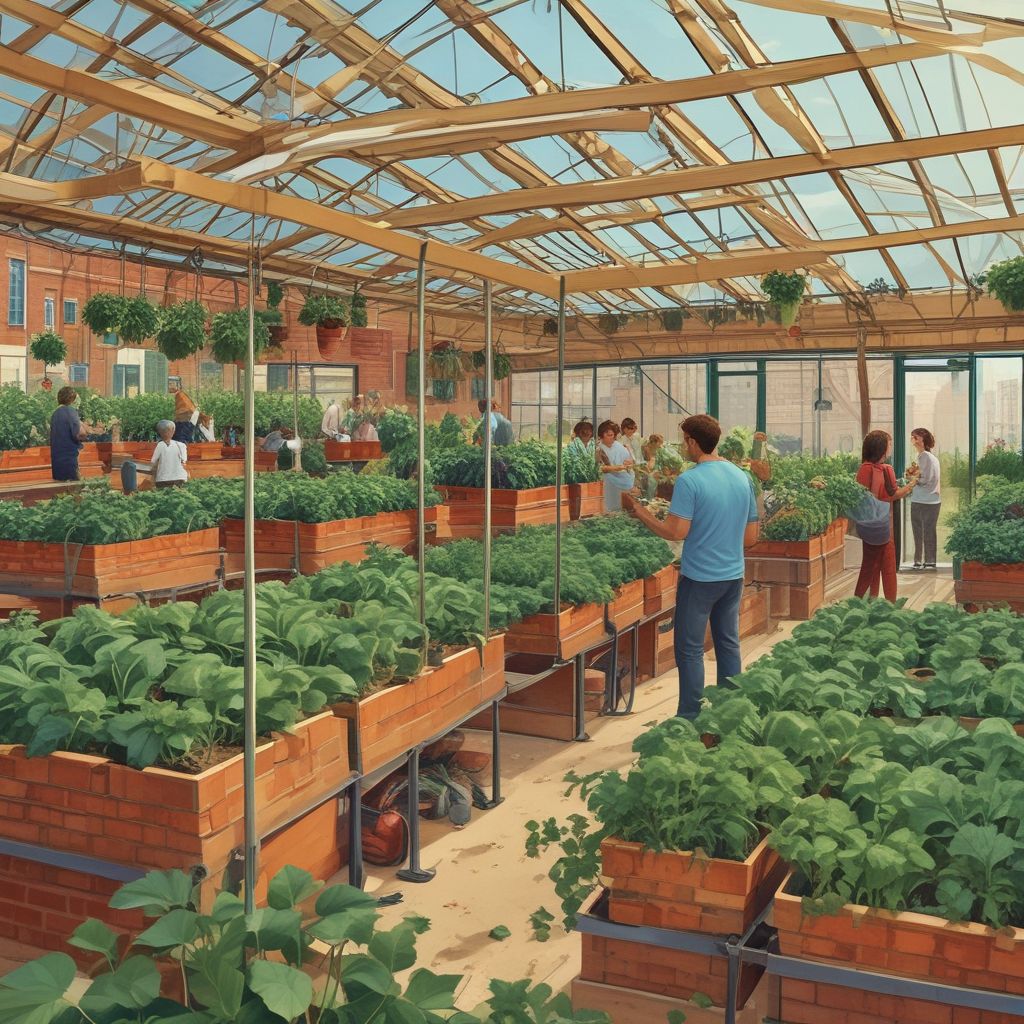
Pop-Up Greenhouse Franchises are a nimble, community-first approach to urban renewal that converts vacant city lots into compact, efficient greenhouses, bringing fresh produce, dignified employment for local youth, and attractive opportunities for micro-investors. This profile explores a scalable social-franchise model that targets food deserts, trains young people in modern agricultural and business skills, and offers clear returns—social and financial—for communities and investors alike.
Why Pop-Up Greenhouse Franchises?
Urban areas across the country are dotted with vacant lots: eyesores that depress neighborhoods and squander potential. At the same time, millions live in food deserts—neighborhoods lacking consistent access to affordable, nutritious food. Pop-up greenhouse franchises solve both problems by placing modular, climate-controlled greenhouses on underused land and operating them with a franchise playbook designed for social impact.
Main outcomes this model delivers
- Local access to fresh vegetables and herbs year-round.
- Paid work and accredited training for local youth aged 16–24.
- Micro-investment pathways allowing residents to co-own and earn revenue.
- Activation of derelict spaces into safe, productive community hubs.
How the Social-Franchise Model Works
The operating model blends franchise consistency with community customization. A nonprofit or mission-driven franchisor develops a turnkey package—designs, supply chains, training curricula, branding, and a technology stack for production and sales. Franchisees are local operators: community organizations, cooperative groups, or social entrepreneurs who license the model and run sites.
Core components
- Modular greenhouse kit: Prefab frames, HVAC and LED grow systems, hydroponic or soil beds optimized for small footprints.
- Training academy: A standardized youth curriculum covering horticulture, food safety, entrepreneurship, and soft skills.
- Micro-investor platform: A low-barrier investment product (e.g., $100–$1,000 tiers) enabling neighbors to fund start-up costs and receive revenue shares or community dividends.
- Market channels: Direct-to-consumer CSA boxes, weekly farm stands, B2B supply to local grocers, and partnerships with school meal programs.
- Impact metrics and reporting: Standard KPIs for pounds of produce, youth hours trained, jobs created, and investor ROI.
Training Youth, Building Careers
A distinguishing feature is the emphasis on dignified career pathways for young people. Rather than unpaid volunteering, the model provides paid apprenticeships and certifications worth resumes and transferable experience. Youth trainees rotate through roles—crop cultivation, greenhouse tech maintenance, sales and marketing, and bookkeeping—so graduates leave with both hard and soft skills.
Typical training pathway
- Week 1–4: Intro to urban agriculture and workplace basics (paid).
- Month 2–3: Technical skills—hydroponics, pest management, post-harvest handling.
- Month 4: Business rotations—point-of-sale, inventory, customer service.
- Graduation: Certificate, job placement assistance, credit toward franchise ownership for top performers.
Attracting Micro-Investors
Micro-investors are central to both funding and ownership. Rather than relying solely on grants, the franchise offers community investment rounds with clear terms—revenue-sharing, modest annual returns, or community equity stakes. These opportunities democratize local capital and align investor incentives with neighborhood success.
Investor benefits and protections
- Low minimums to make participation inclusive.
- Simple impact and financial reporting through an investor portal.
- Legal structures like community benefit cooperatives to protect mission and limit speculative exits.
Financials and Scalability
While exact numbers vary by city and greenhouse size, the model is designed for positive unit economics at small scale, with break-even commonly within 12–24 months. Revenue streams include produce sales, training fees from partner organizations, micro-investor repayments, and licensing fees paid back to the franchisor for ongoing support. Replicability is achieved through a franchisor playbook and supplier partnerships for bulk equipment and seed supplies.
Scaling checklist
- Site assessment and fast permitting templates for small urban lots.
- Standard operating procedures (SOPs) for planting schedules and labor allocation.
- Local partnerships—schools, health clinics, grocers—to secure demand.
- Technology to forecast yields, manage inventory, and automate investor reporting.
Real-World Impact: A Hypothetical Case Study
In a mid-sized city, ten pop-up greenhouse franchises convert vacant lots into productive hubs. Each site employs 6–8 youth apprentices annually, produces 2,000–3,500 pounds of produce per year, and operates a weekend market that serves 500 households. Micro-investors—400 individuals across neighborhoods—fund initial buildout through $150 average contributions and receive modest annual dividends plus community credit for produce. Within two years, several trainees transition to paid site manager roles or co-ownership of new franchise sites, creating an internal pipeline that fuels rapid, mission-aligned expansion.
Challenges and How to Overcome Them
Common obstacles include zoning and permitting delays, seasonal yield variability, and ensuring consistent market demand. The franchisor minimizes risk by providing pre-approved site templates, robust winter cropping plans, and marketing playbooks to create steady CSA subscriptions and institutional buyers (schools, hospitals).
Mitigation strategies
- Advanced municipal engagement to streamline permits and leverage public land leases.
- Diverse revenue mix to smooth cash flow across seasons.
- Ongoing training and leadership pathways to retain talent and reduce turnover.
Why Cities and Investors Should Care
Pop-Up Greenhouse Franchises create measurable environmental, social, and economic returns: cleaner lots, better food access, workforce development, reduced food miles, and new community wealth. For micro-investors, the appeal is meaningful local impact coupled with transparent returns; for cities, it’s a low-cost, high-impact strategy to revitalize neighborhoods and engage youth in constructive careers.
Pop-up greenhouse franchises are more than an urban farming fad—they are a portable, scalable social-franchise that aligns community empowerment with sustainable business design.
Conclusion: Implementing Pop-Up Greenhouse Franchises turns dormant urban spaces into engines for food security, youth employment, and inclusive local investment—delivering fresh produce and dignity where both have been scarce. Ready to bring a pop-up greenhouse to your neighborhood? Learn how to start or invest today.
Call to action: Visit the franchise portal or contact the local coordinator to request a site assessment and join the next micro-investor round.