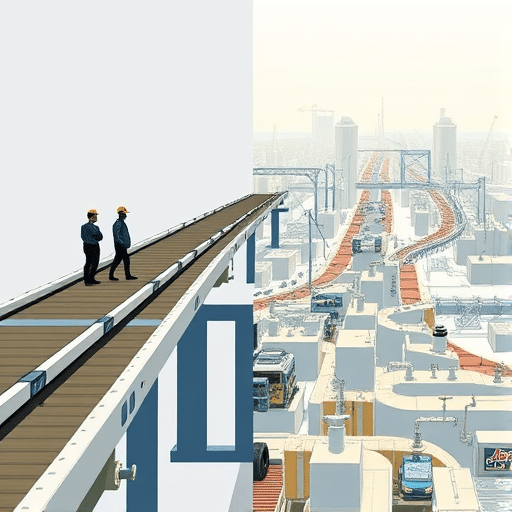
Persistent AR City Layers are reshaping how people experience cities by overlaying always-on, spatially anchored digital content on physical places; this article explores the infrastructure, social dynamics, privacy risks, and sustainable monetization models that make always-on mixed-reality worlds viable and ethical. As augmented reality (AR) moves from ephemeral filters to persistent urban layers, planners, technologists, and communities must align on standards, governance, and business models that preserve public value while enabling innovation.
What are Persistent AR City Layers?
Persistent AR City Layers refer to continuous, location-anchored digital information that remains stable across time and devices—think of a city where neighborhood histories, transit tips, public art, or game objectives are tied to specific coordinates and visible to anyone with the right AR client. Unlike single-session AR experiences, persistent layers are shared, versioned, and often moderated, so a mural’s digital extension, a gamified scavenger hunt, or a transit overlay can persist day-to-day and evolve collaboratively.
Key characteristics
- Spatial persistence: content is fixed to coordinates or physical anchors, not ephemeral screens.
- Shared visibility: multiple users and apps can access, contribute to, or moderate the same layer.
- Version control: edits, provenance, and moderation histories are recorded to resolve conflicts.
- Interoperability: layers follow open standards so different vendors and devices can participate.
Infrastructure: Building the Foundation
Delivering always-on mixed-reality requires an infrastructure stack that blends hardware, software, and standards:
- Edge compute and low-latency networks: Real-time rendering and spatial queries demand distributed compute close to users—5G and edge nodes reduce lag and offload heavy workloads.
- Persistent mapping and spatial anchors: Highly accurate city-scale maps, SLAM systems, and standardized anchor registries ensure AR elements remain aligned with the physical world.
- Cross-platform interoperability: Open APIs, shared coordinate frames, and content packaging formats (e.g., glTF with spatial metadata) let multiple clients render the same layer consistently.
- Identity and access layers: Authentication, device attestation, and role-based permissions help moderate contributions and enable selective visibility (e.g., municipal vs. commercial overlays).
Social Dynamics: Cities as Collaborative Playfields
Persistent AR layers transform public space into a medium for new social behaviors—play, civic participation, and commerce converge:
- Community-driven narratives: Residents can annotate local landmarks with stories, oral histories, and art, enriching neighborhood identity.
- Shared games and events: Cities can host location-based games that encourage exploration and meet-ups, blending tourism and local engagement.
- New civic tools: Councils and planners can publish zoning visualizations, public consultations, and live infrastructure updates in situ, making civic engagement more intuitive.
Risks of emergent behaviors
However, social layering can produce friction: localized harassment, cultural clashes over what should be displayed, and displacement of low-tech public practices. Governance mechanisms and inclusive design are vital to prevent marginalized voices from being drowned out by well-funded commercial layers.
Privacy and Safety: Mitigating Always-On Risks
Persistent AR raises acute privacy issues because overlays can link personal data to places and people in ways that are new and persistent:
- Location surveillance: Continuous AR interactions can create rich logs of where users go and what they view—data minimization and on-device processing should be defaults.
- Face and object recognition: Technologies that identify people or private property must be restricted or require explicit consent to avoid misuse.
- Visual clutter and safety: Overlays should not obstruct drivers, cyclists, or pedestrians; safety-first UI rules and geofenced restrictions for vehicle zones are essential.
Policy prescriptions include privacy-by-design, opt-in default layers, transparent data practices, and public audit trails for content moderation. Cities can require AR providers to publish impact assessments and enforce fines for harmful practices.
Sustainable Monetization Models
For persistent AR layers to thrive, they must be financially sustainable without converting public space into an unmanaged ad meadow. Several approaches balance revenue with public interest:
- Public-private partnerships: Municipalities can license curated city layers to vetted partners in exchange for revenue-sharing and public benefits (free access for residents, funding for local arts).
- Subscription and premium layers: Niche content—like historical tours, enhanced transit navigation, or gamified fitness trails—can be behind affordable subscriptions while basic civic layers remain free.
- Microtransactions tied to value-added content: Small payments for AR-driven experiences (e.g., guided quests, exclusive virtual art pieces) keep mainstream access open while funding creators.
- Creator economies and tipping: Tools that let local creators monetize overlays directly (with clear content standards) encourage diverse contributions without centralized ad dominance.
Revenue models must include safeguards—clear labeling of sponsored content, limits on spatial ad density, and guarantees that public-interest layers are not paywalled.
Design Principles for Ethical Persistent Layers
- Transparency: Always label commercial content and provide easy access to moderation histories.
- Inclusivity: Empower local communities to create and curate layers and ensure language and accessibility support.
- Safety-first defaults: Restrict potentially dangerous overlays near roads, hospitals, or schools.
- Interoperability: Favor open standards so no single vendor controls the city’s digital spine.
- Privacy-preserving tech: Use on-device processing, ephemeral logs, and consented identifiers.
Real-world Inspirations and Early Experiments
Several projects hint at what persistent AR cities might become: community-curated historical overlays that bring plaques to life, museum-style AR tours that persist across seasons, and localized games that drive foot traffic to small businesses. These pilots show that when technology amplifies local stewardship rather than replaces it, AR becomes a civic tool rather than a commercial takeover.
Conclusion
Persistent AR City Layers can turn urban spaces into living gameboards that enrich civic life, boost local economies, and foster creative expression—provided infrastructure, governance, and business models prioritize safety, privacy, and public value. Thoughtful standards, community stewardship, and transparent monetization are the cornerstones of AR cities that serve everyone.
Ready to imagine the AR layer for your neighborhood? Explore, prototype, and involve your community today.