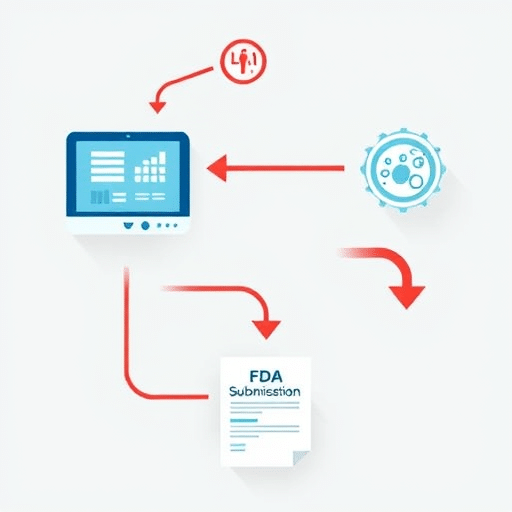
The challenge of algorithmic drift in deployed Software as a Medical Device (SaMD) demands robust post-market trial designs to detect, quantify, and correct silent failures before harm accrues. This article outlines pragmatic hybrid trials and continuous monitoring strategies using real‑world data (RWD) and sentinel sites so teams can spot drift early, measure its clinical impact, and remediate models safely and efficiently.
Understanding the problem: why algorithmic drift is a silent failure
Algorithmic drift occurs when the statistical relationship between inputs and outcomes changes over time, producing degraded model performance without obvious system errors. In clinical settings this can be particularly insidious: alerts may still fire, interfaces remain unchanged, but sensitivity, specificity, or calibration erode as patient populations, practice patterns, or upstream data sources shift. Detecting these changes requires ongoing surveillance beyond pre-market validation.
Principles of pragmatic hybrid post‑market trials
Hybrid trials combine trial-like rigor with real-world pragmatism—embedding focused prospective evaluation within routine care to measure both technical drift and patient-level outcomes. Key design elements include:
- Sentinel site network: Select a geographically and demographically diverse set of clinical sites for intensive monitoring and ground-truth adjudication.
- Pragmatic sampling: Use routine workflows for most data capture but prespecify cohorts for enriched review (e.g., high-risk subgroups or rare conditions).
- Adaptive allocation: Incorporate stepped-wedge or cluster-randomized approaches to allow temporal comparisons while minimizing disruption to care.
- Continuous control arms: Maintain internal or external concurrent controls—either historical baselines or matched non-exposed populations—to separate drift from secular trends.
- Predefined performance thresholds: Establish statistical and clinical thresholds (e.g., change in AUROC, calibration slope, or NNT) for triggering investigation or mitigation.
Design options and when to use them
- Stepped-wedge deployment: Useful when rolling out updates across sites; allows site-level before/after comparisons that help isolate local drifts.
- Cluster randomized audits: Effective when additional clinician review is costly—randomize clusters to periodic audit vs. usual monitoring to measure calibration.
- Sequential adaptive surveillance: Good for rapidly-changing environments; permits increasing sampling frequency in signals of concern and reducing it when stable.
Continuous monitoring strategies with real‑world data
Complement hybrid trials with continuous, automated monitoring pipelines that use RWD to detect distributional and performance changes in near real time.
Key components of a monitoring pipeline
- Streaming data ingestion: Securely collect inputs, predictions, and outcomes across EHR, imaging, and device feeds into a monitored data lake.
- Feature and label monitoring: Track covariate distributions (covariate shift), label prevalence (prior probability shift), and joint feature relationships (concept drift).
- Performance metrics: Compute clinical metrics (sensitivity, specificity, PPV, NPV), discrimination (AUROC), and calibration (Brier score, calibration-in-the-large) at rolling windows.
- Statistical alarms: Implement statistical tests—KS, population stability index (PSI), CUSUM, and change-point detection—to flag meaningful shifts beyond noise.
- Visualization and dashboards: Provide interactive dashboards for engineers, clinicians, and safety officers with drill-downs by site, device, and subgroup.
Sentinel sites as high‑fidelity detectors
Sentinel sites act as early-warning beacons: they provide rapid access to adjudicated outcomes, richer metadata, and clinician feedback loops. By concentrating manual review and confirmatory testing at sentinel centers, teams can confirm whether detected statistical shifts translate to clinical risk and quantify harm potential before widespread remediation.
Quantifying drift and assessing clinical impact
Identifying a shift is only the first step—teams must quantify how much drift matters clinically.
- Delta metrics: Report absolute and relative changes in discrimination and calibration, plus impact on downstream decision thresholds (e.g., change in positive predictive value at operating point).
- Patient‑level risk analysis: Estimate excess missed detections or false positives and convert these into expected clinical outcomes (e.g., delayed treatment, unnecessary procedures).
- Subgroup stratification: Examine performance by age, sex, ethnicity, device vendor, and clinical setting to detect inequitable drift.
Correcting drift: governance and technical playbook
Once drift is confirmed, an orchestrated remediation plan minimizes patient risk and supports regulatory expectations.
- Immediate risk-mitigation: Throttle model use, add clinician-facing warnings, or revert to earlier validated versions in critical settings.
- Short-term fixes: Calibrate scores (recalibration layers), adjust decision thresholds, or apply local intercepts informed by sentinel data.
- Model update cycle: Perform controlled retraining using recent labeled RWD, validate in sentinel sites, and run an A/B rollout with ongoing monitoring.
- Audit trails and documentation: Maintain versioning, validation artifacts, and decision rationale for regulators and clinical governance bodies.
Operational and regulatory considerations
Successful programs align engineering, clinical, legal, and quality teams early.
- Data governance: Ensure patient consent, de-identification, and secure data transfer for RWD and sentinel review.
- Regulatory pathways: Define pre-agreed change control plans with regulators for adaptive updates and explain monitoring triggers that require notification or submission.
- Stakeholder communication: Create escalation protocols so clinicians and safety officers receive actionable summaries rather than raw alerts.
Implementation checklist: from pilot to production
- Define sentinel site criteria and establish data sharing agreements.
- Design hybrid trial protocol with performance thresholds and adjudication workflows.
- Build streaming RWD pipelines with automated metric computation and alarm logic.
- Deploy dashboards and role-based alerting to clinical safety teams.
- Create remediation playbooks and regulatory change control documentation.
- Run pilot in sentinel sites, iterate, and scale with continuous surveillance.
Hypothetical vignette
At a network of emergency departments, an AI triage SaMD shows stable alerts for six months, then slowly loses sensitivity in older patients after a new imaging software release at one vendor. Continuous RWD monitoring flagged a shift in input feature distributions; sentinel site review confirmed missed high-risk cases. The team temporarily adjusted thresholds, retrained the model using recent labeled data, validated performance at sentinel EDs, and rolled out a corrected version with enhanced monitoring—avoiding escalation to patient harm.
Detecting and correcting algorithmic drift is not a single project but a lifecycle capability that pairs pragmatic trials with automated surveillance to preserve safety and trust.
Conclusion: By combining pragmatic hybrid post‑market trial designs with continuous real‑world monitoring and sentinel site adjudication, SaMD teams can detect, quantify, and correct algorithmic drift early—protecting patients, clinicians, and organizations from silent failures. Act now to implement a sentinel-backed monitoring strategy and a prespecified remediation playbook to keep deployed models safe.
Call to action: Start by convening a cross-functional drift readiness workshop and pilot a sentinel monitoring stream this quarter.