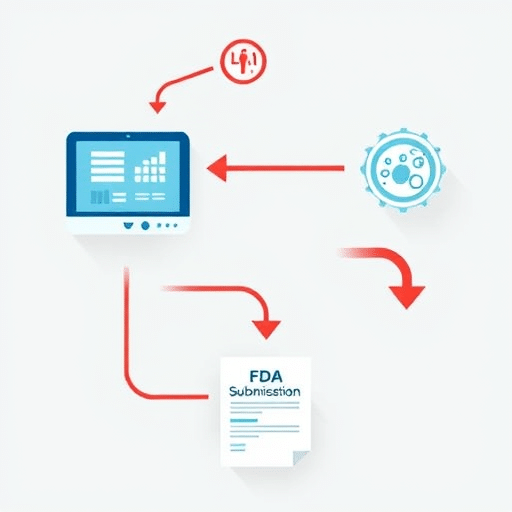
The rise of digital-twin frameworks for SaMD (software as a medical device) is transforming early-phase clinical development by enabling realistic virtual patient–device simulations that reduce required sample sizes, accelerate go/no-go decisions, and clarify regulatory pathways. By combining mechanistic physiology models, real-world datasets, and device-specific behavioral models, developers can run high-fidelity in silico experiments that mirror population variability and operational conditions—helping teams learn faster while exposing fewer real patients to experimental risks.
What are digital-twin frameworks for SaMD?
Digital-twin frameworks for SaMD are integrated modeling environments that create virtual representations of patients, the clinical workflow, and the software device itself. These frameworks typically include three layers:
- Physiological or disease model: mechanistic or data-driven models that reproduce patient physiology and disease progression.
- Device model: a simulation of the SaMD’s algorithms, user interface, sensor behavior, and failure modes.
- Trial and environment model: representations of protocol timing, adherence, measurement noise, and care pathways.
Why virtual patient–device simulations reduce early-phase trial burden
Virtual patient–device simulations let teams run many more controlled experiments than possible with real subjects, enabling:
- Precision sample-size estimation: runs across thousands of simulated patients reveal effect size distributions and statistical power more robustly than small pilot cohorts.
- Robust sensitivity analysis: parameter sweeps identify which patient subgroups and operational factors most influence performance, reducing worst-case surprises during real trials.
- Faster go/no-go decisions: rapid exploration of firmware or algorithm changes in silico lets teams iterate until a candidate meets predefined performance criteria before committing to costly human studies.
Validated approaches: how to trust the virtual twin
Validation is the linchpin for regulatory acceptance. A defensible digital-twin framework follows layered validation:
- Verification: confirm the device model executes intended logic and numerical methods are stable.
- Internal validation: calibrate physiological and environment models using historical trial data or curated registries.
- External validation: prospectively compare simulated outcomes with held-out clinical datasets or parallel sub-studies in early human trials.
- Uncertainty quantification: transparently report model confidence intervals and key assumptions, showing where simulations are robust and where caution is needed.
Practical validation checklist
- Document data sources, model versions, and parameter priors.
- Run anchor tests: reproduce known trial results or physiological markers.
- Apply scenario-based stress tests covering edge cases and sensor failures.
- Publish validation metrics (e.g., calibration plots, RMSE, decision concordance) for reviewers and regulators.
Navigating regulatory acceptance pathways
Regulators increasingly recognize in silico evidence as complementary to clinical data when models are well-validated and used to inform—not replace—human trials. Key strategies to improve regulatory receptivity include:
- Early engagement: request pre-submission meetings to present model structure, datasets, and validation plans to agencies (FDA, EMA, etc.).
- Transparent reporting: provide full model documentation, code snapshots, and reproducible validation artifacts.
- Hybrid designs: combine smaller prospective cohorts with simulation-augmented evidence to demonstrate concordance and reduce the number of patients needed for pivotal decisions.
- Consortium standards: align with community frameworks (e.g., ASME VVUQ, ISPOR guidelines) and participate in multi-stakeholder validation efforts to build credibility.
Case examples: where simulations already helped
Several recent pilot programs illustrate tangible benefits:
- Cardiac monitoring SaMD used virtual cohorts to narrow algorithm thresholds and reduced a first-in-human cohort by 40% while maintaining safety coverage.
- Diabetes decision-support software ran thousands of in silico glucose variability scenarios to prioritize two algorithmic strategies for clinical testing, accelerating go/no-go by months.
- Respiratory monitoring simulations identified sensor placement sensitivities, informing device labeling and reducing protocol amendments during early trials.
Implementing a digital-twin strategy for your SaMD
Adopting a digital-twin framework requires careful planning. A practical roadmap:
- Define the decision: what specific trial outcome or operational choice will the simulation inform (sample size, subgroup selection, algorithm tuning)?
- Assemble data: gather historical trials, registries, and device logs to parameterize models.
- Build modular models: separate physiology, device, and environment layers to speed iteration and validation.
- Validate iteratively: start with anchor tests, then move to external validation and prospective hybrid trials.
- Engage regulators and stakeholders: document and share validation metrics early and often.
Risks, ethics, and limitations
Virtual patient simulations are powerful but not infallible. Risks include overconfidence in biased data, unmodeled confounders, and insufficient representation of real-world diversity. Ethical considerations demand transparency about model limits, protection of source data, and ensuring that reduced human enrollment does not compromise detection of rare adverse events.
Future outlook
As datasets grow and model standards mature, digital-twin frameworks for SaMD will become a routine tool in developers’ toolkits—especially for iterative algorithmic devices where large, rapid in silico sweeps can surface promising candidates and avoid expensive dead-ends. Over time, clearer regulatory pathways and shared validation repositories will further accelerate adoption.
In short, validated digital-twin frameworks that support virtual patient–device simulations offer a pragmatic, risk-aware way to shrink early-phase trials, make faster evidence-based decisions, and better allocate human and financial resources.
Conclusion: Thoughtful use of digital-twin frameworks for SaMD—paired with rigorous validation and early regulator engagement—can safely reduce sample sizes, speed development timelines, and clarify go/no-go decisions without sacrificing patient safety. Explore how a hybrid in silico + small-cohort approach could de-risk your next SaMD program.
Ready to map a digital-twin strategy for your SaMD? Contact a clinical simulation expert to get started.