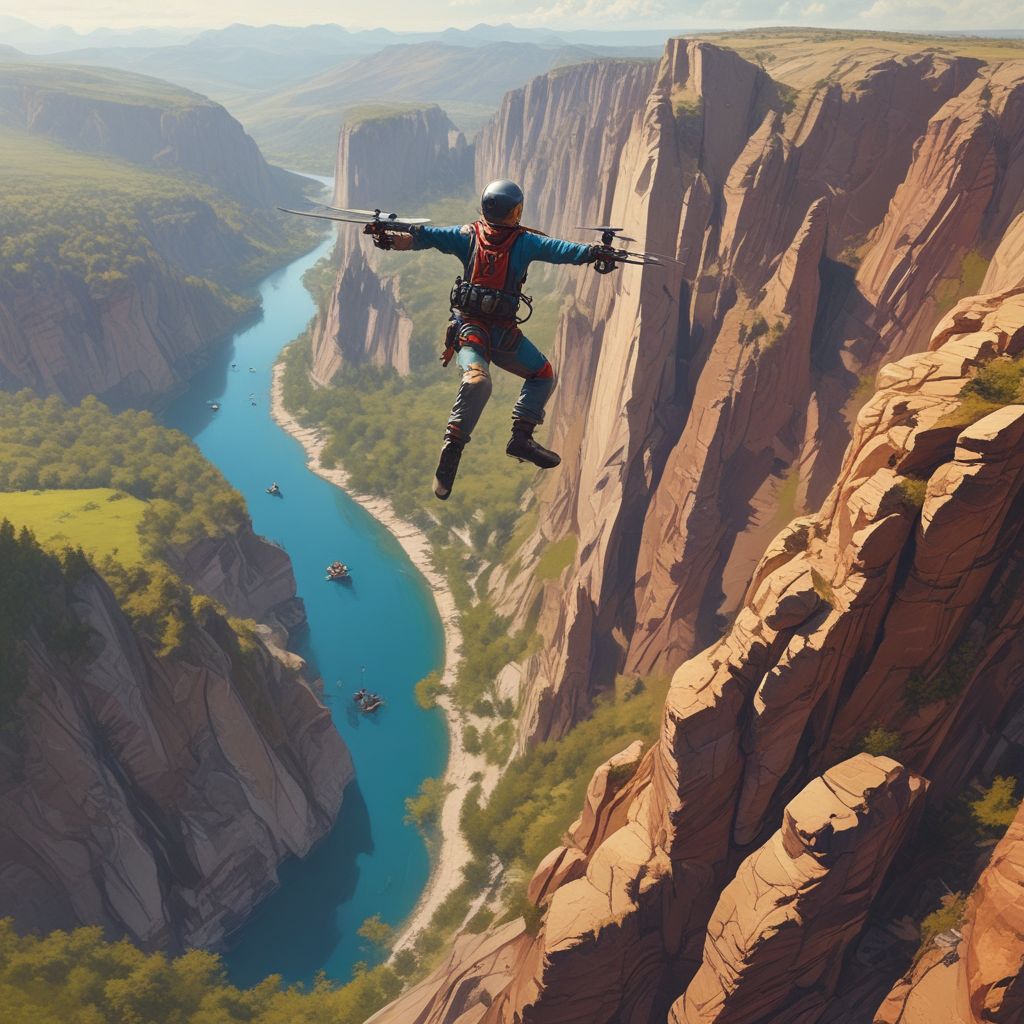
Drone-Assisted BASE Jumping is changing the way athletes plan, film, and commercialize extreme jumps by combining human aerial spotters with AI-guided drones to improve safety, capture cinematic footage, and create new business models. In this article, learn how these technologies work together, what benefits they offer, and what pilots, filmmakers, and event organizers need to consider before integrating drones into high-risk jumps.
Why drones matter in BASE jumping
BASE jumping has always depended on meticulous planning, acute situational awareness, and split-second decision-making. Adding drones—especially when coordinated with trained aerial spotters—extends those capabilities. Drones can scout approach corridors, monitor wind shear near cliffs and towers, provide live telemetry, and capture angles impossible to get with ground crews or handheld cameras. When AI is layered on top, drones can autonomously maintain safe distances, track athletes, and even predict trajectory deviations.
Roles: human aerial spotter vs. AI-guided drone
- Human aerial spotter: Experienced spotters interpret weather nuances, communicate with jumpers, and make judgment calls when conditions change—things that still require human intuition and liability-aware decisions.
- AI-guided drone: Automates repetitive, data-heavy tasks: real-time wind mapping, obstacle detection, dynamic framing for cinematography, and automated emergency recording of jump telemetry for investigation and insurance claims.
Safety: new layers of protection
Safety is the top priority when integrating drones into BASE jumping operations. Drones add several safety layers, but they are not a substitute for rigorous human oversight. Properly implemented, the drone + spotter duo can reduce risk by widening situational awareness and offering objective, real-time data.
Key safety features enabled by drones
- Real-time wind and turbulence mapping: Multi-rotor and fixed-wing drones can sample airspeed and turbulence around jump sites to give a localized picture beyond what a single weather report provides.
- Obstacle and proximity alerts: Lidar and stereo-vision allow drones to detect and warn of nearby hazards—power lines, cliff overhangs, or unexpected structures.
- Automated tracking and emergency logging: AI can flag abnormal trajectories or deploy pre-programmed emergency recordings to aid post-incident analysis and rescue coordination.
- Redundancy and fail-safes: Using multiple drones and redundant communication channels reduces single-point failures during critical phases of a jump.
Filmmaking: cinematic possibilities and choreography
For cinematographers, drone-assisted BASE jumping unlocks a creative toolbox: sweeping approach shots, follow-cam sequences through narrow corridors, or split-angle edits synchronized to the jumper’s movement. When drones are AI-guided, they can maintain complex shot geometries autonomously, keeping the athlete framed at cinematic distances while avoiding collision risks.
Techniques filmmakers are using
- Pre-visualization and rehearsal: Drones scout and record sightlines, enabling directors to pre-visualize impossible shots and rehearse with jumpers in safer conditions.
- Hybrid rigs: Combining 6K stabilized drone gimbals with helmet cams creates dynamic multi-angle edits for social and long-form content.
- Automated pacing: AI can maintain consistent framing despite sudden speed changes, yielding smoother footage and fewer retakes.
Commercialization: new revenue streams and business models
Drone-Assisted BASE Jumping is spawning commercial opportunities across training, media production, and event services. Companies are offering turnkey packages—drone spotters, filming crews, data analysis, and compliance management—to lower the barrier for athletes and brands entering the sport.
Examples of viable services
- Drone-as-a-spotter rental: On-demand aerial spotters with trained operators and pre-certified airframes for sanctioned jumps.
- Production bundles: Cinematography teams that provide post-ready footage, live-stream capabilities, and edits for social campaigns.
- Safety-as-a-service: Subscription offerings for jump sites that include monthly drone surveys, AI hazard modeling, and liability documentation.
Regulatory, legal, and ethical considerations
Integrating drones into BASE jumping raises regulatory hurdles and ethical questions. Airspace rules (beyond visual line of sight waivers, local restrictions, and national aviation authorities) must be navigated carefully. Organizers need clear waivers, insurance that covers unmanned systems, and contingency plans for drone failures that could create new hazards.
Checklist for compliance and ethics
- Obtain necessary BVLOS waivers and local permits well in advance.
- Verify insurance covers drone operations and any film production liabilities.
- Prioritize athlete consent and transparent risk communication before using autonomous features.
- Design no-fly contingencies to prevent drones from creating more risk than they mitigate.
Case studies and real-world use
Several experimental projects have demonstrated the potential of combining aerial spotters with AI-guided drones. In a recent cliff-jump expedition, spotters used drones to validate wind vectors minutes before a series of jumps, while a secondary drone captured a 180-degree surround shot that would have been impossible from the ground. In commercial shoots, brands reported higher viewer engagement for drone-driven sequences and quicker turnaround because of automated shot-keeping and metadata-rich footage.
Best practices for teams
- Run full-scale rehearsals with drones at reduced heights to validate behaviors and communications.
- Use layered communications: radio for human spotters, redundant telemetry for drones, and an on-site safety officer with veto power.
- Keep AI behavior transparent: ensure operators can override autonomous modes instantly.
- Document every flight and jump with synchronized telemetry for post-event review and insurance purposes.
The future: where technology and sport meet
As AI and sensing tech improve, expect smarter predictive models that can forecast microbursts and automatically suggest go/no-go decisions, as well as lightweight, quieter drones that minimize disruption to the athlete and environment. Advances in edge computing will allow more autonomous coordination between multiple drones and human spotters, enabling even more ambitious cinematic choreography and safer commercial operations.
Drone-Assisted BASE Jumping is not about replacing human judgment—it’s about extending it. With careful integration of aerial spotters, robust AI, and strict safety protocols, drones can make extreme jumps safer, more filmable, and commercially sustainable.
Conclusion: Drones and AI are amplifying the capabilities of BASE jumpers and filmmakers alike while introducing new responsibilities; teams that prioritize safety, training, and compliance will unlock the greatest benefits. Ready to explore drone-assisted operations for your next jump or production? Contact a certified drone spotter service to discuss site surveys and safety planning.