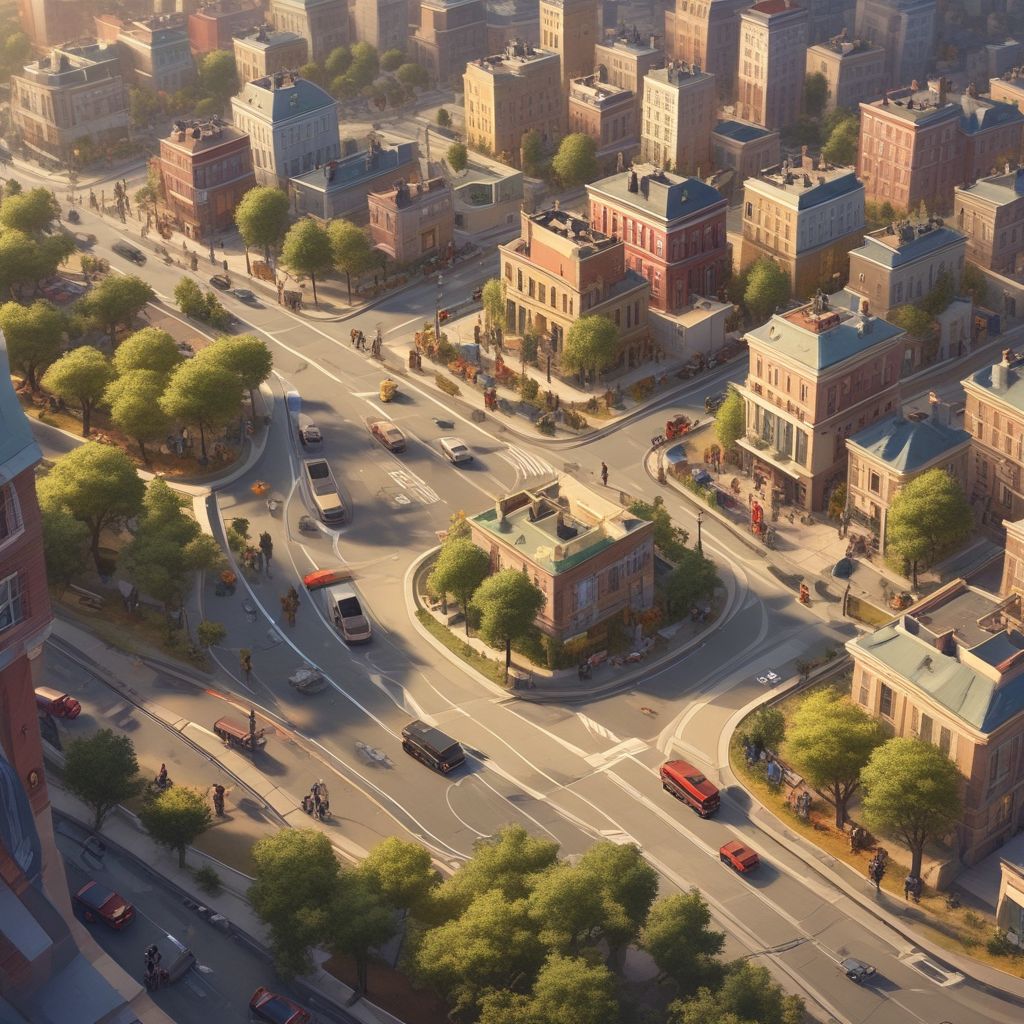
The rise of spatial computing is making City-Scale AR Battlefields more than a sci-fi dream—these persistent multiplayer game worlds transform neighborhoods into shared play spaces, blending the real and virtual. In this article we explore the technical architecture, safety and privacy safeguards, monetization strategies, and community-design approaches needed to build large-scale, responsible AR experiences that scale from a single block to an entire city.
Why City-Scale AR Battlefields Matter
City-Scale AR Battlefields create new forms of social play by anchoring game mechanics to public spaces, landmarks, and local communities. Unlike single-player AR or small-group experiences, city-scale games foster emergent behaviors, local economies, and ongoing narratives that persist between sessions—transforming ordinary streets into stages for collaborative strategy, territorial control, and local storytelling.
Core Technology Stack
Building a robust city-scale AR battlefield requires integrating multiple technology layers that work reliably in the messy, unpredictable real world.
1. Real-World Anchoring and Mapping
- Visual SLAM and multi-session mapping to place persistent virtual objects at consistent world coordinates.
- City-scale localization, using a mix of GPS, Wi‑Fi/Beacon augmentation, and visual markers to reduce drift and improve accuracy in dense urban canyons.
2. Scalable Backend and State Synchronization
- Cloud-hosted authoritative servers for game state, leaderboards, and matchmaking with regional edge nodes to minimize latency.
- Conflict-resolution frameworks so simultaneous interactions in the same physical location remain consistent for all players.
3. Device and Network Considerations
- Adaptive graphics and energy-aware rendering for a range of smartphones and AR glasses.
- Offline mode and opportunistic synchronization so players can continue local interaction when connectivity is intermittent.
4. Safety and Geofencing APIs
- Dynamic geofencing to restrict gameplay around sensitive zones (hospitals, schools, private property) and to comply with local ordinances.
- Context-aware mechanics that detect speed (to discourage play while driving) and elevation changes for vertical gameplay in cities with multi-level walkways.
Designing for Safety and Privacy
Safety and privacy are non-negotiable in city-scale AR games—poor design risks harm, legal action, and community backlash.
Privacy-first Data Practices
- Collect minimum location granularity; use tokenized coordinates or hashed location buckets when possible.
- Offer clear opt-ins for persistent tracking and easy tools to delete personal data and game traces.
Player Safety and Public Good
- Implement mandatory speed checks and disable certain mechanics at vehicle speeds; encourage pedestrian-only zones.
- Use transient visual cues and short-lived overlays to reduce distraction in high-risk areas (crosswalks, transit hubs).
- Design non-invasive interactions near private property—never require trespassing or physical alteration of space.
Monetization Models That Respect Players and Places
Monetization should support ongoing operation and community growth without exploiting players or turning neighborhoods into ad billboards.
- Season passes and battle-passes that unlock narrative arcs, cosmetics, and quality-of-life perks rather than pay-to-win advantages.
- Location-based partnerships with local businesses—optional sponsored missions and ephemeral in-game activations that drive foot traffic and revenue share.
- Microtransactions for customization (skins, emotes) and cosmetic territory markers that do not impact core competitive balance.
- City or municipal licensing models where a portion of revenue funds public maintenance or local cultural programming tied to the game.
Community Design and Governance
Persistent multiplayer worlds need governance structures that balance player agency with public interest.
Local Chapters and Moderation
- Empower local moderators and chapter leads to organize events, manage disputes, and liaise with city officials.
- Combine automated moderation (toxicity filters, location abuse detection) with human review for appeals and nuance.
Player-driven Economies and Social Contracts
- Design resource systems that reward cooperative maintenance of shared virtual assets, not monopolization.
- Create social contracts enforced by reputation systems, community voting, and transparent rulebooks for fair play.
Practical Implementation Roadmap
Delivering a city-scale AR battlefield benefits from a phased approach that reduces risk and builds community trust.
- Pilot in a contained neighborhood: validate localization, safety features, and privacy flows with a small cohort.
- Iterate mechanics and geofencing using player feedback and municipal consultations.
- Scale to multiple districts with edge servers and standardized partner agreements for local businesses and event spaces.
- Open persistent, cross-city events only after verifying moderation, legal compliance, and emergency protocols.
Case Study Highlights (Hypothetical)
Consider a mid-sized city pilot that turned downtown plazas into temporary strategic hubs during weekends: the game used low-power beacons to improve accuracy, worked with merchants for sponsored objectives, and routed high-risk interactions away from transit corridors—resulting in increased foot traffic and positive municipal press because safety and community oversight were prioritized from day one.
Challenges to Watch
- Regulatory uncertainty: privacy laws and public-space regulations vary widely across jurisdictions.
- Technical fragmentation: device diversity and variable connectivity can fragment player experience.
- Social friction: resident opposition when gameplay feels intrusive or monetization undermines public spaces.
City-Scale AR Battlefields offer a rare opportunity to combine local culture, business ecosystems, and shared play into persistent experiences—but only if designers, engineers, and city stakeholders collaborate thoughtfully.
Conclusion: With thoughtful technology choices, robust safety and privacy measures, fair monetization, and strong community governance, city-scale AR battlefields can become sustainable, welcome additions to urban life that foster connection and creativity.
Ready to transform your neighborhood into a responsible, persistent AR playground? Reach out to explore pilot planning and community-first design.