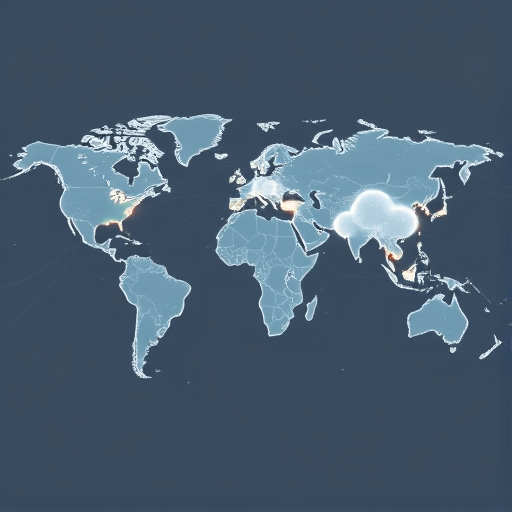
The rise of displacement-driven entrepreneurship is reshaping how communities, investors, and policymakers think about economic recovery: entrepreneurs who began in refugee camps and exile are now launching scalable ventures across Africa, the Middle East, and Europe, powered by diaspora capital, local market knowledge, and adaptive resilience.
Why displacement becomes a source of entrepreneurial strength
Displacement strips away familiar infrastructures but often sharpens resourcefulness, networks, and an urgent focus on problem-solving. Founders who navigate the hardship of forced migration build habits—frugality, rapid iteration, and strong community ties—that translate directly into startup competencies. Rather than viewing refugee status solely as a liability, many successful programs and investors now treat lived displacement experience as a competitive advantage in identifying overlooked market needs.
Key traits of displacement-driven entrepreneurs
- Hyper-local insight: Deep understanding of unmet needs inside camps, informal settlements, and migrant communities.
- Operational resilience: Ability to operate with scarce resources, making creative use of limited capital and infrastructure.
- Network orientation: Reliance on diaspora ties and community trust which accelerate customer acquisition and distribution.
- Rapid adaptation: Skill at pivoting business models when contexts change—valuable in volatile markets.
The catalytic role of diaspora capital
Diaspora capital—financial investment, mentorship, and market access from migrants and exiles living abroad—bridges opportunity gaps that traditional funding rarely reaches. Unlike purely opportunistic capital, diaspora investors often bring culturally informed patience and a long-term view, reinvesting not just for returns but to strengthen hometown economies and community resilience.
How diaspora capital multiplies impact
- Seed funding and risk tolerance: Early checks that validate concepts when local investors are hesitant.
- Market channels: Access to international customers, suppliers, and talent pipelines via personal networks.
- Knowledge transfer: Mentorship, governance standards, and technical skills that raise startup maturity quickly.
Three ecosystem archetypes emerging across regions
Africa: Camp-to-hub product innovation
Across East and West Africa, innovations incubated in displacement contexts—water purification, affordable housing tech, and mobile-first financial services—are scaling into national markets. Nairobi, Kampala, and Lagos now host accelerator programs that deliberately recruit refugee-led teams and connect them to local incubators, creating hybrid hubs where social need and market viability meet.
Middle East: From humanitarian services to commercial models
In the Middle East, entrepreneurs often start by optimizing humanitarian supply chains or digital identity solutions for displaced populations. Those solutions, when adapted, address broader regional problems like logistics, last-mile distribution, and digital payments—unlocking commercial traction beyond camps and into urban markets.
Europe: Diaspora networks and product-market fit
Europe’s large diasporas provide both capital and scale channels. Migrant founders in cities like Berlin, Stockholm, and Amsterdam have launched platforms that connect diaspora consumers with goods and services from origin markets, and they leverage regulatory knowledge to build compliant, scalable businesses that feed back into origin economies.
Practical lessons for founders, investors, and policymakers
For founders
- Leverage lived experience as a product insight—make empathy a market differentiator.
- Build distribution through community networks before chasing large contracts.
- Document traction with small pilots; diaspora backers respond to demonstrated customer adoption.
For investors
- Recalibrate risk models to value social networks and local trust as indicators of long-term viability.
- Offer blended finance (grants + equity) to de-risk early proof-of-concept in unstable contexts.
- Invest in intermediaries—accelerators and diaspora platforms—that can source and vet refugee-led teams.
For policymakers and donors
- Create legal pathways for refugee entrepreneurs to register businesses, access banking, and hire.
- Fund technical training and digital infrastructure inside camps and host communities.
- Promote diaspora engagement programs that match investors with vetted local ventures.
Measuring success: beyond exits
Success metrics for displacement-driven ecosystems should include social and economic indicators alongside financial returns. Track job creation in host communities, improvements in service delivery, diaspora remittances channeled into productive investment, and the rate at which refugee-led ventures graduate to formal markets. These measures reveal systemic resilience and long-term stability rather than one-off exits.
Challenges and how ecosystems are overcoming them
Barriers remain: legal status constraints, limited physical infrastructure, and early-stage capital gaps. But pragmatic approaches are mitigating these problems—mobile-first banking substitutes for lack of formal ID, pop-up co-working spaces in urban peripheries provide operational hubs, and pooled diaspora investment vehicles spread risk while amplifying reach.
Actionable checklist to support growth
- Founders: Pilot in community settings, capture unit economics, and map diaspora stakeholders.
- Investors: Create a dedicated allocation for displacement-driven ventures and partner with local incubators.
- Donors/NGOs: Fund de-risking mechanisms (matching grants, convertible grants) and governance training.
- Policymakers: Streamline registration and tax incentives for social enterprises started by displaced people.
When displacement-driven entrepreneurship meets strategic diaspora capital, the result is more than isolated startups—it is the birth of cross-border ecosystems that transform necessity into innovation and marginalization into market participation.
Conclusion: By valuing lived experience, aligning diaspora flows with early-stage support, and building inclusive regulatory frameworks, refugee camps and diaspora networks can become the seedbeds of tomorrow’s resilient, market-savvy startups across Africa, the Middle East, and Europe.
Take action: If you’re an investor, policymaker, or founder, start a conversation with diaspora networks today to find the next generation of displacement-driven ventures.