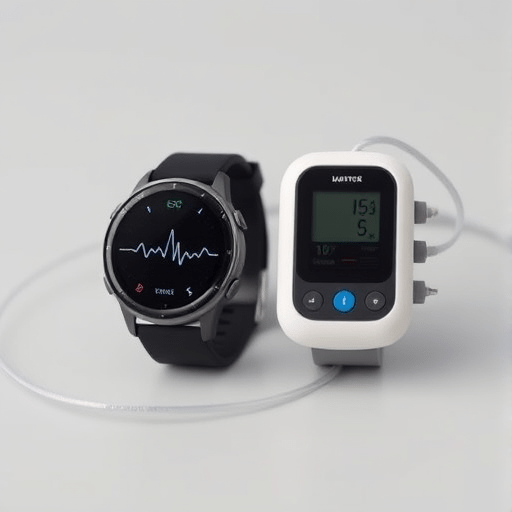
The term “Household Fingerprints” captures how consumer health devices—wearables, smart scales, sleep trackers, and connected home sensors—combine to turn private homes into identifiable medical profiles. As adoption of consumer health devices grows, their data streams merge in ways that make it possible to re-identify individuals and households, raising new privacy, safety, and discrimination risks that consumers and policymakers must urgently address.
What are household fingerprints and why they matter
Household fingerprints are unique signatures derived from multiple streams of health-related data collected inside a home. Rather than a single device revealing sensitive information, the fusion of telemetry—heart rate variability from a smartwatch, weight trends from a smart scale, motion patterns from room sensors, and sleep interruptions from a mattress pad—creates a detailed, persistent picture of who lives in a house, their health conditions, daily routines, and even intimate events.
Key characteristics of household fingerprints
- Multimodal: Built from multiple device types and sensor classes.
- Persistent: Aggregated over days, weeks, and months to reveal trends.
- Unique: Patterns of device usage, biometric baselines, and living rhythms can distinguish one household from another.
- Cross-correlatable: Data can be linked with external sources (e.g., IP addresses, billing records, or public social media) to increase identifiability.
How combined device data enables household-level re-identification
Individually, each device may appear harmless: a step count, a weight reading, a motion event. But when telemetry streams are combined and analyzed, they multiply identifying power. For example, the cadence of motion sensors plus the timing of an individual’s heart-rate spikes can be matched to a wearable’s heartbeat signature; a unique sequence of nightly entries and exits could align with geofenced events or ride-share logs to identify an address or person.
Technical mechanisms that enable re-identification
- Feature correlation: Unique combinations of seemingly benign features (sleep schedule + weight variance + heart-rate peaks) act like a fingerprint.
- Temporal linking: Timestamp alignment across devices reveals sequences that point to single individuals.
- User-device entropy: Device IDs, MAC addresses, and Wi‑Fi metadata provide linking anchors.
- External joins: Public records, loyalty programs, and online behavior amplify identifiability when merged with device data.
Real-world harms from household-level medical profiles
The harms that flow from household fingerprints are concrete and sometimes severe. Risks multiplicatively increase when companies, insurers, employers, or bad actors gain access to or infer sensitive health data.
Examples of harms
- Discrimination: Insurers or employers could use inferred chronic conditions, pregnancy status, or mental health indicators to deny coverage, increase premiums, or make hiring decisions.
- Targeted exploitation: Scammers could tailor phishing attacks using knowledge of a household’s medical routines or medication schedules.
- Stigma and social harm: Disclosure of sensitive conditions (e.g., HIV status, addiction, fertility treatments) to social networks or communities can cause ostracism and emotional trauma.
- Physical safety: Location and routine data can enable stalking, burglary, or coercive control in abusive relationships.
- Legal exposure: Inferences from device data might be used in legal disputes—child custody, employment litigation, or criminal investigations—without proper context or consent.
Pragmatic technical defenses
Protecting households requires engineering controls at device, platform, and network levels that minimize both identifiability and the ability to aggregate sensitive signals.
Device- and platform-level measures
- Local-first processing: Perform sensitive inference and aggregation on-device or within a local hub so raw telemetry never leaves the home.
- Data minimization: Limit data collection to the minimum necessary and avoid high-resolution timestamps or raw waveforms unless essential.
- Strong anonymization with caveats: Use k-anonymity, differential privacy, and synthetic data techniques, but apply them correctly—naïve hashing or simple removal of names is insufficient.
- Pseudonymous device identifiers: Rotate IDs and use ephemeral tokens to prevent long-term cross-device linkage based on stable identifiers.
- Edge encryption and selective sharing: Encrypt sensitive fields and only share aggregate statistics with explicit user consent.
Analytics controls
- Limit cross-dataset joins: Platforms should forbid or strictly mediate joins between health telemetry and external datasets without robust approval.
- Provenance and logging: Maintain auditable logs of who accessed household-level data and why, with automated alerts for anomalous cross-linking activity.
- Risk-aware model training: Evaluate re-identification risk as part of model validation and reject models that increase household identifiability beyond acceptable thresholds.
Policy and governance strategies
Technical defenses must be backed by regulation, corporate accountability, and consumer controls that recognize household fingerprints as a privacy vector.
Policy recommendations
- Explicit household privacy rights: Extend legal protections to cover household-level inferences and not just individual health records.
- Consent frameworks for inference: Require explicit, granular consent for building and sharing derived health inferences—including opt-outs for household-level profiling.
- Transparency mandates: Companies should publish transparency reports about how biometric and sensor data are combined and shared.
- Liability for harmful uses: Create clearer liability for companies that allow re-identification or enable discriminatory downstream uses of household-derived health data.
What consumers can do today
Individuals can reduce exposure by exercising device settings, choosing privacy-forward brands, and limiting cross-service linkages.
- Review privacy settings: Disable unnecessary cloud backups and high-resolution telemetry sharing.
- Use local hubs and firewalls: Keep traffic on a local network and block outgoing telemetry that isn’t essential.
- Limit integrations: Avoid linking health devices to broad third-party services (e.g., social apps, marketing platforms).
- Request data access/deletion: Use vendor rights to obtain and purge data—ask how inferences are stored and whether they can be removed.
Case vignette: A plausible re-identification chain
Consider a household with a smart scale, two wearables, a sleep mat, and a set of motion sensors. An analytics provider removes names but retains device IDs and timestamps. By aligning temporally consistent weight changes with recurring heart-rate anomalies and nighttime motion, the provider clusters a “pregnancy-like” weight and sleep pattern. Public social posts from the same IP range announce an upcoming child; with just a few joins, the anonymized cluster becomes attributable to the household—then sold to advertisers, insurers, or malicious actors. This demonstrates how small, legal data releases can, in aggregate, produce sensitive, attributable inferences.
Balancing innovation and privacy
Consumer health devices have enormous potential to improve care and self-management, but benefits must not come at the cost of household privacy and safety. Responsible innovation recognizes that aggregated signals are powerful: companies must design to avoid creating household fingerprints by default, and regulators must create guardrails that limit harmful fusion of data.
Conclusion: Addressing household fingerprints requires coordinated technical safeguards, stronger policy frameworks, and informed consumers to prevent private homes from becoming involuntary medical dossiers. Act now by checking device permissions, demanding transparency from vendors, and supporting policies that treat household-level inferences as sensitive data.
Call to action: Review your device privacy settings today and contact your device manufacturers to request clearer controls over how household-level data is combined and shared.