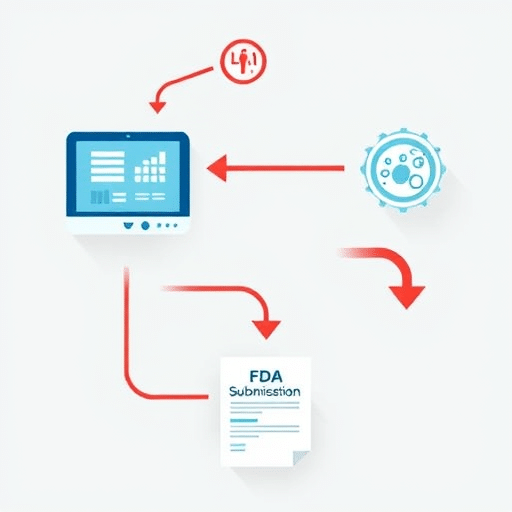
The rise of digital twin–powered DTx is transforming how clinicians and developers design and deliver digital therapeutics; by creating patient-specific synthetic models, these systems can optimize dosing, predict adherence, and compress regulatory evidence while keeping patient privacy intact. In this article, we explore how synthetic patient models and federated learning make personalized, privacy-preserving DTx feasible, practical, and scalable.
What Is a Digital Twin–Powered DTx?
A digital twin–powered DTx (Digital Therapeutic) combines a virtual representation of an individual patient—a digital twin—with therapeutic software to simulate, predict, and personalize treatment. Unlike generic clinical decision-support tools, a digital twin mirrors physiological, behavioral, and environmental variables unique to a single patient, enabling the DTx to adapt in real time.
Core Components
- Patient-specific model: A multimodal profile including medical history, wearable sensor data, genomics (when available), and reported outcomes.
- Simulation engine: Physiological and behavioral models that forecast responses to interventions, dosing schedules, or engagement strategies.
- Federated learning layer: Privacy-first training across many institutions or devices so models improve collectively without centralized patient data pooling.
- Regulatory evidence pipeline: Automated, auditable records of simulation results and real-world outcomes to support submissions and post-market surveillance.
How Synthetic Patient Models Improve Personalization
Synthetic patient models are generated from aggregated, de-identified clinical patterns and then fine-tuned to individual features. These models allow DTx solutions to run “what-if” scenarios safely, predicting how a specific patient will respond to various dosing regimens or engagement nudges.
Optimizing Dosing
For therapeutics—whether software-guided medication timing or neurostimulation protocols—digital twins can test multiple dosing strategies in silico before recommending adjustments. This reduces trial-and-error in the clinic, shortens time to therapeutic effect, and can minimize adverse events by simulating patient-specific pharmacodynamic and behavioral responses.
Predicting Adherence and Behavior
Synthetic models incorporate behavioral signals (sleep, mobility, app engagement) to estimate adherence risk and pinpoint underlying causes—complex schedules, side effects, or socioeconomic constraints. Predictive insights let the DTx personalize reminders, educational content, or clinician alerts to improve sustained use and outcomes.
Federated Learning: Collective Intelligence, Local Privacy
Federated learning enables multiple healthcare providers, devices, or trial sites to collaboratively train shared models without moving raw patient data off local systems. Only model updates—carefully aggregated and often differentially private—are exchanged, producing smarter synthetic patient generators and more robust twin behaviors.
- Privacy-preserving: Local data never leaves the source; only gradients or encrypted updates are shared.
- Robustness: Models learn from diverse populations, increasing generalizability of synthetic patient models and avoiding overfitting to a single center.
- Regulatory alignment: Federated traces provide auditable provenance that supports compliance and builds trust with institutional review boards and regulators.
Compressing Regulatory Evidence with In-Silico Trials
Regulators increasingly accept in-silico evidence as a supplement to clinical trials when models are transparent and validated. Digital twin simulations can:
- Demonstrate treatment effects across varied virtual cohorts
- Explore rare adverse-event scenarios that are impractical to capture in small studies
- Provide mechanistic explanations that complement empirical trial data
By coupling real-world outcomes with synthetic trial results and federated model updates, sponsors can compress evidence-generation timelines—reducing the number of participants required for certain bridging studies while preserving scientific rigor.
Privacy, Ethics, and Trust
While synthetic models and federated training improve privacy posture, ethical safeguards remain essential. Key practices include:
- Differential privacy: Inject calibrated noise to model updates to prevent re-identification.
- Explainability: Surface interpretable model components so clinicians understand why a dosing change is recommended.
- Consent and governance: Maintain transparent patient consent processes and independent governance for model use and data sharing.
Real-World Use Cases
Concrete examples show how digital twin–powered DTx can be deployed across therapeutic areas:
- Chronic pain management: Simulate device-based neuromodulation settings and optimize stimulation patterns personalized to pain phenotypes.
- Mental health DTx: Tailor cognitive behavioral interventions timing and intensity based on predicted mood and adherence cycles.
- Diabetes care: Optimize insulin dosing schedules and app-driven coaching by simulating glucose dynamics under different meal and activity patterns.
Implementation Roadmap for Developers and Clinicians
- Start small: Build a minimal viable twin for a single condition using readily available sensor and EHR features.
- Validate locally: Compare in-silico predictions with short pilot cohorts before federating across sites.
- Adopt federated learning: Partner with a few institutions to share model updates and expand the synthetic patient generator’s diversity.
- Engage regulators early: Co-design validation plans and data provenance methods to ensure in-silico evidence is accepted in submissions.
- Scale ethically: Implement formal governance, differential privacy, and explainability to maintain patient trust as scope grows.
Challenges and Future Directions
Several hurdles must be addressed for widespread adoption:
- Model validation: Demonstrating that digital twins reliably predict individual outcomes across diverse populations remains nontrivial.
- Standards and interoperability: Common data models and APIs are required for federated training and twin portability.
- Clinical workflow integration: Recommendations must be delivered in ways that fit clinician and patient routines without increasing burden.
Looking forward, advances in multimodal modeling, secure multi-party computation, and consensus regulatory frameworks will accelerate adoption and expand the therapeutic reach of digital twin–powered DTx.
Conclusion
Digital twin–powered DTx—combining synthetic patient models with federated learning—offers a compelling path to truly personalized, privacy-preserving digital therapeutics that optimize dosing, predict adherence, and streamline regulatory evidence generation. With careful validation, robust governance, and clinician partnership, these systems can improve outcomes and lower the cost and time of bringing safer, more effective DTx to patients.
Ready to explore how digital twin–powered DTx can transform your therapeutic program? Contact a specialist to discuss a pilot.