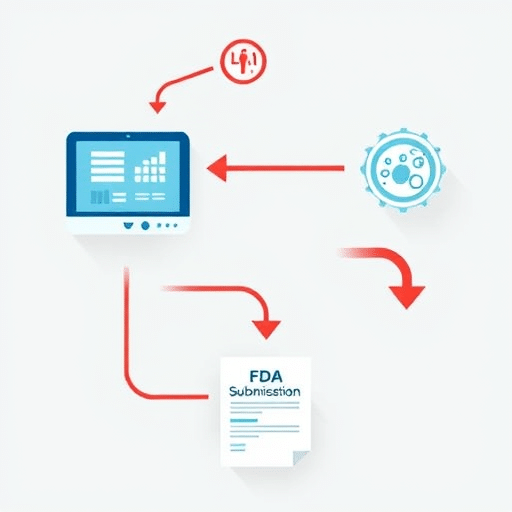
The promise of Ambient Biomarkers: Turning Smart Home Sensor Streams into Regulatory-Ready Clinical Endpoints is compelling—passive behavioral signals collected from everyday living spaces can objectively reflect health status, detect changes early, and complement traditional clinical measures. This article outlines a pragmatic, patient-centered roadmap to validate passive behavioral signals, align them to meaningful outcomes, and navigate privacy and regulatory hurdles so these novel endpoints can support trials, label claims, and clinical care.
Why ambient biomarkers matter
Ambient biomarkers—derived from motion sensors, door contacts, power usage, acoustics, and wearable proximity—offer continuous, low-burden measurement of behaviors such as mobility, sleep patterns, social engagement, and activities of daily living. Unlike active assessments, passive monitoring reduces participant burden and captures ecologically valid data that better reflect real-world functioning. For regulators, the potential is to create endpoints that are reliable, reproducible, and meaningful to patients and clinicians.
How regulators view digital and ambient biomarkers
Regulatory agencies like the FDA and EMA evaluate new endpoints on analytic validity, clinical validity, and clinical utility. Ambient biomarkers must demonstrate that the signal is measured accurately, correlates with a clinical concept of interest, and meaningfully informs decisions about treatment or care. Transparency, pre-specified analysis plans, and patient-centered outcome alignment are critical to gaining regulatory confidence.
A stepwise roadmap to regulatory-ready ambient biomarkers
1. Define the clinical concept and patient-centric outcome
- Start with the clinical question: What symptom, function, or event will the ambient biomarker reflect (e.g., early decline in mobility, nocturnal wandering, social isolation)?
- Engage patients and caregivers early to ensure the chosen outcome is relevant, understandable, and meaningful.
- Map the ambient signals to established clinical scales or patient-reported outcomes (PROs) to create anchor measures for validation.
2. Sensor selection and study design
Choose sensors that balance signal quality, intrusiveness, cost, and maintainability. Design prospective studies that collect ambient streams alongside gold-standard measures (e.g., clinical gait assessments, actigraphy, clinician ratings) across diverse real-world settings to capture variability.
- Standardize sensor placement and calibration procedures.
- Include heterogeneous populations to ensure generalizability (age, comorbidities, housing types).
- Document data loss, outages, and environmental confounders.
3. Analytic validation: from raw streams to robust features
Transform raw sensor data into interpretable features using transparent, reproducible pipelines. Analytic validation should show that algorithms reliably extract features (e.g., room transition counts, gait cadence) across devices and environments.
- Report performance metrics (sensitivity, specificity, ICC, test-retest reliability) with confidence intervals.
- Version-control preprocessing and feature-extraction code and publish model specifications where possible.
- Use simulated or bench tests to characterize limits of detection and failure modes.
4. Clinical validation and anchoring
Demonstrate that ambient features correlate with clinical anchors and predict meaningful outcomes (hospitalization, functional decline, PRO change). Use longitudinal cohorts to quantify effect sizes, minimally important differences (MIDs), and responsiveness to change.
- Pre-specify statistical models and sensitivity analyses.
- Perform external validation in independent cohorts or sites.
- Where possible, run bridging studies to translate research-grade sensors to consumer devices.
5. Endpoint qualification and regulatory engagement
Construct a qualification package that links analytic validity, clinical validity, and patient relevance. Early and iterative engagement with regulators (e.g., FDA Q-Sub, scientific advice meetings) reduces uncertainty and helps align evidentiary expectations.
- Prepare a clear narrative: what is measured, how, and why it matters.
- Provide pre-specified analysis plans and simulation studies to show robustness.
- Be ready to propose risk-based mitigations for missing data and algorithm updates.
Privacy, ethics, and data governance
Ambient monitoring raises privacy concerns because sensor streams can reveal daily routines and sensitive behaviors. Building trust requires privacy-by-design, transparent consent, and strong governance.
- Limit raw audio/video capture; prefer derived features and edge processing where raw data is immediately transformed or discarded.
- Use de-identification, robust encryption at rest and in transit, and role-based access controls.
- Offer granular consent choices and easy withdrawal pathways for participants.
- Document data provenance, retention policies, and third-party vendor practices.
Technical and operational considerations
- Interoperability: adopt standards (FHIR, Open mHealth) for exchanging derived features and metadata.
- Reproducibility: publish code, test datasets, and algorithm specifications where possible while protecting privacy and IP.
- Monitoring: implement continuous quality monitoring for sensor drift, firmware updates, and environment changes.
- Bias mitigation: evaluate performance across demographic and socioeconomic subgroups to detect and correct algorithmic bias.
Common challenges and practical mitigations
Key challenges include variability across homes, sensor failures, participant adherence to network maintenance, and shifting regulatory expectations. Practical mitigations include redundancy in sensing modalities, remote health-technology support, robust imputation strategies, and piloting endpoints in adaptive trials.
Collaborating with stakeholders
Successful qualification of ambient biomarkers requires multidisciplinary collaboration: engineers and data scientists for signal work, clinicians for anchoring, patients for relevance, ethicists for governance, and regulatory experts for strategy. Consider consortia or public–private partnerships to share datasets and harmonize methods.
Ambient biomarkers derived from smart home sensor streams can become regulatory-ready clinical endpoints, but only through rigorous analytic and clinical validation, patient-centered design, transparent governance, and early regulatory dialogue. The roadmap above offers a pragmatic path to translate passive behavioral signals into endpoints that are reliable, meaningful, and actionable.
Conclusion: Turning smart home sensor streams into regulatory-ready ambient biomarkers is achievable with careful planning, stakeholder engagement, and rigorous validation; these endpoints can enhance clinical trials and patient care by providing continuous, low-burden measures of real-world functioning. Ready to explore building a validation plan for your study? Contact a regulatory or digital-health specialist to start mapping sensors to outcomes today.