If you have ever watched a promising diagnostic algorithm move from a Jupyter notebook to a stalled institutional review board (IRB) submission, you already understand the quiet crisis unfolding inside healthcare innovation pipelines. Industry analyses suggest that roughly 60% of healthcare AI pilots stall at the IRB approval stage, never reaching the clinical validation phase that would prove their real-world value. The bottleneck is rarely the model. It is the gap between what a data science team produces and what a hospital’s ethics committee, legal department, and clinical leadership are prepared to sign off on. In 2026, with regulators sharpening their focus on algorithmic transparency and patient safety, closing that gap has become a strategic priority rather than an administrative afterthought.
The Real Reasons Pilots Stall Before They Begin
IRB committees exist to protect patients, not to vet algorithms, and that mismatch shapes nearly every rejection. Most submissions arrive under-prepared because teams underestimate what “human subjects research” means once a model touches clinical data, even retrospectively.
- Retrospective data is still human subjects research. Many teams assume that using de-identified historical records sidesteps IRB oversight. It does not, especially when outputs eventually influence care or are published as generalizable knowledge.
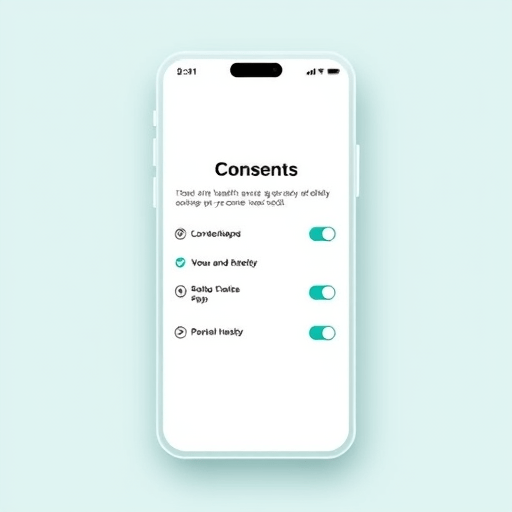
- Consent language was never designed for AI. Broad consent forms rarely explain automated decision support, secondary use of imaging, or model retraining, which triggers full board review rather than expedited pathways.
- Algorithmic transparency is now a reviewable risk. Reviewers are asking how the model handles missing inputs, what its performance is across subgroups, and how clinicians will interpret its outputs. Vague answers delay, not accelerate, approval.
- Data security and governance gaps surface late. Questions about data provenance, Business Associate Agreements, and Health Insurance Portability and Accountability Act compliance often emerge only during review, forcing resubmission.
What “Fast-Track Clinical Validation” Actually Means in 2026
The phrase “fast-track” is sometimes misused as shorthand for skipping rigor. In practice, it means compressing timelines by designing for review from day one, then leveraging the modernized pathways regulators and institutions have quietly rolled out.
The 2026 Regulatory Landscape Favors Prepared Sponsors
Several developments have reshaped what is possible for AI clinical validation this year. The U.S. Food and Drug Administration’s Predetermined Change Control Plans, finalized guidance on lifecycle management for AI-enabled devices, and updated Good Machine Learning Practice principles give sponsors a clearer blueprint than existed even eighteen months ago. On the institutional side, many academic medical centers now operate parallel “informatics” and “regulatory” pre-review tracks that can shave weeks off formal IRB timelines when protocols arrive tightly scoped and well documented.
Risk Stratification Is the Hidden Accelerator
Not every AI pilot carries the same risk profile. A model that triages radiology worklists carries different obligations than one that autonomously adjusts medication doses. Stratifying your pilot into the lowest appropriate risk category — for example, “clinical decision support” rather than “diagnostic” — can move a submission from full board review to expedited review, which often means the difference between a two-month wait and a two-week turnaround.
A Pre-Submission Checklist That Actually Works
The fastest approvals share a common trait: they treat the IRB submission as a deliverable from the first sprint, not a final hurdle. Before drafting a protocol, address these elements.
1. Map the Data Lifecycle Before You Touch a Single Record
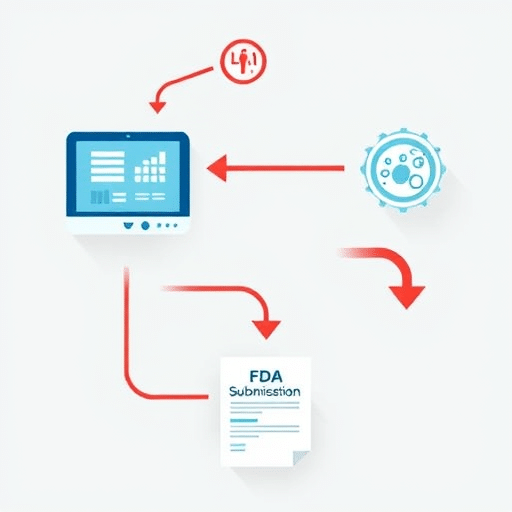
Document where data originates, how it is de-identified, where it is stored, who can access it, and when it is destroyed. Reviewers want a narrative they can follow without asking clarifying questions. A one-page data flow diagram embedded in the protocol consistently correlates with faster approvals.
2. Define the Clinical Question in One Sentence
“Can our model predict 30-day readmission with sufficient accuracy to be useful for discharge planning?” is reviewable. “We want to explore machine learning on our EHR data” is not. Specificity forces the team to choose a primary endpoint, sample size, and statistical plan, which in turn signals seriousness to the committee.
3. Address Subgroup Performance Proactively
Equity audits are no longer optional in 2026. Include disaggregated performance metrics by sex, age, race, and relevant comorbidity where the sample supports it. If the sample is too small, say so explicitly and describe mitigation, such as prospective enrollment to balance subgroups. Silence on this point is one of the top reasons boards send submissions back for revision.
4. Pre-Negotiate Clinical Workflow Integration
Reviewers increasingly ask whether clinicians will actually use the output. A signed letter from the relevant department chair, describing intended use and how alerts or recommendations will be presented, removes ambiguity. It also signals institutional buy-in, which committees weigh heavily when assessing risk.
5. Build a Monitoring Plan, Not Just a Validation Plan
Clinical validation answers whether a model works in the studied population. Monitoring answers whether it continues to work after deployment. Outline post-market surveillance metrics, drift detection thresholds, and a defined process for suspending use if performance degrades. Committees view this as evidence that the team understands the algorithm is not “finished” at deployment.
Choosing the Right Validation Pathway
Three validation pathways dominate the 2026 landscape for healthcare AI, each suited to different risk levels and timelines.
Retrospective Validation With Prospective Oversight
Useful for low-risk decision support tools. The model is locked, run on historical data, and its outputs are reviewed by clinicians blinded to ground truth. This pathway is fastest when the dataset is already governed under an existing IRB protocol, such as a deidentified research repository.
Silent Mode Prospective Validation
The model runs in the background of live clinical workflow, generating predictions that are logged but not displayed to care teams. This provides real-world performance data without influencing care, which many IRBs consider lower risk than interventional studies. Silent mode has become the workhorse for academic groups validating sepsis, deterioration, and imaging triage models.
Randomized Clinical Workflow Trial
Reserved for higher-risk applications where outputs directly modify treatment. These require full board review, often with data safety monitoring, but they produce the strongest evidence and unlock reimbursement pathways. Reserve this option for pilots with a credible route to commercialization or system-wide adoption.
Common Mistakes That Send Pilots Back to Square One
Even experienced teams repeat a handful of errors that reliably add three to six months to clinical validation. Recognizing them in advance is the cheapest way to accelerate.
- Treating the IRB protocol as a research grant application. Reviewers want feasibility and safety, not novelty. Cut the literature review.
- Using boilerplate consent language. Custom consent text that names the model, the data, and the intended use builds trust and shortens the consent negotiation phase.
- Failing to declare conflicts. If a vendor funds the study, disclose it early. Hidden conflicts surface during review and derail timelines.
- Skipping a biostatistician. Sample size justification and analysis plan errors are among the top reasons protocols are sent back for revision.
- Ignoring local context. A protocol that worked at one institution rarely ports cleanly. Local context, including patient population, EHR configuration, and clinical workflow, must be addressed explicitly.
What Success Looks Like After Approval
Approval is not the finish line; it is the start of evidence generation. Teams that plan for the post-approval phase from the outset tend to publish sooner, secure follow-on funding, and move toward deployment with fewer surprises. Set internal milestones for prospective validation, model performance reporting, and stakeholder communication before the IRB letter arrives. The teams that treat clinical validation as an ongoing program, rather than a one-time gate, are the ones whose pilots survive contact with clinical reality.
Conclusion
The 60% stall rate at IRB approval is not a mystery. It reflects a mismatch between how AI is built and how clinical research is reviewed. Closing that mismatch requires front-loading governance, choosing the lowest-risk validation pathway that still answers the clinical question, and treating the IRB submission as a core project deliverable. In 2026, the institutions and vendors that master this discipline will move from endless pilots to deployed, validated tools that actually reach patients. Those that continue to treat regulatory strategy as an afterthought will keep watching their best models gather dust in development environments.