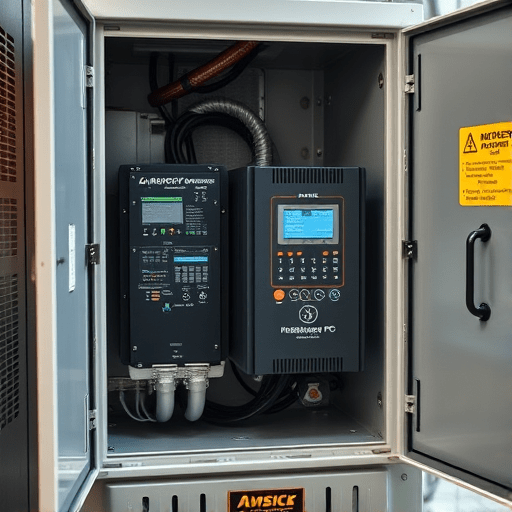
Walk into a working factory in 2026 and you might notice something surprising tucked into the equipment cabinets: not a rack of GPUs, but a fanless industrial PC running a sub-7B parameter language model. While headlines continue to fixate on ever-larger foundation models, a quieter revolution is unfolding in predictive maintenance, where lean small language models are beating their giant cousins on cost, latency, and reliability. For manufacturers still operating lines installed in the early 2010s, that shift is changing the economics of industrial AI.
The Problem With Cloud LLMs on the Plant Floor
For most of the last three years, the default playbook for AI in manufacturing has been: send telemetry to the cloud, run it through a massive language model, wait for an answer, and pray that the network connection holds. That playbook has run into three stubborn realities on legacy lines.
- Bandwidth is expensive and unreliable. Many plants operate in facilities with shared corporate networks, VPN tunnels, or limited cellular coverage. Streaming vibration, torque, and temperature streams to a remote inference endpoint introduces latency and outages that maintenance teams cannot tolerate.
- Data residency is non-negotiable. Process recipes, calibration values, and defect descriptions are often considered trade secrets or are subject to contractual restrictions with OEM partners. Air-gapping AI inference has become a procurement requirement, not a nice-to-have.
- Latency budgets are measured in milliseconds. A bearing failure announcement two seconds after the event has limited value. Maintenance crews want warnings before the vibration signature crosses a threshold, not after.
These constraints have pushed engineers toward smaller models that can live on-premises, run on modest hardware, and still speak the fluent, context-aware language that technicians expect.
What “Sub-7B” Actually Means in a Maintenance Context
A sub-7B model is any language model with fewer than seven billion parameters, often distilled, quantized, or fine-tuned from a larger base. In the predictive maintenance world, that typically lands somewhere in the 1.5B to 6B range, where modern quantisation techniques (INT4 and INT8) allow full inference on a single consumer-class GPU, an industrial Jetson module, or even a well-cooled CPU server.
These models are not generalists in the marketing sense. They are heavily fine-tuned on three streams of data:
- Equipment manuals and service bulletins for specific machine families, often supplied as PDFs that are parsed and chunked during a one-time ingestion step.
- Historical work orders and technician notes, which capture the messy human language of “sounded rough, swapped belt, looked fine” alongside the structured failure codes.
- Time-series telemetry transcripts, where sensor readings are converted into natural-language summaries that an LLM can reason about alongside the documentation.
The result is a model that knows the difference between a Husky Injection Molding Machine and a Husqvarna chainsaw, can quote torque specs from a 2014 service manual, and can summarise twelve hours of PLC logs into a paragraph a shift supervisor can act on.
The Cost-Benefit Math, Without the Marketing
Cost comparisons across vendors are notoriously slippery, but some numbers are consistent enough to be useful. A rough order-of-magnitude breakdown for a mid-sized plant with 50 critical assets might look like the following:
Upfront Investment
- Large cloud LLM stack: $150K-$400K for integration, plus recurring spend on embeddings, vector storage, inference API calls, and a fallback connection.
- Sub-7B on-premises stack: $25K-$60K for a single industrial server, a one-time fine-tuning engagement, and ingestion of historical records.
Ongoing Operating Cost
- Cloud LLM: Per-token inference fees, plus egress costs that scale with the number of monitored assets. A noisy plant generating millions of events per day can rack up significant monthly bills.
- Sub-7B on-premises: Electricity, occasional retraining (quarterly or after major equipment changes), and a part-time MLOps engineer. Most plants report monthly operating costs between five and fifteen times lower.
Hidden Savings
The line items that rarely make it into vendor pitches are often the biggest. Plants running on-premises small models report gains in three areas:
- Reduced unplanned downtime. Faster local inference means warnings arrive while there is still time to schedule an intervention, not during a weekend overtime call.
- Lower integration overhead. Because the model lives inside the plant network, there is no need to build a hardened gateway, deal with two-way TLS through a corporate firewall, or maintain SOC2-compliant logging of every prompt.
- Knowledge retention. When a veteran maintenance technician retires, their work-order notes and shop-floor lore can be folded into a retraining run, keeping institutional knowledge inside the model.
Where Small Models Still Struggle
It would be misleading to pretend the trade-offs disappear entirely. Sub-7B models have real limits that are worth naming.
First, reasoning depth on ambiguous faults is weaker. A 70B-parameter model can sometimes chain through “the vibration spectrum suggests imbalance, but the oil analysis suggests wear, and the temperature trend suggests misalignment” in a way that a distilled 3B model cannot. Engineers who deploy small models compensate by routing the hardest cases back to a human or a larger remote model.
Second, multilingual support is patchier. Plants with mixed-language workforces, especially across Eastern European or Southeast Asian supplier networks, may find that a small model fine-tuned on English documentation underperforms for technicians who write notes in other languages.
Third, the long tail of equipment models is genuinely long. A specialty bottling line or a 1990s-era CNC machine may simply lack the training data to ground a 6B model confidently.
The 2026 Deployment Pattern That Is Emerging
The pattern taking shape across early adopters looks less like a single model and more like a layered system:
- Edge tier: A sub-7B model running on an industrial PC at the cell or line level, handling real-time monitoring, natural-language summaries, and structured queries against local documentation.
- Aggregation tier: A plant-wide server running a slightly larger open-weight model (still under 13B) that consolidates signals across lines and flags cross-equipment patterns.
- Cloud tier (optional): Reserved for quarterly incident reviews and for the rare cases where reasoning depth justifies a remote call. Strict egress controls keep sensitive data inside the plant by default.
This layered approach mirrors the way control systems themselves are structured, from sensor to PLC to SCADA to MES. AI is finally starting to fit the architecture of the factory rather than forcing the factory to fit the AI.
What Maintenance Teams Should Evaluate Before Switching
For plant managers weighing a move toward small-model predictive maintenance in the second half of 2026, a short evaluation checklist has begun to emerge from real deployments:
- Quantify the current cost of unplanned downtime per hour and the share that better early warnings could realistically prevent.
- Audit existing documentation and work-order quality. Even the best small model cannot rescue a data archive with no failure context.
- Insist on offline benchmarking. Vendor demos running on curated data rarely match shop-floor reality.
- Plan for a six- to ten-week pilot on a single critical asset before scaling, with clear go/no-go criteria written into the contract.
- Budget for ongoing model maintenance, especially as equipment gets retrofitted or as new failure modes emerge.
Sub-7B language models will not replace experienced maintenance technicians, and they were never going to. What they are doing is giving those technicians a faster, cheaper, more private way to ask questions of every sensor and every page of every manual on the floor. For an industry that has spent a decade trying to bolt cloud AI onto equipment that predates the smartphone era, that alignment finally looks like progress.