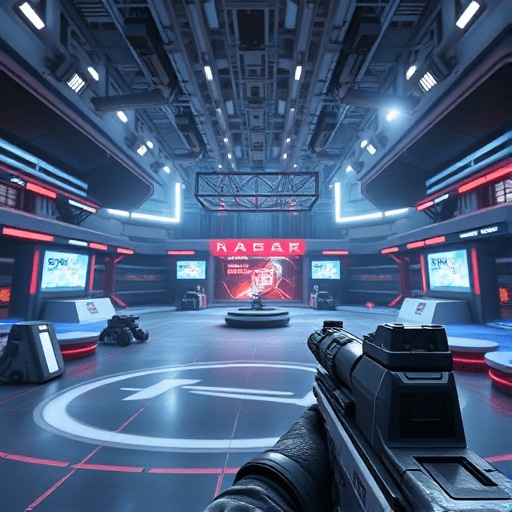
The rise of persistent-arena MMOs is reshaping expectations for first-person shooters: persistent-arena MMOs blend twitch FPS combat with long-term territorial control, player economies, and emergent politics to create matches that feel like chapters of an ongoing war. Instead of discrete rounds where leaderboards reset, these games layer moment-to-moment skill onto meta-level strategy that evolves over weeks or months, rewarding both mechanical mastery and strategic coordination.
What are Persistent-Arena MMOs?
Persistent-arena MMOs are multiplayer shooters that combine fast-paced, skill-based encounters with a persistent world state. Players still engage in high-intensity firefights—sprinting, aiming, and outmaneuvering opponents—but their actions also influence larger systems: which faction controls a region, how resources are distributed, which players rise to leadership positions, and what the in-game economy looks like over time.
Key characteristics
- Twitch FPS combat: Tight input-to-response mechanics, precise aiming, and reflex-driven engagements remain central.
- Persistent territorial control: Zones, bases, or extraction points remain under faction control between sessions and can be contested over extended campaigns.
- Player-driven economies: Crafting, resource gathering, trade hubs, and taxation systems evolve from player activity.
- Emergent politics: Alliances, betrayals, leadership elections, and meta-level diplomacy arise organically.
Why the hybrid works
Pairing twitch combat with persistence amplifies both thrills and stakes. The immediacy of shooting keeps sessions exciting and accessible, while the persistent consequences give player decisions weight beyond a single match. A well-executed hybrid turns a clutch play into a turning point for a campaign and makes logistics and strategy as impactful as marksmanship.
Player motivations satisfied
- Short-term gratification: Kills, clutch plays, and mechanical improvement in every session.
- Long-term investment: Building an economic foothold, influencing territory, and shaping a legacy.
- Social dynamics: Forming crews, negotiating alliances, and participating in emergent governance.
Design trade-offs developers must address
Integrating persistence into an FPS framework introduces hard design choices. Three of the most consequential areas are matchmaking, progression, and monetization—each affects fairness, retention, and the health of the emergent meta.
Matchmaking vs. meaningful persistence
- Skill parity vs. meaningful stakes: Strict ELO-style matchmaking keeps firefights fair but can isolate veteran factions from newcomers. Open persistence encourages mentorship but risks discouraging new players facing seasoned squads.
- Solutions: layered matchmaking—mixing skill-curated skirmish queues with open-world objectives—and sandbox spaces where outcomes affect meta-level progress only if specific conditions are met.
Progression systems
- Grinding vs. competence: Long-term upgrades should reward engagement without turning matches into pay-to-win funnels or time-sinks that alienate casual players.
- Balanced designs: horizontal progression (new tools/styles) rather than raw power increases, limited seasonal resets, and prestige systems that retain accomplishments without permanent dominance.
Monetization and fairness
- Cosmetics vs. impact: Cosmetic monetization preserves competitive integrity, but players often demand convenience or progression boosts.
- Ethical approaches: optional battle passes focused on cosmetics, vendor systems fueled by in-game currency, and transparent monetization roadmaps to avoid community backlash.
Emergent economies and politics: the living layer
Persistence transforms supply-and-demand into an in-game lifeblood. Resource nodes that respawn, player-run vendors that set prices, and logistics chains that ferry supplies create opportunities for entrepreneurs and griefers alike. Political systems—whether simple war councils or fully player-run governance—seed drama and personal stories.
Examples of emergent systems
- Black markets: Players corner rare drops and sell exclusives to allies or profit from speculation.
- Logistics warfare: Sabotaging supply lines becomes a strategic play that changes frontline compositions.
- Diplomacy and treaties: Temporary non-aggression pacts, tribute arrangements, and declared alliances shape who fights whom.
Balancing player freedom and healthy ecosystems
Too much freedom invites monopolies and toxic behavior; too much control kills emergent storytelling. Successful persistent-arena MMOs use light-handed governance—server rules, consequence systems, and community tools—to let players create narratives without allowing a handful to dominate indefinitely.
Practical mechanics
- Decay mechanics: Territory and leader bonuses degrade if not actively defended to prevent stagnation.
- Anti-monopoly taxation: Soft caps on resource hoarding and dynamic spawn balancing that favors under-contested zones.
- Criminal justice: Bounties, reputation systems, and adjudication tools that incentivize accountability over unchecked griefing.
Future trends and opportunities
As cloud tech and server orchestration improve, expect even larger persistent theaters with cross-server politics, deeper economic simulation driven by AI, and more nuanced leaderboards that reward diplomacy and logistics as much as combat. Cross-platform persistence, procedural regions, and player-created content will further blur the line between match and campaign.
For players and designers
Players should embrace hybrid games with a long-view mindset: learn teamwork, trade skills, and value meta-contributions as much as raw KD. Designers should prioritize match fairness, ethical monetization, and systems that let players tell stories—because the strongest hook of persistent-arena MMOs is the living, evolving world they create together.
Persistent-arena MMOs are not just about winning a match; they’re about shaping history.
Conclusion: The fusion of twitch FPS combat with persistent territorial and economic layers creates experiences that reward both reflexes and long-term thinking; design choices around matchmaking, progression, and monetization will determine whether these evolving wars become enduring communities or fleeting spectacles.
Ready to explore a persistent battlefield—jump in, find a faction, and start shaping the next campaign.