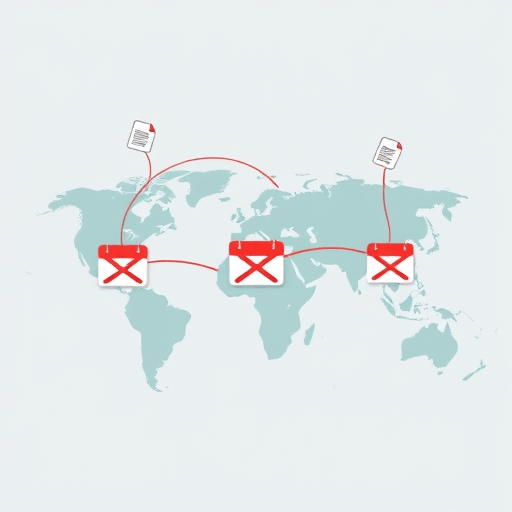
For early-stage founders scaling across time zones, meetings have quietly become the most expensive line item on the calendar. Every synchronous huddle burns hours of focused work, fragments context, and slows the very execution it claims to protect. The shift toward async decision-making frameworks for distributed startup teams isn’t a productivity fad; it’s a structural answer to a problem that grows worse with every new hire in a new city. In 2026, the startups pulling ahead aren’t running fewer meetings because they’re disciplined; they’re running fewer because they’ve built systems where decisions move forward while everyone sleeps.
Why Meeting Overload Quietly Kills Early-Stage Velocity
Founders tend to underestimate the compounding cost of synchronous communication. A 30-minute standup with six people isn’t 30 minutes of work, it’s 3 hours of calendar real estate. Multiply that across product reviews, planning sessions, retrospectives, and ad-hoc syncs, and a four-person team can easily spend a full workday per week in meetings before shipping a single feature.
The deeper problem is decision latency. When approval paths require a live conversation, a question raised at 4 PM in San Francisco doesn’t get answered until the European team logs on the next morning. By then the context has cooled, the asker is blocked, and someone else has reinvented the wheel in isolation.
Async frameworks flip this. Decisions become artifacts, not moments. They persist, they get linked, they create a searchable record of why something shipped the way it did.
The Three Layers of an Async Decision Stack
Designing async decision-making frameworks for distributed startup teams works best when you think in layers. Each layer has a default mode, an escalation path, and a clear owner.
Layer 1: Reversible Defaults (Auto-Approve)
The fastest decisions are the ones you don’t need to make explicitly. If a choice is reversible within a week and under a defined cost threshold, ship it, log it in a decision ledger, and move on. PR titles, copy edits, internal tooling tweaks, and minor roadmap reorderings all live here.
The discipline is writing down what’s reversible and what’s not. Without that list, every team member defaults to asking permission because the blast radius of a wrong guess feels unbounded.
Layer 2: Async Proposal Loops (Decide in Writing)
For decisions that are hard to reverse but don’t require a live debate, use a written proposal. A good proposal has four ingredients:
- Context: the problem in two or three sentences.
- Options considered: at least two, including the status quo.
- Recommendation: a single preferred path with reasoning.
- Decision deadline: a hard timestamp, typically 24 to 72 hours after posting.
Reviewers respond in-thread, attach concerns, and the decision owner either ships the recommendation or pivots based on feedback. The deadline is non-negotiable. Without it, proposals decay into endless Slack threads.
Layer 3: Synchronous Escalation (Reserved for Irreversible Calls)
Not everything should be async. Pricing changes, pivots, major hires, and architectural rewrites deserve a live conversation. The mistake is treating Layer 3 as the default. Reserve synchronous time for choices that bind the company for more than a quarter and where written back-and-forth loses nuance.
A Founder’s Blueprint for Rolling It Out
Frameworks fail not because they’re wrong but because they’re adopted like a policy drop. Treat the rollout like a product launch.
Start With a Decision Audit
For two weeks, log every decision made in your team and how it was made. Tag each with a category: reversible, proposal-worthy, or escalation. You’ll likely find that 60 to 70% of decisions were reversible but treated as escalation. That’s your wedge.
Write a Team Charter, Not a Policy
A single-page charter that names the three layers, gives examples, and lists who owns which decision category. Keep it under 500 words. Founders often over-document async practices; the document becomes the bottleneck instead of the meetings.
Pick a Default Tooling Stack
You don’t need ten platforms, you need three. Most distributed startups settle on a long-form async tool (Notion, Slab, or GitHub discussions) for proposals, a chat tool for quick reversibles, and a calendar with strict defaults for synchronous escalation. The mistake is letting team members choose tools by personal preference. Tool fragmentation is async with extra steps.
Train for Writing, Not Just Reviewing
Async only works if proposal quality is high. Run a 30-minute internal session on writing tight context blocks and constructive written feedback. Teams new to async often default to long, defensive prose that triggers equally long replies. Short, opinionated, and specific is the style to model.
Common Failure Modes to Watch For
Even well-designed async decision-making frameworks for distributed startup teams break in predictable ways. A few patterns show up again and again.
The first is decision by emoji. A proposal goes up, three people react with a thumbs-up, and the team assumes consensus. Emoji is not consent. Require an explicit “approve” or a written concern. Otherwise, ambiguity creeps back in.
The second is shadow sync. Two team members “just hop on a quick call” to “get unstuck” while the proposal sits untouched. Add up the unscheduled calls and you’ve recreated the meeting problem with worse documentation.
The third is proposal paralysis. Over-eager adoption of written reviews for every minor call creates a documentation tax that founders didn’t budget for. Re-anchor the team: most things are reversible, just ship them.
Measuring Whether It’s Working
Async is easy to romanticize and hard to measure. A few signals tell you whether the framework is actually reducing meeting overload.
- Meeting hours per engineer per week: aim to drop below 4 hours as the team scales past 10 people.
- Proposal cycle time: median time from proposal posted to decision shipped should trend below 48 hours.
- Decision re-litigation rate: how often a decision gets reopened within 90 days. A healthy framework keeps this below 10%.
- Async-to-sync ratio: track decisions made in writing versus decisions made on calls. Early-stage teams often flip from 30/70 to 70/30 within a quarter.
What Changes When the Framework Sticks
The visible win is fewer meetings. The deeper win is that hiring gets easier. Distributed candidates now expect mature async practices. A documented framework signals that your team respects their time across time zones, which is one of the strongest signals of operational maturity a startup can send.
Product quality tends to improve too. When decisions live in writing, new hires onboard faster. They don’t have to reconstruct the ghost logic of every architectural choice; the proposal that justified it is still in the archive.
Designing async decision-making frameworks for distributed startup teams is less about tooling and more about rewriting the social contract inside the company. Decisions stop being events and start being artifacts. Meetings stop being default and start being reserved. And founders get back the focused hours they need to build the next thing instead of coordinating the thing they’re already building.