Kubernetes namespaces are supposed to bring order to multi-tenant clusters, yet they often become the epicenter of sprawl. Teams create namespaces with arbitrary names, missing labels, and no resource boundaries. Before long, a single noisy workload can starve the entire cluster. You already know the solution isn’t another dashboard or a weekly review—it’s automation. If you want to stop Kubernetes namespace chaos with OPA Gatekeeper and define multi-tenancy limits and audit policies in under an hour, this guide walks through a concrete approach that works in today’s complex environments.
Why Namespace Governance Is the Real Challenge in Multi-Tenant Clusters
Namespaces are a convenient abstraction, but they don’t enforce anything on their own. A namespace is simply a folder. Without policies, any user with cluster access can create a namespace named “production” or “test” and deploy workloads that consume unlimited CPU and memory. Even with RBAC in place, namespace-level guardrails are often missing or inconsistently applied.
The problem becomes acute in shared clusters where several teams run different applications. Resource quotas exist, but they must be attached to every namespace manually. Labels and annotations—critical for cost allocation, ownership, and operational tooling—are frequently omitted. The result is a cluster that becomes a black box of ad-hoc configuration.
OPA Gatekeeper: The Missing Control Plane for Namespace Policies
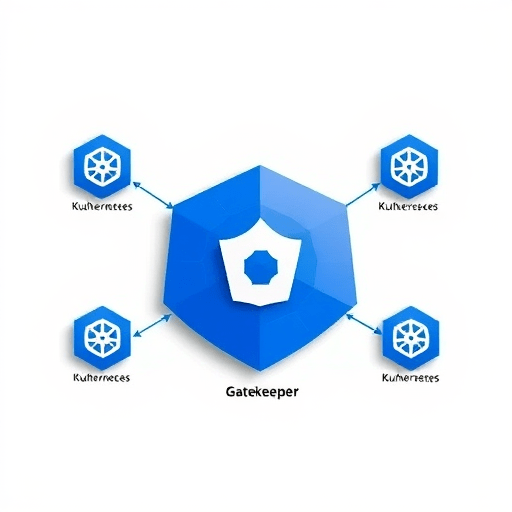
Open Policy Agent (OPA) Gatekeeper is a Kubernetes admission controller that enforces policies before resources are persisted. It uses the OPA constraint framework to define reusable policy templates, which are then instantiated via Constraint objects targeting specific kinds of resources—including namespaces.
Gatekeeper does not replace RBAC or resource quotas. Instead, it adds a policy layer that can validate, mutate, and audit. For multi-tenancy, this means you can enforce naming conventions, require ownership labels, mandate default resource limits, and block unsafe namespace deletions—all from a central policy repository.
The best part? You can run Gatekeeper in audit mode first to see what would be blocked without actually enforcing anything. That makes it an ideal tool for gradual adoption.
Define Multi-Tenancy Limits with Constraint Templates
To stop namespace chaos, you need to encode your tenant boundaries as policy. Gatekeeper uses ConstraintTemplates to define the logic, and Constraints to apply that logic to specific resources.
Here is a minimal constraint template that requires every namespace to have a team label and a environment label.
apiVersion: templates.gatekeeper.sh/v1
kind: ConstraintTemplate
metadata:
  name: ns-required-labels
spec:
  crd:
    spec:
      names:
        kind: NSRequiredLabels
  targets:
    - target: admission.k8s.gatekeeper.sh
      rego: |
        package nsrequiredlabels
        violation[{"msg": msg}] {
          input.review.object.kind == "Namespace"
          required := { "team", "environment" }
          missing := required - {k | input.review.object.metadata.labels[k]}
          count(missing) > 0
          msg := sprintf("Namespace is missing required labels: %v", [missing])
        }
Once the template is applied, you can create a constraint to enforce it on all namespaces.
apiVersion: constraints.gatekeeper.sh/v1beta1
kind: NSRequiredLabels
metadata:
  name: require-tenant-labels
spec:
  match:
    kinds:
      - apiGroups: [""]
        kinds: ["Namespace"]
  parameters:
    labels: ["team", "environment"]
But labels are only one dimension. Multi-tenancy also demands resource limits. You can define a constraint that requires every namespace to include a ResourceQuota with specific CPU and memory limits. That way, tenants cannot create unbounded workloads.
Audit Existing Namespaces Before Enforcing Policies
Rolling out policies blindly is risky. A namespace that has run for months without the required labels could suddenly be rejected during an upgrade. This is why Gatekeeper’s audit capability is a superpower.
Gatekeeper constraints support a spec.enforcementAction field. Setting it to dryrun lets you log violations without blocking requests. You can also set it to warn to provide a warning while still allowing the resource. Only deny will actually stop the request.
To audit your entire cluster, simply apply constraints with enforcementAction: dryrun and query the status:
kubectl get constraints --all-namespaces # or use kubectl get nsrequiredlabelsGatekeeper writes audit results to the constraint’s status.violations field. You can then generate a report of every namespace that violates your multi-tenancy policy. This gives you a data-driven cleanup list—no more guessing which teams forgot to add labels.
Define Multi-Tenancy Limits with NamespaceSelectors and Parameterized Constraints
Not every namespace needs the same treatment. System namespaces like kube-system or gatekeeper-system should be exempt from tenant policies. Gatekeeper allows you to combine namespaceSelector and labelSelector in the constraint’s match block.
For example, a constraint that requires a resource quota can be scoped to only namespaces with the label tenant: true. This avoids breaking cluster infrastructure while still providing tenancy controls.
spec:
  match:
    kinds:
      - apiGroups: [""]
        kinds: ["Namespace"]
    labelSelector:
      matchLabels:
        tenant: "true"
You can also parameterize constraints to allow different limits for different tenant tiers. The same template can accept a cpuLimit and memoryLimit parameter, and the constraint can specify values per tier (e.g., gold, silver, bronze). This is the difference between static checks and a real multi-tenancy policy engine.
Audit Policies That Go Beyond Admission
Auditing is not just about what gets created. It is also about what already exists. Gatekeeper’s audit cycle runs every 60 seconds by default, reviewing all live resources against constraints. This continuous feedback loop enables you to detect drift—when someone changes a namespace label or deletes a resource quota after creation.
For a complete audit trail, integrate Gatekeeper’s violation logs with your existing observability stack. You can export logs to Elasticsearch, Loki, or any SIEM. This transforms a simple admission controller into a compliance tool that supports your multi-tenancy governance requirements.
Another overlooked value is using audit in the development phase. When a new team wants to join the cluster, you can run a dry-run policy set against their planned namespaces before giving them access. This allows you to enforce standards without slowing down delivery.
A Practical Path to Policy-as-Code in Under an Hour
You can achieve a meaningful multi-tenancy policy layer in less than an hour if you focus on the highest-impact items. Here is a structured approach:
- Install Gatekeeper using the official Helm chart or static manifests. The default installation includes a webhook and an audit controller.
- Create two constraint templates: one for required labels, one for resource quotas.
- Apply constraints in dryrun mode and review violations. This will show you the state of your cluster in minutes.
- Refine the match criteria to exclude system namespaces and target only tenant-owned namespaces.
- Enable enforcement gradually, starting with the label requirement, then the resource quota requirement.
If you commit your constraint templates to a Git repository and use a GitOps delivery tool like ArgoCD or Flux, you get version-controlled policy history and automatic synchronization. This is the core of policy-as-code, and it fits naturally into your existing Kubernetes workflows.
Stopping Kubernetes Namespace Chaos in Practice
Once the policies are in place, the impact is immediate. New namespaces cannot be created without the correct labels. Resource quotas are always attached. The audit log gives you a recurring report of any namespace that drifts from policy. Your cluster becomes self-governing.
The key is to treat Gatekeeper as a platform, not a one-off script. With a few reusable templates, you can encode all your multi-tenancy limits and audit policies and apply them across many clusters. The same templates can be extended to cover pod security, network policies, and even cost controls.
If you are already struggling with namespace sprawl, the hour you spend defining these constraints will pay back many times over in reduced incidents and cleaner operations.
Conclusion
Kubernetes namespace chaos does not have to be inevitable. By using OPA Gatekeeper to define multi-tenancy limits and audit policies, you can turn a noisy cluster into a governed environment in under an hour. The combination of constraint templates, dryrun auditing, and gradual enforcement gives you a safe, repeatable way to scale shared Kubernetes infrastructure without losing control.