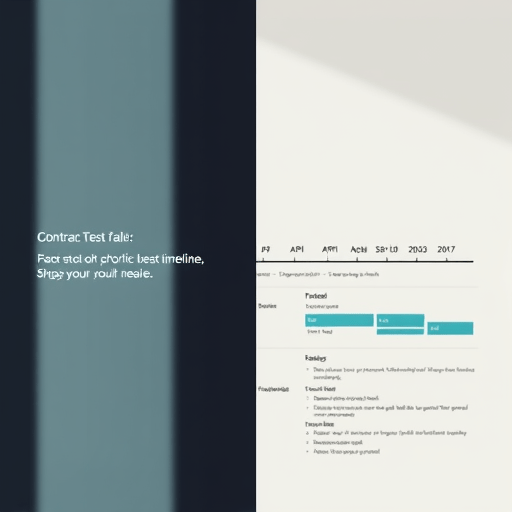
When teams compare contract testing vs E2E testing, the conversation usually starts with test pyramid ratios. But in 2026, the more important angle is regression detection latency: how quickly does a broken change surface, and how much effort does it take to diagnose? Contract testing shifts the focus to the API boundary, where most integration regressions actually begin. It catches API breaks before UI tests fail, and it does so with less flakiness, shorter feedback loops, and clearer blame assignment.
This is not an argument for deleting your end-to-end suite. It is an argument for rebalancing it. If you only rely on E2E to catch regressions, you are waiting for the slowest, noisiest, and most expensive signal in your entire quality system.
Why E2E Regression Suites Are Late by Design
End-to-end tests simulate a real user journey: open a page, log in, interact with UI elements, and verify results. That makes them valuable for proving that the whole system works together. But they are not shift-left. They sit at the end of the delivery pipeline, and every layer of the stack has to be deployed and integrated before the test can even start.
When a provider API removes a required field, a UI test will not notice until the user triggers the call and sees an unexpected response. The failure message often says something vague, like “expected text not found” or “request failed with 500.” Then the debugging journey begins. You have to trace through browser logs, network tabs, service logs, and recent deploys just to discover that a contract broke two merged pull requests ago.
That is not catching a regression early. That is catching it at the last possible moment, after the cost of fixing it has multiplied.
The E2E Flakiness Tax
E2E suites also produce a large number of false regressions. A slow API response, a font-loading race condition, or a browser-specific CSS issue can fail a test without any contract being broken. Teams end up spending the first half of the morning triaging failures that are not regressions at all. This noise trains people to ignore green and red results, which is exactly the wrong culture for regression detection.
How API Contract Tests Catch Breaks Before UI Tests Fail
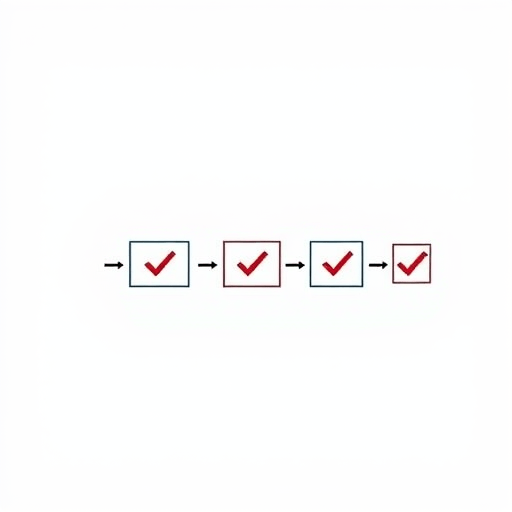
Contract testing works at the API level. A consumer defines the response shape, fields, headers, and validation rules it expects from a provider. The provider then runs its own contract verification suite against those expectations. If the provider changes something that breaks the consumer, the failure happens in CI, before a UI test ever runs.
This is the core advantage in the contract testing vs E2E debate: contract tests locate a regression to a specific API contract, and they do it in seconds. The provider can see exactly which consumer expectation is no longer satisfied. There is no need to reproduce a flaky browser session or click through a broken UI.
Modern contract testing tools also support versioned contracts and branch-based verification. That means a provider can test a proposed change against every active consumer contract without waiting for the full integrated environment to spin up. In practice, this turns merge-time checks into an early warning system.
Contract Testing vs E2E: A Regression Detection Comparison
If you measure regression detection by raw count, contract testing often catches more unique API regression risks because it can exhaustively verify every consumer-provider relationship. E2E tests only cover the journeys you wrote, and those journeys usually cover just a fraction of the API surface.
Consider the difference in three categories:
- Detection speed: Contract tests run after every provider commit. E2E tests run after a full deployment, often in a separate environment.
- Diagnosis clarity: Contract test failures tell you which endpoint changed and which consumer is affected. E2E failures tell you a user-visible behavior broke, but not which microservice caused it.
- Cost per regression: Contract tests are lightweight and parallelizable. E2E tests require browsers, fixtures, and stable test data, making them harder to maintain and more expensive to run.
That is why many teams find that contract testing catches more regressions in absolute terms, especially in backend and API changes. The gap only widens as the number of consumers grows. A mobile app, a web dashboard, and an internal admin tool may all depend on the same provider. One contract suite can cover all of them; an E2E suite would need to automate every critical journey in every client.
Not All Regressions Are Contract Regressions
It would be misleading to claim that contract testing replaces E2E for every regression class. Contract tests do not see the UI. They cannot catch a regression in accessibility semantics, keyboard navigation, visual layout, or client-side data formatting. They also cannot verify that a button triggers the expected API call in the first place. Those regressions only happen in the browser, and that is where E2E testing still earns its keep.
There is also a class of distributed system regression that contract testing does not solve: timing issues, partial failures, and infrastructure problems. If a service is slow under load or memory-constrained, both contract and E2E tests may pass while customers still see degraded behavior. You need resiliency testing and observability tooling for those cases, not another test suite.
A Practical Shift-Left Strategy That Uses Both
The strongest regression strategy for 2026 is a layered one. Contract testing becomes the first line of defense, catching API regressions before they reach integration environments. E2E testing then focuses on high-value user journeys that are likely to break due to UI logic, state management, or browser-specific behavior.
If you are planning next quarter’s quality work, consider this sequence:
- Add contract tests for every internal API interaction, especially for teams that own different services.
- Run provider contract verification as a required check in CI, before merge.
- Keep a small, curated E2E smoke suite that covers the five or ten most critical user journeys.
- Use additional E2E coverage only on journeys with complex client-side logic or visual dependencies.
- Track the regression discovery time for each suite and use it to decide where to invest next.
This approach avoids the false choice between contract testing and E2E. It also respects the reality that not all regressions are equal. API contract breaks are usually high-impact, high-blast-radius, and expensive to fix late. User-facing regressions are often more visible, but many of them are caught early by contract tests anyway because the root cause is still a changed response shape.
The Shift Left that Changes the Conversation
When someone asks which catches more regressions, the best answer is: contract testing catches more of the orchestration-level regressions, and it catches them earlier than UI tests ever could. Once the API surface is protected, the E2E suite naturally becomes smaller, calmer, and more reliable. Teams stop treating UI tests as the final judge of API health and start treating them as the last line of defense for browser-specific behavior.
The angle for this year is not “contract tests are better” or “E2E is obsolete.” It is about regression awareness. A contract test failure means you know what broke and where. An E2E failure means you know something broke, but you still have to locate the cause. In a world where services change independently and deployment speed is a competitive advantage, the later the detection, the more context has been lost.
Conclusion
Contract testing vs E2E is not a contest between two identical tools. It is a conversation about where regressions should be detected. For API breaks, contract testing catches more issues, with higher precision, and at a fraction of the cost of waiting for UI tests to fail. E2E still plays a critical role for interface-level regressions, but only after the contract layer has done the heavy lifting. Shift left with contract tests, and your E2E suite will finally have the time to focus on the things only a browser can prove.