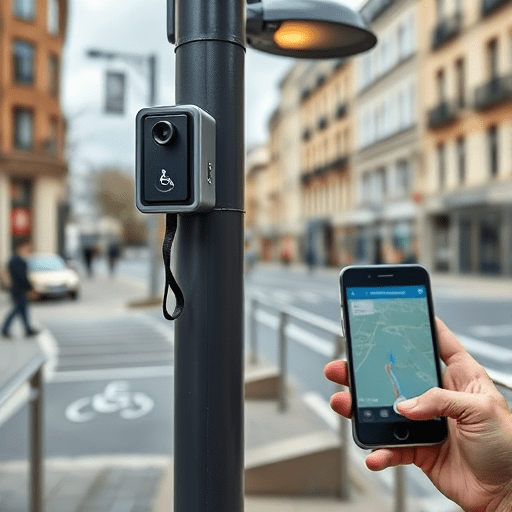
When a city deploys smart streetlights, air-quality sensors, or water-management systems, it is not simply purchasing hardware. It is entering a long-term relationship with a vendor’s cloud, APIs, firmware update cadence, and data-processing geography. As smart-city budgets are renewed in 2026, procurement teams need to know how to audit IoT vendors for city data sovereignty before signing. A weak audit can lead to cross-border data storage pitfalls, citizen data leaving the jurisdiction without legal approval, and a slow loss of control over essential urban services.
Why Data Sovereignty Now Belongs in Procurement
Data sovereignty is no longer just a question of server location. It covers who can access the data, which legal frameworks apply, how data flows to subprocessors, and whether the city can retrieve its data at the end of the contract. IoT systems make this more urgent because data is continuously generated at the edge, often processed by a vendor-managed cloud, and frequently shared with third-party analytics or support teams.
If sovereignty is not addressed in procurement, the city may inherit a system where it cannot fully enforce privacy laws, meet public-records obligations, or terminate a contract without losing historical data. In that sense, the vendor audit is not an IT due-diligence step. It is a legal and democratic safeguard. The city should define sovereignty in terms of access, control, and continuity, not just geolocation.
Before the RFP: Define What Sovereignty Means for Your City
An effective audit begins before the vendor is selected. The city must map its data landscape and decide which data categories are sensitive. Some data, such as traffic counts, may be low risk. Other data, including surveillance video, energy usage, or mobility patterns, may be subject to special legal protections. Procurement teams should identify the applicable laws, data retention periods, and permitted storage locations before issuing a request for proposal.
This becomes the yardstick for the audit. If a vendor cannot commit to those boundaries during procurement, it will not be able to do so later. Cities should also specify prohibited jurisdictions and require vendors to disclose any routing or storage that occurs outside the city’s legal authority. The more precise the procurement document, the easier the audit will be.
Key Audit Areas for Vendor Lock-In and Cross-Border Data Storage
The following areas represent the highest sources of risk in municipal IoT procurement. This is not an exhaustive technical review; it is a focused governance audit designed to expose hidden dependencies and data flows.
1. Physical and Logical Storage Topology
Ask the vendor to document exactly where data is stored, processed, and backed up. Avoid vague language such as “hosted in your region” or “available in-country.” Some vendors offer regional data residency for the primary database but still route metadata, support telemetry, or firmware diagnostics through an abroad control plane. Cross-border data storage pitfalls often surface in logs and maintenance data rather than the core dataset.
Ask for a data-flow diagram that includes cloud regions, edge processing locations, backup sites, and any disaster-recovery facilities. The city should also know whether data is stored in a multi-tenant environment or a dedicated single-tenant deployment. Single-tenant architecture can reduce the risk of accidental cross-border exposure and make exit easier.
2. Subprocessors and Supply-Chain Data Flows
Most IoT vendors rely on downstream services for cloud infrastructure, AI processing, remote support, or device updates. The audit must cover these subprocessors. The city needs a list of all subprocessors that could touch city data, their locations, and their roles. The vendor should also commit to advance notice when a subprocessor changes location or is acquired.
The audit should look for access to plaintext data. Some vendors may encrypt data in transit and at rest, yet still allow subprocessors to decrypt it for technical support. If that support occurs in another jurisdiction, the city may not be able to prevent foreign authorities from requesting access. The contract should require that any remote support use strict access controls, audit logging, and cryptographic separation where possible.
3. Device Identity and Firmware Ownership
Vendor lock-in is not always about data storage. It can also occur when the city cannot patch a sensor or replace a device without the vendor’s cloud service. Audit the device identity and provisioning model. Does the vendor control the root of trust for each device? Can the city operate the identity registry locally if the vendor fails to renew the contract?
Firmware is another common trap. If the vendor signs all firmware with private keys it holds exclusively, the city may be prevented from making necessary security updates or migrating to another management platform. The audit should ask whether the city can receive firmware binaries directly, or whether a third-party escrow agent will hold signing keys and source code. Public-sector buyers should not accept a system that becomes inoperable when a commercial relationship ends.
4. APIs, Data Portability, and Open Standards
A city can preserve its sovereignty by requiring open, documented APIs. The audit should test whether all data can be accessed programmatically and exported in standard, machine-readable formats such as JSON, CSV, or Parquet. If the only way to view data is through the vendor’s own dashboard, the city is effectively trapped.
Look for the use of published standards, including MQTT for messaging, oneM2M for machine-to-machine communication, or NGSI for context information. Proprietary protocols that are not documented make it difficult for another vendor to maintain the system. The procurement audit should require evidence that the APIs are complete, stable, and available without an expensive premium tier.
5. Operational Exit and Decommissioning
The exit process is as important as the initial deployment. Ask the vendor to describe how a city would exit the contract after one, five, or ten years. The plan should include a time line for data migration, the format used for handoff, and how devices will be remotely decommissioned or securely wiped at the end of life.
The contract should name clear exit deliverables, including a complete export of historical data, device inventory, and configuration information. It should also require the destruction of all city data in the vendor’s systems and subprocessor systems. A vendor that cannot explain the exit procedure likely has no intention of making it easy.
The Audit Checklist: Questions to Ask Every IoT Vendor
- Can you provide a complete data-flow diagram showing every location where city data is stored, processed, or backed up?
- Will all data, including metadata and support telemetry, remain within the city’s legal jurisdiction?
- Can you support a single-tenant, on-premises, or private-cloud deployment for sensitive city systems?
- What happens if a subprocessor changes location, is acquired, or is required by law to disclose data?
- Are all APIs publicly documented and available without vendor-specific software?
- Can the city export its data at any time, in open formats, without a special request or additional fee?
- Does the city control firmware signing keys, or can the source code and keys be placed in escrow?
- What encryption controls protect data from direct access by a foreign government or cloud provider?
- Can the city revoke a device certificate without contacting the vendor’s support team?
- Does the vendor offer a contractual right to audit its data centers or security controls?
Red Flags and Contractual Guardrails
During the audit, certain answers should immediately raise concern. A vendor that cannot identify the exact legal entity responsible for data processing may be routing data to an overseas affiliate. A promise that “data will never be shared” is insufficient if foreign law could compel disclosure. A list of subprocessors that is hidden behind a web page updated without notice is not acceptable.
The contract itself should reinforce the audit findings. It should include a data-processing addendum, a clear governing-law clause, a right to audit, and a requirement for transfer impact assessments. The city should also demand that the vendor notify it immediately of any legal request for city data, unless prohibited by law. Procurement teams should include financial penalties if data moves to a prohibited jurisdiction or if the vendor fails to meet the exit milestones.
For many cities, the most important red flag is a vendor that refuses to include these terms because they conflict with its standard terms. In that case, the vendor is not a true partner for municipal data sovereignty. The procurement process should be designed to reject those offers early, before the final negotiation stage.
Embedding the Audit in the Procurement Process
The audit should not be a one-time questionnaire. It should be embedded in the evaluation criteria, alongside cost and technical capability. Require each vendor to provide evidence of its data governance practices, including certifications, independent audit reports, and logs from a live demonstration. Ask the technical evaluation team to run a small proof of concept that includes exporting data, creating a device, and simulating a support request.
Legal counsel with data-protection expertise should participate from the beginning. Cities that lack this capacity can hire an external auditor, but the auditor should have no financial relationship with the vendor. The goal is to move beyond the sales presentation and look at actual data flows, because that is where sovereignty is gained or lost.
Auditing IoT vendors for city data sovereignty is now a core element of smart-city procurement. It helps public-sector teams avoid vendor lock-in, prevent cross-border data storage pitfalls, and protect the city’s long-term ability to serve residents responsibly. A thorough procurement audit may take additional time, but it is far cheaper than losing control of civic systems after the deployment has begun.