Multi-language backend schema migrations are the silent killer of otherwise well-architected polyglot systems. A Go API, a Python worker, and a Java reporting service can coexist beautifully in production until someone adds a single NOT NULL column to a shared table. Suddenly the migration tooling for one language diverges from another team’s view of the database, and the deploy queue becomes a negotiation table. The fix isn’t to unify your languages or settle on one migration framework. It’s to introduce a shared migration contract while allowing each service to maintain its own per-service versioned schemas.
Why Polyglot Schema Migrations Spiral Out of Control
Most database migration ecosystems are written by single-language communities. Django has its migration framework, Rails has Active Record, Java has Flyway and Liquibase, and Go has dozens of small libraries. Each tool writes its own tracking table, numbers its migrations with a different heuristic, and interprets “up” and “down” in subtly different ways.
The trouble is that the database itself has no migration state except the schema. With multiple tools pointing at the same database, you get phantom states: a table exists in PostgreSQL but isn’t in any migration history; a migration ran successfully in CI but crashed on a staging instance because another service’s tool had already altered the column. The problem is not the team’s discipline — it’s the absence of a shared migration contract.
Better: A Shared Migration Contract, Not a Shared Framework
The shared migration contract is a language-neutral manifest that codifies the rules of the game. It isn’t the migration code itself. It’s a formal description of the schema’s current released shape, who owns what, and what kinds of changes are legal at each version step. Every service, regardless of implementation language, is expected to align its migration behavior with that contract.
What the Contract Contains
- Table ownership matrix: one service is the authority for each table; other services are read-only at the application level.
- Version map: a single continuous schema version number per domain, not per service.
- Compatibility rules: additive changes are always legal in a forward-compatible contract; destructive changes require explicit approval in the contract file.
- Contract hash: a content-addressed hash of the manifest, released as part of the artifact, so teams can prove which schema definition a given deploy actually conformed to.
Why the Contract Breaks Tool Lock-In
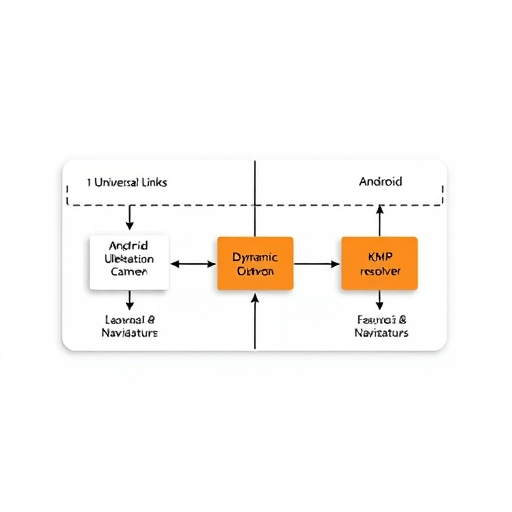
Teams can still use their favorite local migration framework. What matters is that each framework’s output is validated against the shared contract in CI. The contract becomes an adapter layer of sorts: Flyway, Alembic, goose, and Prisma Migrate all produce migration statements, but the contract decides whether those statements are legal for the global schema plan. This means migration decisions are raised from individual app repos to a reviewable, versioned artifact that all teams can read.
Per-Service Versioned Schemas: Decentralized Work, Centralized Truth
“Per-service versioned schemas” is not a license to drift. It means each service owns its migration scripts, but those scripts are versioned against the shared contract. Every service’s migration directory is a thin slice of the global schema evolution, and the contract tracks the composition of those slices.
Versioning by Business Capability, Not Team Cadence
Use version numbers that reflect business capabilities: identity-api/v8, pricing/v6, ledger/v12. When a capability evolves, the contract updates its version map — not when a team happens to merge a pull request. This avoids the classic confusion of one service on schema revision 217 while another is on revision 214 for the same shared table.
Migrations as Published Artifacts, Not Database Side Effects
Each service’s migration output is compiled into an artifact — a SQL bundle or a manifest referencing migration files — and published to the central repository along with its version number. Deploys pull the artifact, compare it with the shared contract’s expected state, and apply only the missing increments. Because the artifact is immutable and content-addressed, rollbacks are deterministic.
Compatibility Gates: CI Rules That Save the Deploy
The shared contract only works if it is enforced automatically. Add a contract validation step to each service’s CI pipeline: a language-agnostic CLI that parses the contract against the service’s migration artifacts and answers two questions. Is this migration legal for the current contract revision? Does it violate forward compatibility?
The Two-Phase Expansion/Contraction Rule
Destructive changes go through two contract revisions. In the first revision, we expand — add the new column, table, or type — while keeping the old one. In the second revision, we contract — drop the old column or type. Most migration headaches in polyglot systems come from skipping the middle phase: the other language services are still reading the old state when the new state is forced on them. With the shared contract, a drop operation in phase two is only legal if the expansion was present in the previous contract revision.
A Walkthrough: Adding a Column Across a Polyglot Stack
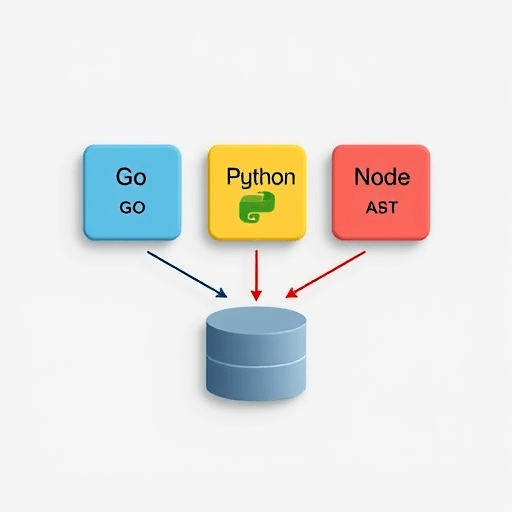
Imagine a Go API owns the accounts table, a Python worker reads it for analytics, and a Node.js service handles customer-facing dashboards. The team wants to add region_code to the accounts table. Here’s the migration lifecycle under a shared contract:
- Revision 1, expansion: The Go service publishes an artifact adding
region_codeas a nullable column; the contract updates its version map and compatibility section. The Python and Node services are unaffected because the column is still optional. - Deploy and backfill: The Go service deploys, then runs a backfill job — itself a versioned artifact that the contract recognizes as a post-deploy step. No other service needs to coordinate.
- Revision 2, making it required: The contract marks the column
NOT NULL. Dependent services learn about it through the contract diff, bump their own migration artifacts, and deploy. A later contract revision can drop the legacy column.
Notice what didn’t happen: no cross-team chat, no “can I merge now?” messages, no emergency rollback because a Python worker still used a hidden legacy column.
Tooling, Drift Detection, and the 2026 Reality
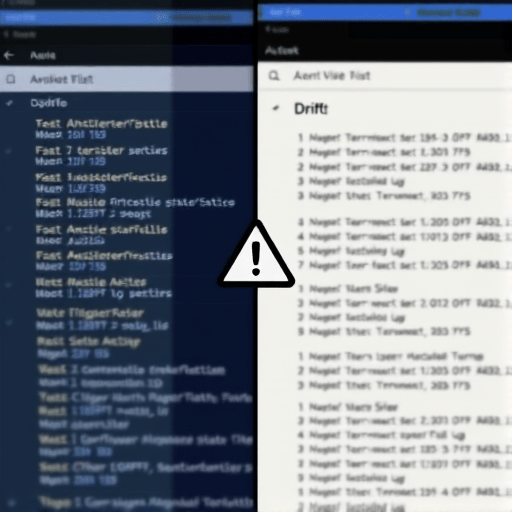
Schema drift is a growing hazard now that administrators and AI-assisted data tools make one-off changes to the live database. The shared contract gives you a party wall: a regular drift-detection job compares the live schema against the contract’s expected shape and flags differences even when no migration has run. The output is a simple report: contract version, database version, diff. That’s enough to prevent the “who touched the column” blame game.
Adopting this pattern takes a little ceremony up front and removes a steady stream of urgent, migrational patchwork afterward.
Conclusion
Multi-language backend schema migrations don’t need to be tense affairs. With a shared migration contract serving as a neutral, language-agnostic source of truth, and per-service versioned schemas letting teams move quickly on their own turf, the database can become a quieter part of the business — not the thing that wakes you up at 2 a.m.