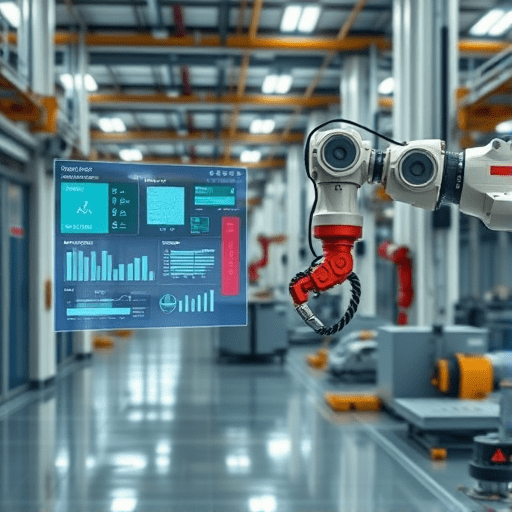
In modern manufacturing, a digital twin is only as valuable as the accuracy of its real-time mirror. When sensor inputs, equipment behavior, or environmental conditions shift, the twin begins to diverge from its physical counterpart—a phenomenon known as digital twin data drift. Left unchecked, this drift leads to poor predictions, misguided maintenance, and wasted production resources. For factory floors, where even a small error can cascade into downtime, keeping models accurate is not a one-time setup but an ongoing discipline. Here are five ways to stay ahead of drift, including a close look at the trade-off between validation triggers and scheduled sync.
1. Implement Windowed Validation Triggers for Rapid Response
Validation triggers are event-based mechanisms that compare the digital twin’s output to fresh sensor data whenever a meaningful change occurs. Instead of waiting for a nightly sync, a trigger fires when a threshold is crossed—such as a temperature spike, a vibration anomaly, or a sudden shift in throughput. The key is to use windowed validation that evaluates a rolling set of recent data points rather than a single sample. This reduces false alarms caused by transient noise while still catching genuine drift early.
For example, a robotic welding cell may experience drift only when a new batch of material arrives. A trigger set to monitor material hardness changes will immediately flag the mismatch and recalibrate the twin’s thermal model before the next weld. This type of response is essential for processes with high variability and tight tolerances. However, triggers must be carefully tuned—too sensitive, and they flood the system with alerts; too loose, and they miss slow-developing drift.
2. Pair Scheduled Sync with Context-Aware Timing
Scheduled sync, by contrast, runs on a fixed interval—every hour, every shift, or every day. This approach is simpler to manage and often sufficient for relatively stable production lines. The catch is that static scheduling can either over-sync when nothing changes, consuming network bandwidth and compute resources, or under-sync when rapid changes occur between intervals.
Modern factory floors shouldn’t abandon scheduled sync, but they should make it context-aware. For instance, align sync windows with known production phases, such as after a line changeover, during low-volume night shifts, or right after a quality control checkpoint. By integrating the schedule with MES (Manufacturing Execution System) events, you avoid wasted updates and ensure that the twin is refreshed when it matters most. One useful strategy is to use scheduled sync as a baseline and let validation triggers override it when necessary—a hybrid model we’ll return to shortly.
3. Balance the Two with a Drift Budget
Instead of asking which is better, forward-thinking operations define a drift budget: the maximum allowable deviation between the twin and the physical asset before corrective action is required. This budget sets the rules for both validation triggers and scheduled sync. For a precision CNC spindle, a tight drift budget might demand trigger-based validation every time spindle load changes by more than 2%. For an air handling unit with slower dynamics, a scheduled hourly sync might be perfectly adequate.
Creating a drift budget requires understanding the cost of inaccuracy for each asset class. The key is to classify assets by criticality and drift sensitivity, then assign an appropriate mix of trigger and sync policies. This prevents the common mistake of applying a one-size-fits-all synchronization strategy across an entire plant. A turbine cooling system and a packaging robot should not share the same drift prevention rules.
4. Use Semantic Drift Detection Rather Than Raw Data Comparison
Many drift detection methods compare raw sensor readings to model predictions, but on a factory floor, raw data can be noisy and non-representative. A better way is to monitor semantic drift—changes in the meaning of the data relative to the model’s assumptions. For example, a vibration sensor may show increased amplitude, but the root cause could be a loose mounting bracket, not a bearing failure. A semantic drift detector understands the context and flags only where the model’s interpretation no longer matches reality.
This approach often relies on a digital thread that combines process logs, maintenance records, and operator input with sensor readings. By aligning the twin with higher-level operational semantics, you filter out irrelevant variations and focus on actual model decay. Semantic drift detection also improves the quality of both validation triggers and scheduled sync: triggers become more precise, and scheduled syncs can be skipped when no semantic change has occurred.
5. Close the Loop with Continuous Calibration from Actual Output
No matter how well you detect drift, the ultimate fix is to update the model. The fifth way to keep models accurate is to build a continuous calibration loop that uses ground-truth data from the physical system. This means comparing the twin’s predictions not just to sensors, but to the actual outcome—e.g., measured part dimensions, energy consumption, or cycle time. When a discrepancy appears, the model adjusts automatically or sends an alert to an engineer for manual tuning.
Continuous calibration is especially effective when combined with edge computing. Instead of sending all data to a central cloud, edge devices can run lightweight correction algorithms locally and only propagate major updates upward. This reduces latency and allows the factory floor to self-correct even during network outages. Over time, the digital twin learns the subtle shifts in machine behavior and becomes more resilient to drift. The goal isn’t to eliminate drift entirely—it’s to keep the model within its accuracy budget at all times.
Validation Triggers vs. Scheduled Sync: A Practical Framework for Factory Floors
Both validation triggers and scheduled sync have strengths and weaknesses, and the choice depends on your specific production environment. Use the following framework to decide:
- Use validation triggers when: Processes are highly dynamic; equipment degrades quickly; sensor data is rich and frequent; the cost of false negatives is high; and you can tune thresholds with confidence.
- Use scheduled sync when: Processes are stable; data volumes are huge but changes are slow; network bandwidth is limited; and simplicity is more important than immediacy.
- Use both together when: You have a mix of critical and non-critical assets, or you want a safety net that catches drift between scheduled intervals.
A common pattern on modern factory floors is to run scheduled sync as the default, then deploy validation triggers only for high-risk zones such as robotic assembly, chemical mixing, or precision machining. The exact balance should be informed by the drift budget described earlier, as well as by historical data on how often actual drift events occur. In many cases, the first few months of operation reveal that some scheduled syncs were unnecessary, while many trigger failures point to the need for a deeper model update.
Another practical consideration is computing cost. Scheduled syncs can be run in batch mode to minimize impact on PLCs and edge gateways, while validation triggers require always-on monitoring. If your factory floor has limited compute resources, consider a “light trigger” that performs a quick heuristic check and only invokes a full validation when the heuristic suggests real drift. This hybrid approach gives you the best of both worlds without overwhelming the system.
Conclusion
Digital twin data drift is an unavoidable challenge on factory floors, but it doesn’t have to undermine your production intelligence. By implementing windowed validation triggers, context-aware scheduled syncs, a clear drift budget, semantic drift detection, and a continuous calibration loop, you can significantly extend the useful life of your models. The comparison between validation triggers and scheduled sync is not a binary choice—it is a tuning decision that should be revisited as your processes evolve. For manufacturers ready to invest in drift management, the payoff is a digital twin that reliably mirrors reality, moment by moment, without constant manual intervention.