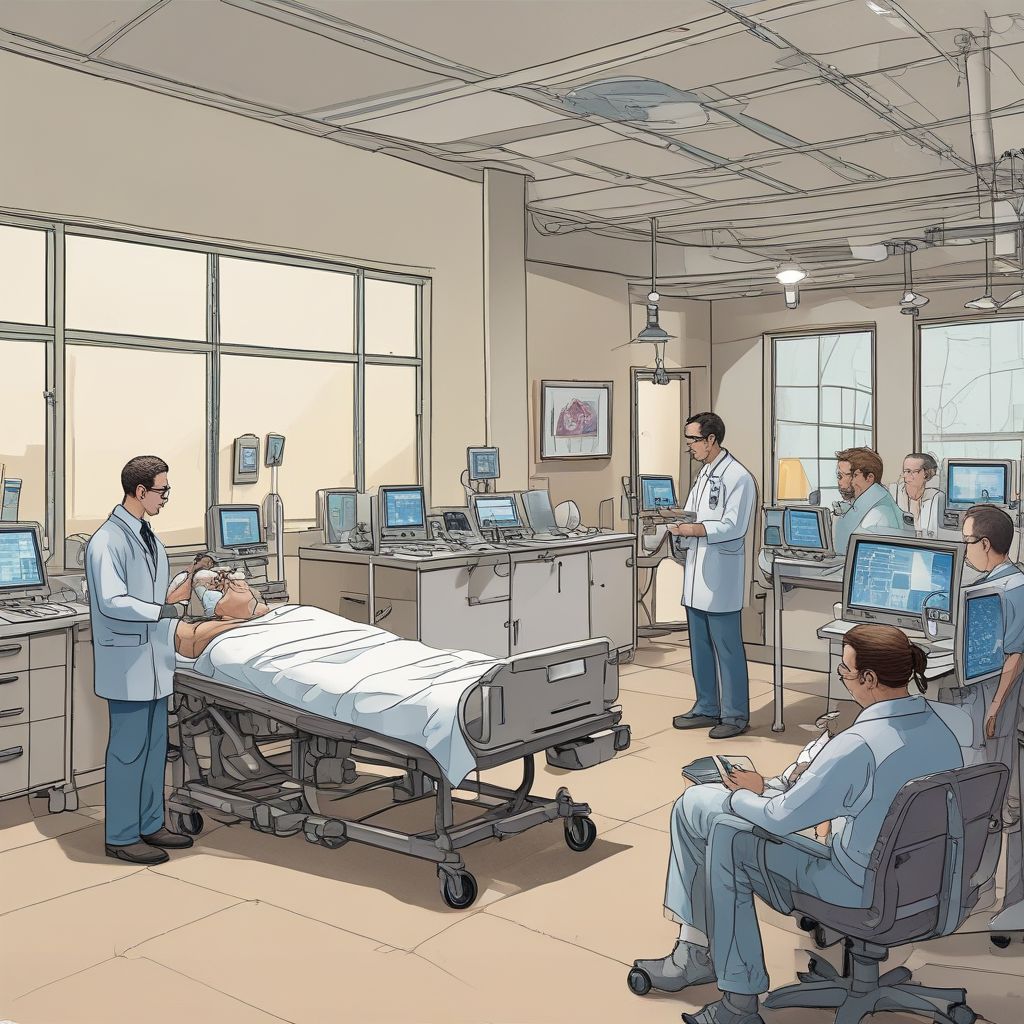
Virtual Wards are rapidly moving from pilot projects to core hospital strategy, and this pragmatic roadmap shows how orchestrating EHRs, wearables, and digital twins can scale hybrid inpatient–home models to cut length-of-stay (LOS) and readmissions. The approach below focuses on realistic integration steps, governance, clinician workflows, and measurable KPIs so health systems can deliver safe, continuous care outside the brick-and-mortar ward.
Why Virtual Wards Deliver Real Savings
Virtual Wards blend remote monitoring, advanced analytics, and coordinated care pathways to shift appropriate inpatient care into patients’ homes. Savings come from shorter hospital stays, fewer avoidable readmissions, and more efficient use of specialist time. Crucially, these benefits depend on real-time orchestration—connecting the EHR, IoT wearables, clinical decision logic, and a scalable digital twin that models patient risk and capacity across the system.
Core value streams
- Reduced LOS through early discharge with continuous remote monitoring and automated escalation.
- Lower readmissions by proactive detection of deterioration and standardized remote interventions.
- Operational efficiency from automated care pathways and workload triage for multidisciplinary teams.
- Improved patient experience and satisfaction by enabling recovery at home with safety nets.
Foundations: People, Policy, and Platform
Successful scale begins with three foundations: clinical governance, reimbursement/legal clarity, and a neutral orchestration platform. These ensure that technology amplifies clinical decision-making rather than replacing it.
1. Clinical governance and selection criteria
- Define inclusion/exclusion criteria (severity thresholds, comorbidities, home safety).
- Create standardized care pathways for common cohorts (e.g., CHF, COPD, postop orthopedics, pneumonia).
- Assign a multidisciplinary virtual ward team: physician lead, nurse care manager, pharmacist, physiotherapist, and informaticist.
2. Reimbursement, consent and liability
- Map reimbursement models (fee-for-service, bundled payments, remote patient monitoring codes) and align pilots to revenue streams.
- Standardize informed consent and data-sharing agreements for remote monitoring and AI-assisted decisions.
- Clarify escalation protocols and legal responsibility during out-of-hospital events.
3. Orchestration platform requirements
The orchestration layer is the system of record for virtual ward operations. Key capabilities:
- Bi-directional EHR integration (FHIR R4/PUSH and subscription mechanisms) to read and write care plans and dispositions.
- Device ingestion and management for wearables via secure IoT gateways, with device health telemetry.
- Real-time rules engine and workflow automation to trigger interventions, telehealth huddles, or escalation.
- Digital twin modeling to run near-real-time risk simulations per patient and forecast capacity across populations.
- Role-based clinician dashboards and patient-facing apps that promote adherence and communication.
Technology Stack: Pragmatic, Interoperable, and Incremental
A pragmatic stack avoids rip-and-replace. Start with layered integration that can grow:
Layer 1 – Integration and data normalization
- Connect EHR via FHIR APIs to exchange admissions, meds, labs, and problem lists.
- Use a clinical data repository to normalize streaming wearable data, vitals, and PROs (patient-reported outcomes).
Layer 2 – Orchestration and automation
- Rules engine for pathway automation (early discharge triggers, abnormal vitals alerts, medication reconciliation reminders).
- Scheduling and telehealth integration to auto-book virtual rounds and remote assessments.
Layer 3 – Digital twin and analytics
- Patient-specific predictive models that combine static EHR data and dynamic wearable signals to estimate deterioration risk.
- Population-level twins to model bed capacity, virtual ward load, and staffing needs to inform operational decisions.
Layer 4 – UX and safety
- Clinician workflows embedded in the EHR to minimize context switching.
- Patient apps with simple onboarding, device pairing, and two-way messaging for escalation.
- Fail-safe pathways: when automation can’t resolve an alert, route to a human triage promptly.
Operationalizing: From Pilot to Scale
Scaling virtual wards requires iterative pilots with tight measurement and rapid feedback loops.
Stepwise pilot plan
- Choose a high-impact cohort (e.g., CHF or postop patients) with predictable trajectories.
- Launch a time-boxed pilot (6–12 weeks) with a small caseload and predefined KPIs: LOS reduction, 30-day readmission, patient satisfaction, and cost per episode.
- Use A/B or matched-cohort evaluation to quantify effect sizes and operational constraints.
- Refine selection criteria, algorithms, and staffing model based on outcomes and clinician feedback.
- Expand incrementally by cohort and geography, shifting from manual triage to automated orchestration as confidence and safety processes mature.
Key metrics to track
- Average LOS and variance
- 30-day and 90-day readmission rates
- Time-to-detection for clinical deterioration
- False-positive alert rates and clinician burden
- Patient adherence and device uptime
- Cost per episode and total cost of care
Clinical Safety, Privacy and Equity
Safety protocols and equity must be embedded from day one.
- Validate predictive models across demographic groups to avoid bias and inequitable care.
- Implement encryption-at-rest/in-transit, device attestation, and regular security audits for IoT endpoints.
- Provide alternatives for patients with limited connectivity—loaner hubs, phone-based monitoring, or home visits.
Change Management: Clinicians, Patients and IT
Technology succeeds only when people adopt it. Invest in training, clear SOPs, and iterative co-design.
- Run clinician shadowing and simulation labs to co-create escalation logic and alerts thresholds.
- Create patient onboarding scripts and 24/7 support to reduce technical barriers and anxiety.
- Keep IT and clinical informatics tightly coupled to rapidly triage integration issues.
Example Use Case: Early Discharge for Heart Failure
Example workflow demonstrating the stack in action:
- Identify stable CHF inpatient with adequate home support—trigger early discharge pathway in EHR.
- Provision wearable patch and tablet; device streams weight, heart rate, and activity to orchestration layer.
- Digital twin predicts rising congestion risk; rules engine increases monitoring frequency and auto-schedules telehealth visit.
- Nurse care manager adjusts diuretics under protocol; readmission avoided and LOS reduced by 2–3 days on average.
Buy vs. Build: Practical Guidance
Most hospitals should avoid building the entire stack from scratch. Recommended hybrid approach:
- Use commercial orchestration platforms with open APIs for workflow and device management.
- Develop in-house predictive models only when you have strong data science capacity and access to high-quality labels.
- Insist on vendor interoperability, transparent algorithms, and the ability to export data to your clinical data repository.
Scaling virtual wards is not just a technology project—it’s an operational transformation that requires aligned incentives, clinician trust, and a measured approach to automation. When EHRs, wearables, and digital twins are orchestrated with clear governance and robust safety nets, hospitals can cut LOS, lower readmissions, and unlock true value-based care.
Conclusion: Virtual Wards represent a practical, high-impact pathway to better outcomes and lower costs when implemented with interoperable orchestration, clinician-led governance, and patient-centered safety. Take the first step by piloting a single, well-scoped cohort and measuring against clear operational KPIs.
Ready to pilot a virtual ward? Contact your informatics team to map one cohort, one pathway, and one measurable KPI to start delivering real savings.