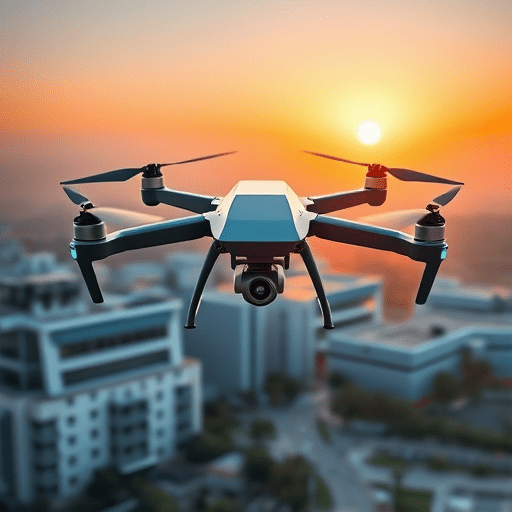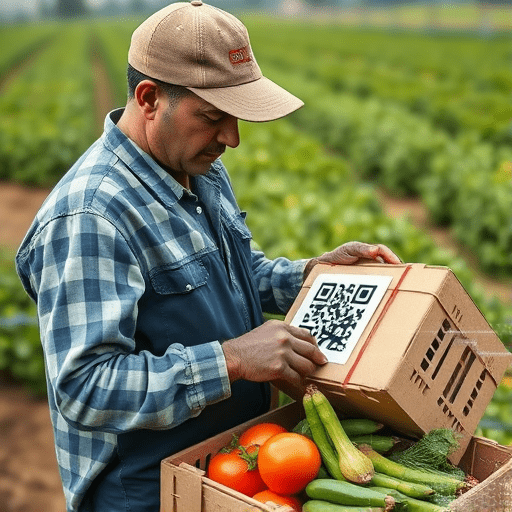
Self-Supervising Reality transforms how foundation models are trained by turning continuous streams from cameras, microphones, and IoT telemetry into meaningful learning signals without human labels. This on-device multimodal self-supervision approach preserves privacy, reduces bandwidth, and enables models to adapt in real time to users and environments. Below is a practical guide to the paradigms, techniques, privacy safeguards, and real-world use cases that make label-free continuous training viable today.
What is Self-Supervising Reality?
At its core, Self-Supervising Reality leverages natural structure and correlations in sensory data to create supervisory signals. Instead of relying on curated datasets and human annotation, models learn from patterns across time, between modalities (e.g., sound and vision), and from predictive relationships (e.g., “what happens next?”). When this happens on-device, raw sensor data never needs to leave the user’s hardware—only model updates or tightly controlled summaries do.
Key Techniques for Multimodal, On-Device Self-Supervision
Several self-supervised learning techniques map particularly well to continuous sensor streams:
- Temporal Predictive Coding: Train models to predict future frames, audio segments, or telemetry windows, encouraging them to encode dynamics and causality.
- Cross-Modal Contrastive Learning: Use alignment objectives where visual frames and corresponding audio clips are pulled together in representation space while unrelated samples are pushed apart.
- Masked Modeling: Mask parts of an input (e.g., audio segment or image patch) and reconstruct them, teaching contextual understanding without labels.
- Teacher-Student Distillation: A larger or more stable teacher model generates soft targets for a compact on-device student, enabling continual improvement with low compute overhead.
- Clustering and Pseudo-Labels: Periodically cluster embeddings on-device to create pseudo-labels for downstream fine-tuning without exposing raw data.
Privacy-Preserving Strategies
Preserving privacy is essential when training from live sensor streams. Effective strategies include:
- On-Device Processing: Keep raw audio, video, and telemetry local; only share encrypted gradients or compressed model deltas.
- Federated Aggregation: Aggregate model updates across devices on a server without exposing individual updates, often combined with secure aggregation protocols.
- Differential Privacy: Add calibrated noise to gradients or updates to limit the risk of reconstructing personal data from model parameters.
- Selective Sampling: Apply privacy-aware filters that discard or obfuscate sensitive contexts (faces, conversations) before any processing or storage.
Engineering Considerations for On-Device Continuous Learning
Deploying self-supervising systems on constrained devices requires careful design:
- Compute and Memory Budget: Use lightweight architectures (e.g., efficient CNNs, quantized transformers), model pruning, and sparse updates to match hardware limits.
- Energy-Aware Scheduling: Run training or updates opportunistically—during charging, low activity, or overnight—to avoid draining batteries or degrading UX.
- Data Selection and Replay: Maintain a small ring buffer or coreset of representative embeddings to prevent catastrophic forgetting and to stabilize learning.
- Continual Evaluation: Implement lightweight on-device metrics (consistency, prediction surprise) and offline validation pipelines to detect drift and regression early.
Model Lifecycle: From Cold-Start to Personalization
Typical deployment follows a hybrid lifecycle: a robust, pre-trained foundation model ships with the device (cold-start), then continues to adapt locally via self-supervision (personalization), while periodic federated rounds or curated server-side tuning consolidate improvements across users without compromising privacy.
Real-World Use Cases
- Smart Homes: Cameras and microphones learn household routines to optimize energy, anticipate needs, and enhance accessibility while keeping raw footage local.
- Wearables and AR/VR: Multimodal streams (IMU, gaze, audio, scene video) enable personalized context-aware assistance—gesture recognition or predictive UI adjustments—trained continuously on-device.
- Industrial IoT: Telemetry-driven self-supervision identifies anomalous equipment behavior early by learning normal operational dynamics without annotated fault datasets.
- Assistive Devices: Devices for users with disabilities adapt to individual speech patterns and ambient contexts, improving responsiveness without sharing private interactions.
Challenges and Practical Mitigations
While promising, on-device self-supervision must contend with several challenges:
- Label Drift and Bias: Models can amplify biased patterns present in a single user’s environment; mitigation includes cross-device aggregation and fairness-aware regularizers.
- Catastrophic Forgetting: Use replay buffers, elastic weight consolidation, or regularized fine-tuning to preserve core capabilities while learning new personalized information.
- Adversarial or Spoofed Sensors: Implement sensor attestation and anomaly detection to ignore tampered streams or implausible inputs.
- Evaluation Complexity: Continuous learning complicates validation; maintain holdout tasks, simulated edge tests, and federated evaluation to assess generalized performance.
Best Practices for Responsible Deployment
Adopt a principled approach:
- Design privacy defaults: off-by-default sharing and clear user controls for model personalization.
- Provide transparency: explain what is learned on-device and how aggregated updates are used.
- Limit exposure: send only compressed, anonymized model deltas when aggregation is necessary.
- Monitor and rollback: include mechanisms to undo harmful updates and to deploy safety patches quickly.
Looking Ahead
Self-Supervising Reality invites a future where intelligent systems evolve continuously with users and environments while respecting privacy and resource constraints. By combining multimodal alignment, on-device efficiency, and robust privacy techniques, foundation models can become more adaptive, personalized, and useful—without the bottleneck of human labels.
Conclusion: Self-Supervising Reality is a pragmatic path to adaptive AI: it harnesses the natural signal in live sensors, keeps private data local, and enables models to keep learning in-the-wild. Try assessing a pilot use case—start with a small, privacy-aware on-device pipeline and measure representation stability before scaling.
Call to action: Ready to prototype on-device self-supervision for your product? Begin with a simple cross-modal contrastive experiment on a representative sensor stream today.