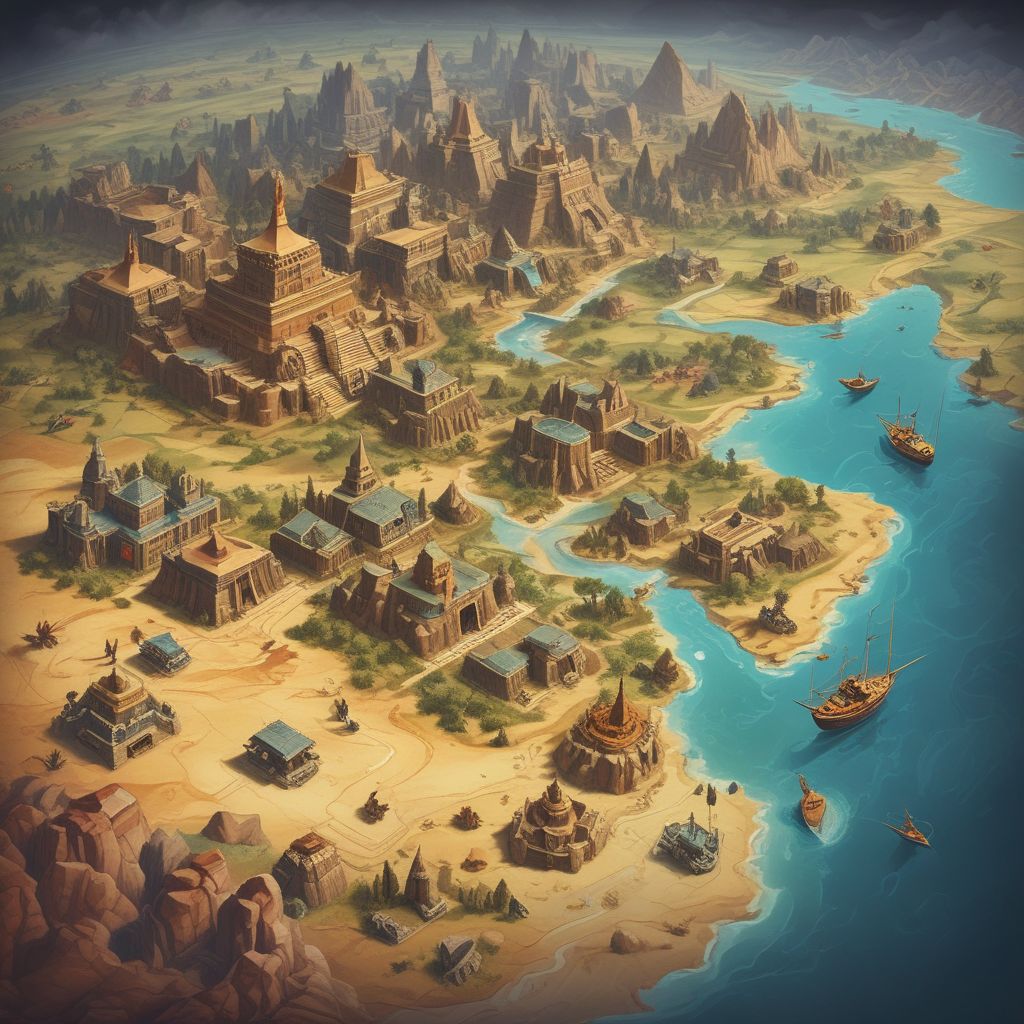
Rewriting History: Modern Strategy RPGs Let Players Reclaim Ancient Civilizations
In an age where games are increasingly celebrated for their narrative depth and cultural authenticity, rewriting history has taken on a new form. Modern strategy RPGs no longer rely on flat, deterministic campaigns; instead they weave rigorous historical research with open-ended systems that let players experiment, adapt, and ultimately become the architects of a civilization’s destiny. Whether you’re channeling the disciplined legions of Rome, rallying the enigmatic nomads of the Eurasian steppes, or reimagining the flourishing empires of the Bronze Age, these titles provide a sandbox where lore informs strategy and strategy reshapes lore.
Historical Accuracy as a Foundation
Accurate lore is more than a backdrop; it’s a strategic asset. Developers invest in historians, archaeologists, and cultural consultants to capture the political, technological, and social nuances of the era. In Age of Empires IV, for example, the designers consulted Roman engineers to model the intricate logistics of legionary formations and aqueduct construction. This depth allows players to employ tactics that mirror historical practices—like flanking with light cavalry in Roman camps or building a fortified siege line during the Late Iron Age—rather than relying on generic “heroic” moves.
Primary Sources and Cultural Nuance
- Archival Documents – Players can access in-game archives that reflect primary sources such as trade ledgers, diplomatic correspondence, and religious edicts, giving them a sense of authenticity.
- Language and Signage – Textual interfaces and in-game banners use period-accurate scripts, reinforcing immersion.
- Technological Milestones – From the Bronze smelting techniques in Anatolia to the ironwork of the Kushan Empire, tech trees mirror real developmental pathways.
Emergent Gameplay in Modern Strategy RPGs
While accuracy grounds the experience, emergent gameplay lifts it. AI systems respond to the player’s actions in unpredictable ways, creating a living world that evolves. Branching narratives unfold as players forge alliances, betray allies, or choose to adopt a foreign technology, leading to multiple possible outcomes for a single civilization.
Dynamic AI and Branching Narratives
- Adaptive Diplomacy – AI factions weigh the political climate and historical grudges, altering treaties based on the player’s past decisions.
- Variable Warfare Outcomes – Randomized terrain modifiers and weather effects can turn a seemingly decisive battle into a strategic stalemate.
- Legacy System – Decisions reverberate across campaigns, allowing a player’s legacy to influence future generations of units and leaders.
Replayability and Community Content
Mod support and procedural generation give each playthrough a fresh feel. Community-generated scenarios often introduce alternate histories—like a Roman Empire that never fell—or speculative technological advances, broadening the creative horizon even further.
Game Spotlight 1: Age of Empires IV
Released in 2022, Age of Empires IV revitalizes a classic franchise with a deeper historical lens. The game’s campaign modes are meticulously crafted around pivotal events such as the Norman Conquest and the Mongol invasions. Each civilization features a unique “Leader’s Quest” that mirrors real historical campaigns, offering both narrative depth and strategic challenges.
Key Features
- Authentic Unit Animations – Units move, fight, and retreat in ways consistent with period tactics.
- Research and Innovation Systems – Players can prioritize certain tech paths, reflecting the diffusion of knowledge across borders.
- Dynamic Weather and Seasonal Campaigns – Seasonal shifts affect harvest yields and troop morale, demanding adaptive strategies.
Emergent Gameplay in AoE IV
The AI’s “Civilization Awareness” system means that if a player builds a massive navy early, the game will respond by developing naval doctrines. This creates a feedback loop where the player’s choices shape the world’s strategic landscape, a hallmark of emergent gameplay.
Game Spotlight 2: Rome: Total War – Imperium
“Rome: Total War – Imperium” (2024) pushes the total war formula further into the realm of RPG, integrating character development into a sprawling political simulation. Players command not only armies but also senators, merchants, and generals, each with individual agendas that affect the empire’s stability.
Strategic Depth
- Political Intrigue – Intrigue mechanics force players to weigh the benefits of eliminating rivals versus maintaining a united front.
- Economic Modeling – Resource flows emulate ancient markets, with trade agreements influencing local economies.
- Leadership Attributes – Leaders possess traits like “Charismatic” or “Tactical Genius” that alter battle outcomes.
Historical Narratives
The game’s campaign follows the rise of the Roman Republic into an Empire, offering branching paths where the player can either pursue the consolidation of power or encourage republican ideals. Each choice leads to distinct diplomatic relations and potential internal revolts, creating a dynamic world where history is a living entity.
Game Spotlight 3: The Last Empire: Rise of the Scythians
While less known, The Last Empire: Rise of the Scythians (2025) offers a fresh lens on the nomadic tribes of the Eurasian steppes. It combines a sprawling open world with a rich narrative that highlights the Scythians’ role in ancient history.
Unique Mechanics
- Horse Cultivation – Players manage a breeding system that directly impacts cavalry strength and speed.
- Nomadic Settlement Building – Camps evolve into fortified cities as the player expands.
- Cross-Civilization Trade – Interaction with settled civilizations introduces a trade system rooted in the Silk Road.
Emergent Narrative
Player decisions about whether to adopt a settled lifestyle or maintain nomadic freedom alter the game’s ending. The AI responds by developing diplomatic ties or launching surprise raids, showcasing emergent storylines that hinge on player agency.
Design Principles Behind Rewriting History
Successful titles share a few core design principles:
- Balance Between Rigor and Flexibility – Historical facts provide a scaffold, but flexible systems allow for creative strategies.
- Player-Centric Narratives – The game world reacts to the player’s actions, ensuring that choices feel consequential.
- Modular Content Updates – Regular updates, including new civilizations and historical events, keep the experience fresh.
By marrying meticulous research with emergent systems, developers empower players to rewrite history—not just observe it. This blend of authenticity and agency creates immersive worlds where strategy becomes storytelling, and strategy becomes history.
Whether you’re a history buff or a strategy enthusiast, the modern strategy RPG landscape offers countless opportunities to lead an ancient civilization into a new age. Dive in, shape the past, and watch your legacy unfold across the ages.
Ready to rewrite your own chapter of history? Grab your controller, choose your civilization, and let the empire-building begin.