The Evolution of Swarm Drone Technology
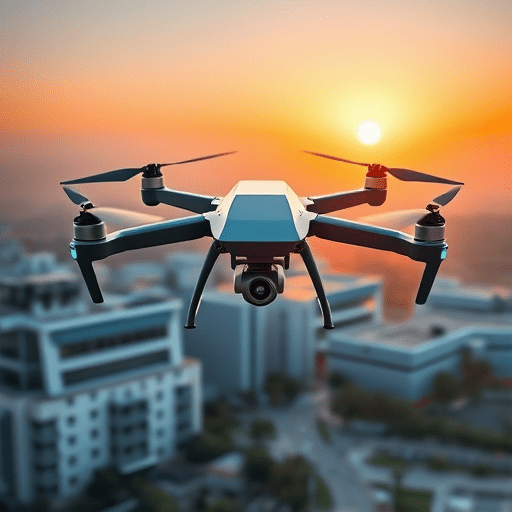
Swarm drones draw inspiration from nature, mimicking bird flocks or insect colonies. Unlike single drones, swarms operate as a collective intelligence, with each unit communicating via IoT networks to share data and adapt in real time.
At the core is edge AI, which processes vast amounts of sensor data onboard each drone. This eliminates latency from cloud reliance, crucial in disrupted urban environments where internet fails. Drones use lightweight neural networks to analyze imagery, predict flood paths, and prioritize threats.
IoT integration connects drones to city sensors—traffic cams, water gauges, and seismic detectors—creating a unified disaster intelligence network. This fusion enables predictive analytics, alerting responders before crises peak.
Urban Flood Challenges and Traditional Limitations
Smart cities face escalating flood risks from climate change and urbanization. In 2023, floods in New York caused $5 billion in damages, with response delays costing lives. Ground teams navigate debris and rising waters slowly, while satellites offer only broad overviews.
Conventional methods rely on helicopters for aerial views, but they’re expensive, weather-vulnerable, and limited in number. Human-operated drones cover small areas but lack endurance for city-scale operations.
- Visibility issues: Smoke, rain, and nightfall obscure assessments.
- Scalability: One drone per block can’t survey megacities.
- Speed: Manual data analysis takes hours, not minutes.
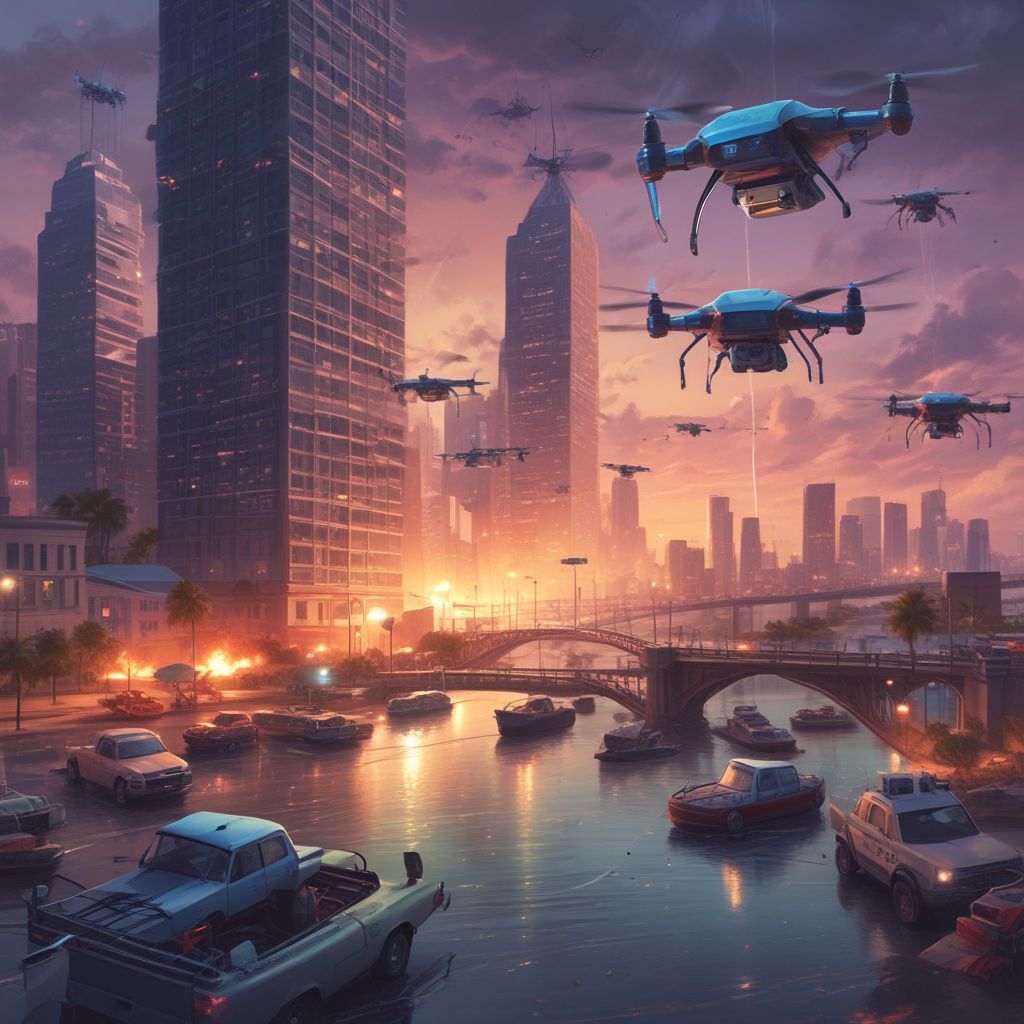
Swarm drones address these by deploying en masse, covering square miles rapidly while self-coordinating around obstacles.
How Swarm Drones Coordinate Real-Time Rescues
Deployment begins with automated alerts from city IoT hubs. Drones lift off in waves, using GPS and LiDAR for 3D mapping. Swarm algorithms, like particle swarm optimization, assign roles dynamically: some scout, others rescue, and a few relay data.
For rescues, thermal cameras detect body heat under rubble or in attics. Edge AI identifies distress signals—waving arms or SOS flashes—and triangulates positions. Drones drop life vests, medical kits, or inflatable rafts with pinpoint accuracy.
Edge AI in Action
Each drone runs computer vision models trained on flood datasets. They segment water levels, detect stranded vehicles, and classify structural integrity. Real-time fusion of multispectral imagery reveals hidden dangers, like submerged power lines.
Communication happens via mesh networks: drones relay signals peer-to-peer, bypassing cellular outages. Blockchain-inspired ledgers ensure tamper-proof data sharing among agencies.
Damage Assessment: From Chaos to Clarity
Post-flood, swarms generate orthomosaic maps stitching thousands of images into high-res overviews. AI quantifies inundation depths, eroded roads, and building collapses, feeding directly into GIS systems.
In a simulated Jakarta flood trial, swarms assessed 10 square kilometers in under 30 minutes—versus days for ground crews. Outputs include heatmaps of vulnerable infrastructure, prioritizing repairs.
- Infrastructure scans: Ultrasonic sensors measure bridge stability.
- Environmental monitoring: Air quality and chemical spill detection.
- Resource allocation: Identify safe landing zones for helicopters.
Real-World Deployments and Success Stories
In 2024, Miami piloted a 200-drone swarm during Hurricane Season drills. The system located 15 mock survivors and mapped 80% of flood zones accurately. Response time dropped from 4 hours to 20 minutes.
Europe’s FloodGuard project in Rotterdam integrated swarms with smart levees. Drones predicted breaches 45 minutes early, evacuating 5,000 residents preemptively.
Developing cities like Dhaka are adopting affordable open-source swarms, customized with local AI models for monsoon patterns. Partnerships with firms like DJI and startups like Skydio accelerate global rollout.
Case Study: Jakarta Mega-Flood Response
During 2023’s record deluge, prototype swarms flew 500 missions. They delivered 2 tons of supplies and assessed $200 million in damages overnight. Officials credit the tech with saving 200 lives through early warnings.
Key Benefits of IoT Swarm Drones
These systems offer multifaceted advantages, reshaping disaster management.
- Cost-efficiency: $500 per drone versus $10 million helicopters; reusable fleets amortize quickly.
- Safety: No human pilots risk exposure; swarms evade hazards autonomously.
- 24/7 operation: Night vision and weather-resistant designs ensure constant vigilance.
- Data-driven decisions: Petabytes of processed intel optimize aid distribution.
- Scalability: From neighborhood floods to city-wide events, swarms adapt size.
Quantitatively, studies show 40% faster evacuations and 30% reduced economic losses.
Overcoming Challenges and Future Horizons
Regulatory hurdles persist: FAA rules limit beyond-visual-line-of-sight flights, though waivers grow. Battery life caps missions at 45 minutes, addressed by solar-charging docking stations.
Privacy concerns arise from pervasive surveillance, mitigated by anonymized data and geofencing. Cybersecurity demands quantum-resistant encryption against hacks.
Looking ahead, 6G networks will boost bandwidth, enabling 10,000-drone swarms. Integration with AR glasses for first responders and ground robots promises hybrid teams. By 2030, experts predict swarms as standard in 70% of smart cities.
Conclusion: A Safer Urban Future
IoT swarm drones with edge AI herald a paradigm shift in urban disaster response. By coordinating real-time rescues and assessments, they bridge the gap between chaos and control in flood-prone metropolises. As adoption surges, cities worldwide gain resilience against intensifying climate threats.
Investing in this tech isn’t optional—it’s essential. Governments, tech firms, and communities must collaborate to deploy swarms at scale, ensuring no flood catches a city unprepared.
Word count: 1,156