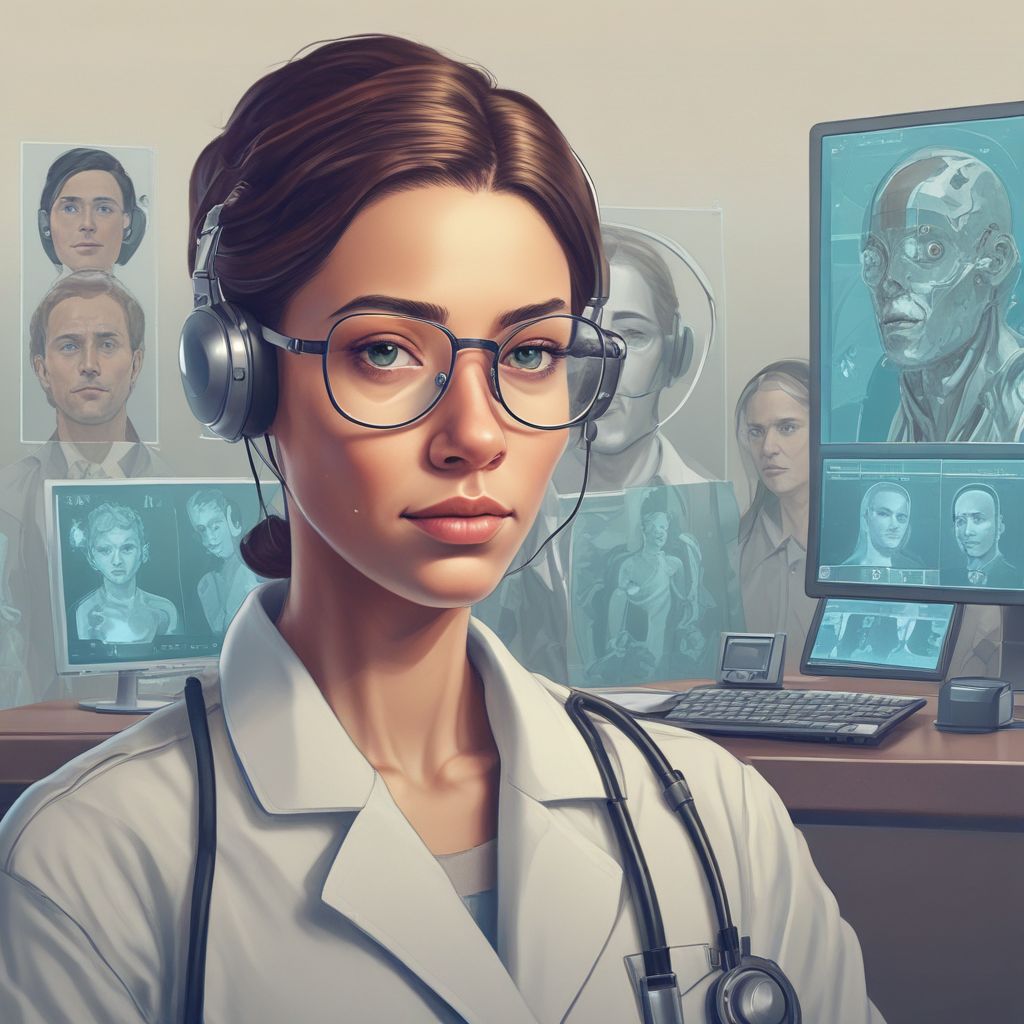
The term “Digital Twin Clinics” refers to clinical environments that use AI patient avatars—digital twins—to simulate treatment outcomes and predict individual responses to therapies. These AI patient avatars combine patient-specific data, computational models, and machine learning to create a virtual representation of a person’s physiology and disease trajectory, enabling clinicians to test interventions in silico before applying them in real life.
What is an AI Patient Avatar?
An AI patient avatar is a personalized computational model that mirrors a patient’s biology, medical history, imaging, and wearable data to forecast how that individual is likely to respond to treatments. Unlike generic population-level models, these avatars aim for individualized predictions by incorporating multi-modal data streams and mechanistic understanding of disease processes.
Core components
- Data layer: EHR records, genomics, imaging, labs, and remote-monitoring feeds.
- Physiologic models: Mechanistic or hybrid models that simulate organ systems or disease pathways.
- Machine learning: Models that learn from historic outcomes to refine predictions and account for real-world complexity.
- Interface and visualization: Tools clinicians use to interrogate simulated scenarios and compare outcomes.
Emerging Pilots: Where Digital Twin Clinics Are Being Tested
Across academic medical centers and startups, pilots are exploring AI patient avatars in specialties where treatment variability is high and stakes are significant.
Examples of pilot use cases
- Oncology: Simulating tumor response to different chemotherapy regimens or targeted agents to personalize oncology protocols and spare ineffective treatments.
- Cardiology: Optimizing device settings (e.g., pacemaker parameters) and forecasting heart failure decompensation to reduce readmissions.
- Diabetes management: Personalizing insulin dosing algorithms by simulating glucose responses to meals, activity, and medications.
- Critical care: Running virtual trials of ventilation strategies or sepsis interventions on avatars to predict individual risk of adverse events.
Validation: How Trustworthy Are the Simulations?
Validation is the single greatest challenge for digital twin adoption. Demonstrating that an AI patient avatar reliably predicts meaningful clinical outcomes requires careful, multi-stage evidence generation.
Validation approaches
- Retrospective validation: Comparing avatar predictions against historical outcomes in held-out datasets.
- Prospective observational studies: Using avatars in parallel with clinical care to compare predicted versus actual responses.
- Randomized controlled trials (RCTs): Testing avatar-guided decision-making against standard care for patient-centered endpoints.
- Real-world performance monitoring: Post-deployment surveillance to detect drift, bias, or degradation of predictive accuracy.
Robust validation must also consider representativeness—ensuring training and test sets reflect demographic and clinical diversity to avoid systematic bias that could worsen disparities.
Regulatory and Ethical Hurdles
Digital Twin Clinics intersect with medical device and software regulation, data protection, and clinical liability, creating a complex regulatory landscape.
Regulatory considerations
- Device classification: Many regulators treat predictive software as Software as a Medical Device (SaMD), requiring premarket evidence proportional to risk.
- Explainability and transparency: Regulators increasingly expect clear documentation of how models work and their limitations.
- Change management: Continuous learning systems raise questions about when retraining or updates require new approvals.
- Post-market surveillance: Ongoing monitoring and reporting frameworks are essential to maintain safety and efficacy post-deployment.
Ethical and operational issues
- Informed consent: Patients should understand when their care is informed by a virtual simulation and what that entails.
- Data privacy: Aggregating multi-modal health data demands strict safeguards and governance to maintain confidentiality.
- Liability: Clarifying responsibility when avatar-guided recommendations lead to harm remains unresolved in many jurisdictions.
- Equity: Ensuring avatars do not reproduce or amplify biases requires deliberate design and auditing.
How Digital Twin Clinics Could Reduce Adverse Events and Personalize Care
When validated and responsibly deployed, AI patient avatars have the potential to shift care from reactive to proactive and individualized.
Potential benefits
- Fewer trial-and-error treatments: Simulating multiple interventions can identify the most promising option without exposing patients to ineffective therapies.
- Early risk detection: Predicting adverse drug reactions or complications allows preemptive adjustments or monitoring.
- Resource optimization: Virtual testing of strategies can reduce unnecessary procedures and focus resources where they’ll have the greatest impact.
- Shared decision-making: Visual, personalized simulations can help patients and clinicians weigh risks and benefits together.
Practical Steps for Health Systems Considering Pilots
Institutions planning to trial digital twin technology should proceed in measured stages with multidisciplinary oversight.
Recommended roadmap
- Start with low-risk, high-value use cases where improved prediction would change management.
- Assemble governance: include clinicians, data scientists, ethicists, and patient representatives.
- Define validation metrics up front and plan for independent evaluation.
- Integrate with existing workflows and EHR systems to minimize friction and ensure traceability of decisions.
- Implement robust consent, data governance, and post-deployment monitoring.
The Road Ahead
Digital Twin Clinics are not a single technology but an ecosystem of personalized models, clinical trials, regulatory pathways, and human-centered design. Progress will depend on transparent validation, collaborative regulation, and continuous engagement with patients and clinicians to build trust.
Early pilots already hint at the promise: fewer adverse events in simulated treatment planning, more tailored therapeutic choices, and a new toolset for clinicians facing complex, multimodal patient data. Yet substantial work remains to prove clinical benefit at scale and to navigate the ethical and regulatory terrain.
Conclusion: Digital Twin Clinics and their AI patient avatars offer a compelling path toward safer, more personalized medicine, but their success hinges on rigorous validation, responsible regulation, and equitable design. For health systems and innovators, the next three to five years will be decisive as pilots mature into validated clinical tools.
Call to action: Explore a pilot with clear validation goals, multidisciplinary governance, and patient-centered safeguards to test whether digital twin technology can improve outcomes in your care setting.