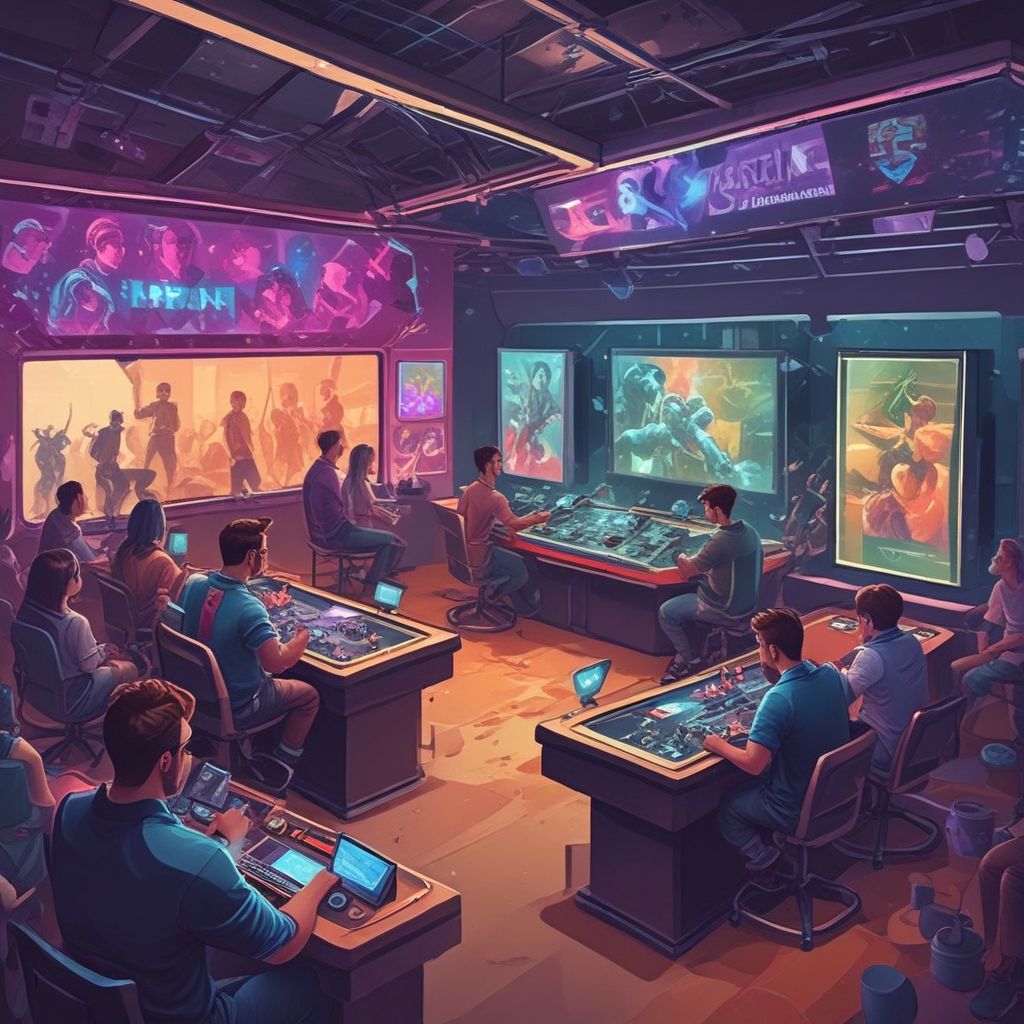
Cross-Reality Esports is redefining competitive gaming by blending augmented reality (AR) spectator overlays with immersive virtual reality (VR) arenas to create hybrid tournaments that feel part sport, part live theater. This article examines the enabling technologies, necessary rule changes, broadcasting innovations, and monetization models that are already powering the first generation of cross-reality leagues and will determine which formats scale to mainstream audiences.
What Is Cross-Reality Esports?
Cross-Reality Esports describes competitions where players, referees, and spectators interact across physical, augmented, and virtual spaces simultaneously. In these events, a VR arena hosts players or avatars, while AR overlays enrich live broadcasts or in-person viewing with persistent game-state visuals, stats, and interactive elements for spectators at home and on-site.
Key Technologies Powering Hybrid AR/VR Tournaments
1. XR Engines and Real-Time Synchronization
Robust XR engines (Unreal/Unity with XR toolkits) power the shared world, synchronizing physics, player state, and environment changes across devices. Millisecond-level synchronization using edge servers, UDP-based protocols, and adaptive tick rates minimizes divergence between a player’s VR experience and what spectators see in AR overlays.
2. Low-Latency Networking and Edge Compute
Edge computing and regional relay nodes cut round-trip times for broadcast overlays and spectator interactions. Techniques like prediction smoothing, time-warping, and forward error correction keep visuals consistent when packet loss or jitter occurs.
3. AR Overlay Tooling and Spatial Anchors
AR spectator overlays use spatial anchors and computer vision to lock digital HUDs to real-world camera feeds or venue geometry. These overlays can display damage numbers, heatmaps, hitboxes, and sponsor content without obscuring core action, and they can be personalized per viewer.
4. Motion Capture, Haptics, and Spatial Audio
Precision motion capture translates player movement to avatars with sub-20ms latency; haptic rigs provide physical feedback to competitors; and spatial audio recreates crowd and in-game soundscapes so both players and virtual audience members perceive location-based cues.
Rule Changes and Competitive Integrity
Hybrid formats require new rules to ensure fairness, safety, and spectator clarity:
- Latency parity: Establish maximum acceptable end-to-end latency windows and transparent disclosure of any lag that could influence play.
- Hardware standardization: Mandate approved headsets, motion capture kits, and network quality tiers for league matches to reduce equipment-based advantages.
- Visibility rules: Define what AR overlays are allowed in competitive viewports (e.g., no hidden assists, standardized HUDs for referees).
- Physical-safety protocols: Safety margins for movement in mixed spaces, padded play boundaries, and on-site medical staff become required at major events.
- Anti-cheat & privacy: Integrated telemetry audits, signed game-state logs, and consented biometric policies for using player data in showcases.
Broadcasting Innovations for Hybrid Audiences
Mixed-Reality Camera Systems
Mixed-reality cameras combine live lenses with virtual cameras inside the XR engine to produce shots that travel seamlessly between physical and digital action. Directors can “dive” into a player’s POV, then emerge into a panoramic AR-enhanced stadium view.
Personalized AR Overlays for Viewers
Viewers can toggle overlays—performance metrics, strategy heatmaps, or sponsor-driven effects—on their second screens or AR glasses. Personalization increases engagement and opens new ad formats that don’t disrupt the main broadcast feed.
Interactive Second-Screen & Social Layers
Companion apps let viewers vote on camera choices, trigger crowd reactions, or buy in-game cosmetics in near real time. These social layers deepen immersion and create measurable engagement signals for monetization.
Monetization Models Emerging in Cross-Reality Leagues
- Sponsorships and Dynamic Ads: Brand placements adapt to the viewer’s AR feed and local regulations; dynamic in-scene ads can be targeted by geography or viewer preferences.
- Tiered Viewing Passes: Free baseline streams, premium AR-enhanced spectator modes, and VIP virtual lounges within the VR arena for paying fans.
- Microtransactions & Cosmetic Sales: Sell avatar skins, reactive overlays, and ephemeral event-wear that can appear inside the AR broadcast or in VR lounges.
- Tokenized Access & NFTs: Limited-run digital collectibles, play-by-play highlights minted as NFTs, and token-gated access to player hangouts fuel new revenue splits between leagues, teams, and players.
- Pay-Per-View Championships: Major events blend stadium ticket revenue with PPV buys, offering mixed packages that include AR camera controls and post-match VR meet-and-greets.
Early Use Cases and Lessons Learned
Prototype events have shown that audiences love overlay-driven storytelling—real-time stat trails and trajectory visualizations dramatically improve comprehension for complex matches. However, organizers learned the hard way that inconsistent device performance and opaque latency can erode trust rapidly; transparency and standardized tooling are non-negotiable.
Challenges and the Road Ahead
- Standardization: Industry-wide protocols for state synchronization, spectator overlays, and anti-cheat are needed to scale.
- Accessibility: Ensuring VR/AR formats are accessible to neurodiverse and physically disabled fans requires thoughtful UI/UX and alternative feeds.
- Cost of Entry: High-fidelity XR setups are expensive for grassroots scenes—cloud-rendered spectator streams and communal AR viewing hubs can lower barriers.
- Regulation & Ethics: Data use, biometric monetization, and gambling-adjacent overlays will attract regulatory scrutiny; proactive governance models will be a competitive advantage.
How Leagues Can Prepare Today
- Invest in modular broadcast stacks that separate AR overlay layers from core game logic to enable dynamic personalization without risking integrity.
- Create clear rulebooks that address hardware parity, latency reporting, and allowed spectator content.
- Pilot hybrid formats at smaller regional events to refine safety procedures, UI polish, and monetization splits before global rollouts.
- Partner with telcos and cloud providers to prototype edge-based delivery for low-latency spectator experiences.
Cross-Reality Esports is not just a technical evolution; it’s a cultural one—where the boundary between player, game, and audience dissolves in service of richer competition and storytelling. Leagues that prioritize transparency, standardization, and accessible monetization will capture the largest, most engaged audiences.
Conclusion: The hybrid future of esports—driven by AR overlays and VR arenas—offers unprecedented storytelling, spectator control, and revenue models, but success depends on solving latency, fairness, and accessibility challenges through industry collaboration.
Ready to bring cross-reality experiences to your league or event? Contact a mixed-reality production partner today to explore pilot formats and monetization strategies.