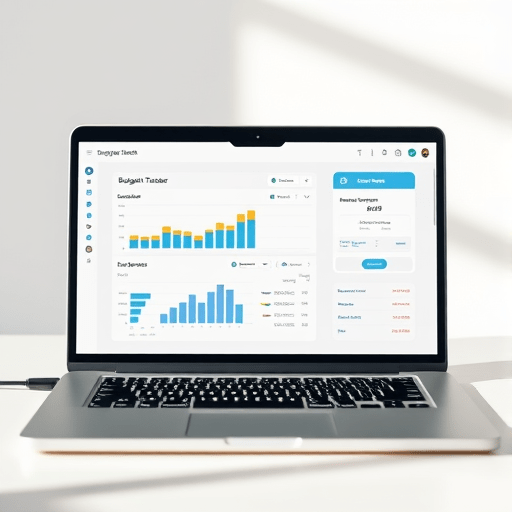
The rise of real-time analytics has pushed architects to rethink storage: Composable Storage is the deliberate design pattern of stitching OLTP NoSQL systems with columnar OLAP stores to preserve transactional speed while enabling sub-second analytical queries. This article shows how to build a unified pipeline that keeps fast, low-latency writes and immediate consistency where needed, while also delivering highly optimized, queryable columnar representations for analytics.
Why combine OLTP NoSQL and Columnar OLAP?
No single storage engine does everything well: row-oriented NoSQL excels at high-throughput, low-latency transactional operations, while columnar stores are purpose-built for aggregation-heavy analytical workloads. Composable Storage separates concerns so each layer can be optimized independently—resulting in better overall performance, lower cost, and the ability to answer fresh, sub-second analytical queries.
Key benefits
- Preserves transactional speed for user-facing operations (millisecond writes/reads).
- Enables fast analytical queries by using columnar formats and vectorized engines.
- Reduces coupling: analytical schema evolution and query tuning don’t slow down OLTP.
- Improves scalability and cost control by tiering data according to access patterns.
Core architectural building blocks
Designing a composable storage pipeline requires clear separation of responsibilities and robust data movement primitives. The following components form the backbone of a reliable system.
1. OLTP NoSQL layer (write optimized)
- Purpose: Accept high-volume, low-latency transactions—user events, inventory updates, payments.
- Characteristics: LSM-based engines or in-memory caches (e.g., RocksDB, Cassandra, Dynamo-style stores) with strong availability and predictable tail latencies.
2. Change Data Capture (CDC) / streaming transport
- Purpose: Stream every mutating event from OLTP into downstream systems reliably.
- Characteristics: Exactly-once or at-least-once delivery with ordering guarantees where needed; technologies include Debezium, built-in DB CDC, or native write-ahead-log tailing combined with Kafka, Pulsar, or Kinesis.
3. Transformation & enrichment layer
Lightweight, streamable transformations (normalization, enrichment, denormalization, schema mapping) convert transactional events to the analytical model. Keep logic idempotent, versioned, and small to avoid complex replays.
4. Columnar OLAP store (read optimized)
- Purpose: Store time-series or aggregated slices in columnar formats (Parquet, ORC, Arrow) to serve analytical workloads.
- Characteristics: Supports vectorized query engines (e.g., Dremel-like, ClickHouse, Trino on Parquet, or cloud-native analytics), compression, and fast scan performance.
5. Serving & materialized views
Precompute common aggregations or maintain materialized views incrementally (via stream processors or specialized engines) to meet sub-second query requirements without scanning full datasets.
Design patterns for preserving transactional speed and analytical freshness
Several proven patterns help align the conflicting goals of high-speed OLTP and low-latency analytics:
Dual-write avoidance: rely on CDC
Avoid application-level dual writes (writing to OLTP and analytics simultaneously) because they create consistency hazards. Instead, emit events once and rely on CDC to feed the pipeline; this centralizes guarantees and reduces error.
Hybrid hot path: cached aggregations
For truly sub-second dashboards, keep a hot path of compact aggregations in a fast key-value store or streaming materialized view that is updated synchronously or with bounded staleness.
Incremental columnar ingestion
- Batch small micro-batches (e.g., seconds) into columnar files to retain scan efficiency.
- Use append-only immutable files and periodic compaction to optimize read performance.
Schema evolution & compatibility
Version the event schema and use tolerant readers in the columnar layer. Maintain forward/backward compatibility by avoiding breaking changes or by providing transformation steps that coerce old events into the new analytical schema.
Operational considerations
Consistency and correctness
Decide the acceptable freshness window: sub-second for high-value metrics often requires materialized views; for heavy aggregations, near-real-time with a few seconds of lag may be acceptable. Implement idempotency in consumers and deduplication strategies using event IDs or offsets.
Latency, throughput & backpressure
Design the pipeline to provide backpressure signals and autoscaling for stream processors. Keep transformations stateless or use fault-tolerant state stores with snapshots to minimize recovery time.
Cost, storage tiering & retention
Store recent, hot data in fast columnar partitions and cold data in cheaper object storage with partition pruning for queries. Apply compaction and compression aggressively on older data to control storage costs while maintaining queryability.
Monitoring, observability & SLOs
- Track event lag from source to columnar ingestion and to materialized views.
- Instrument tail latencies for OLTP and 95/99 percentile for analytics queries.
- Alert on schema drift, consumer lag, or compaction failures.
Example pipeline in 6 steps
- Write: Client performs transactional writes to the NoSQL OLTP store (millisecond latency).
- Capture: DB CDC captures change events and publishes to a durable log (Kafka/Pulsar).
- Stream-transform: A stream processor enriches/denormalizes events and emits incremental aggregates.
- Ingest: Micro-batches are written as columnar files (Parquet/Arrow) to object storage with partitioning keys.
- Materialize: Frequently-used aggregates are maintained as materialized views in a fast store for sub-second queries.
- Query: Analysts use a columnar query engine or BI tool that hits either the materialized views (fast) or the columnar store (ad-hoc) depending on latency needs.
Trade-offs and final recommendations
Composable Storage requires operational discipline: more moving parts and careful orchestration—but the payoff is a system that preserves transactional speed and supports sub-second analytics without sacrificing data correctness. Start with a small set of materialized views for critical dashboards, measure end-to-end lag, and iterate on compaction and partitioning strategies before expanding.
For teams building this pipeline: prioritize reliable CDC, idempotent transformations, and incremental columnar ingestion—these three practices unlock the most predictable gains in freshness, performance, and maintainability.
Conclusion: A composable storage architecture that thoughtfully stitches OLTP NoSQL and columnar OLAP lets organizations have both transactional responsiveness and near-instant analytical insights; the key is to define clear interfaces between layers, automate safe data movement, and optimize the read path with incremental columnar files and materialized views.
Ready to design your pipeline? Start by mapping write-to-query latency targets and instrumenting CDC today.