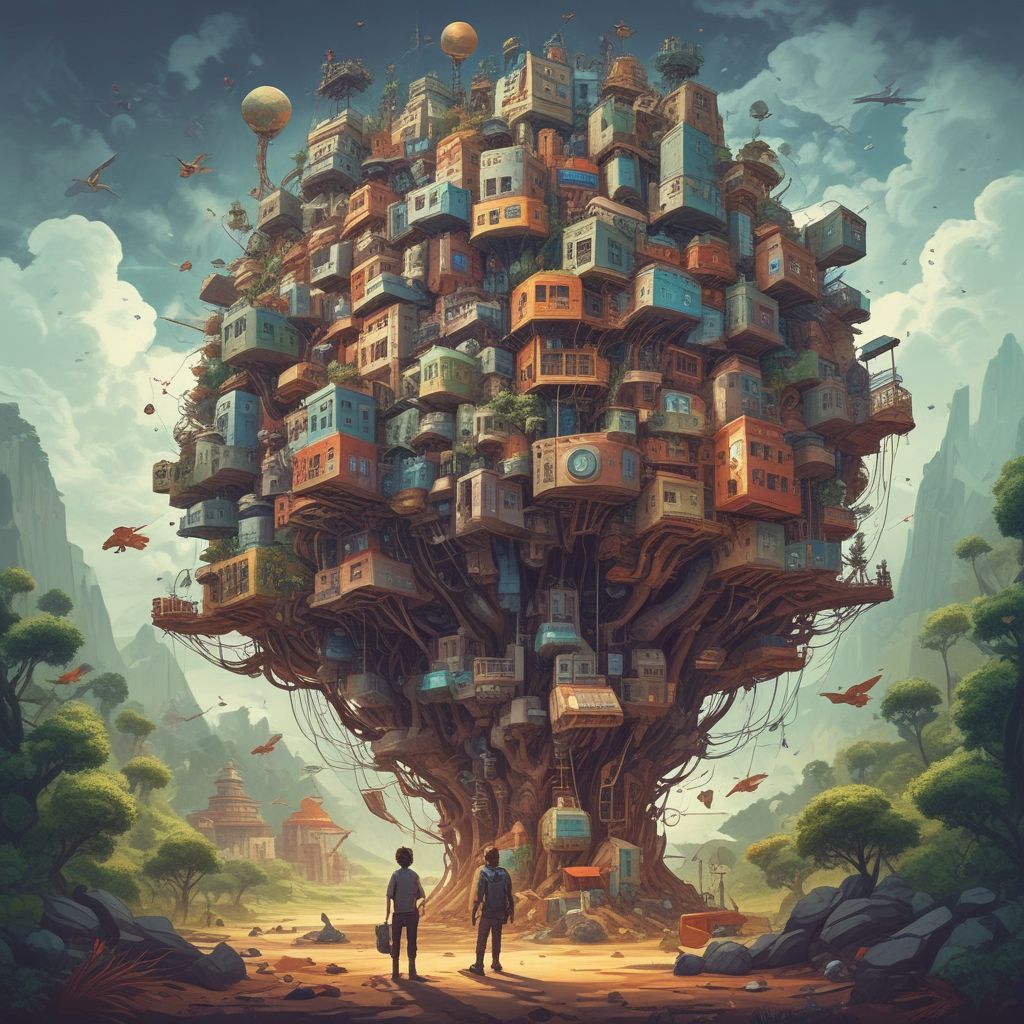
The Evolution of Procedural Generation
Early procedural systems prioritized unpredictability. Algorithms generated terrain, items, or encounters with little regard for coherence. The result was often amusing absurdity—a castle floating in the middle of a desert, or a village populated solely by hostile rabbits.
From Chaos to Structure
Modern approaches focus on constrained randomness. Developers use mathematical seeds to create reproducible patterns while embedding narrative “intent” into the generation rules. For example:
- Environmental storytelling: A desert might generate with scattered ruins only if the world’s lore includes a collapsed civilization.
- Character-driven logic: A town’s mayor always appears in settlements with populations above 100, ensuring leadership aligns with community size.
- Thematic consistency: A “haunted forest” biome combines twisted trees, eerie sound effects, and ghost enemies to reinforce a single mood.
Seeding Meaningful Stories
Developers now treat seeds as narrative blueprints. Instead of generating a random forest, an algorithm might create a forest where every clearing tells a micro-story—overgrown ruins hint at a forgotten war, while abandoned camps suggest fleeing refugees. These details guide players toward broader themes without explicit exposition.
Player-Driven Narratives
True narrative intent emerges when players shape their own paths. Modern systems respond to choices, weaving player actions into the generated world’s fabric.
Dynamic Plot Points
Games now create “emergent plot points” based on player behavior:
- A neglected village might collapse into ruin if the player ignores it, altering regional politics.
- Repeated victories in combat could attract the attention of powerful factions, triggering new quests.
- Discovering hidden artifacts might rewrite local history, changing dialogue and objectives.
This approach turns players into co-authors. Their decisions become the variables that shape the story’s direction, while the underlying algorithms ensure those variables still serve a coherent narrative arc.
Case Studies in Narrative Code
Minecraft’s Story Seeds
Minecraft’s world generation includes subtle narrative cues. Village structures appear only near water sources, implying trade dependencies. Abandoned mines show signs of collapse, suggesting long-abandoned industries. These elements create a silent history that players piece together.
Elite’s Living Galaxy
The original Elite used procedural generation to create thousands of star systems, but later iterations added narrative layers. Factions, wars, and economic trends emerged from simple rules, giving players the sense of navigating a living, reactive universe.
Dwarf Fortress’s Dark Humor
Dwarf Fortress embeds narrative intent into its brutal simulation. A flood might destroy a fortress, but the game records the event with poetic melancholy. Bandits attack not just to kill, but to loot—creating moments of dark comedy when a thief steals a player’s prized spoon.
Challenges and Future Directions
This fusion of code and narrative isn’t without hurdles. Balancing randomness with coherence requires meticulous tuning. Too much structure kills variety; too little leaves players confused.
Key Challenges
- Maintaining thematic consistency across vast, generated worlds.
- Avoiding repetitive patterns that feel “tired” rather than intentional.
- Ensuring player choices have meaningful, non-disruptive impacts.
Researchers are exploring advanced techniques like generative adversarial networks (GANs) to refine narrative quality. Others experiment with “narrative grammars”—rule sets that guarantee every generated element advances a central theme.
Conclusion
Procedural generation is evolving from a technical trick into a storytelling medium. By embedding narrative intent into algorithms, developers create worlds that feel alive, reactive, and deeply personal. Players no longer just explore random landscapes—they uncover layered histories, confront moral choices, and write stories that remain unique to their journeys. The code, in its quiet logic, becomes the ultimate storyteller.