Rewriting Battles, Reshaping Stories
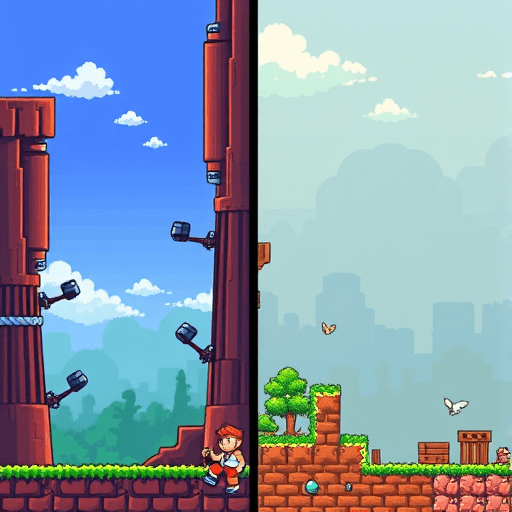
Time manipulation in RPGs goes beyond simple undo buttons. Modern implementations weave temporal mechanics into core gameplay loops, creating strategic depth and branching narratives. Players don’t just retry failed attempts—they actively reshape cause and effect.
Battle Replay with Strategic Insight
Many games let players revisit past battles with new information. This creates a feedback loop where tactical growth influences narrative options. For example, mastering a boss fight early might unlock story pathways unavailable on the first attempt, while failure could trigger alternative dialogues or character developments.
Parallel Timelines and Moral Choices
Some titles maintain multiple timelines simultaneously. A player’s actions in one thread affect others, forcing difficult choices. Saving one character might doom another timeline, creating ethical dilemmas that traditional linear storytelling cannot match. This mechanic turns gameplay into a moral compass, where every decision carries weight across realities.
Strategic Depth Through Temporal Layers
Time manipulation adds layers to strategy. Players must weigh immediate gains against long-term consequences, balancing short-term power with narrative coherence across timelines.
- Resource Management: Items used in one timeline may vanish from others, requiring careful planning.
- Unit Development: Training a character in one timeline could alter their skills in parallel threads.
- Battle Preparation: Revisiting past fights with upgraded units creates cascading strategic advantages.
Risk vs. Reward Calculations
Each timeline rewrite carries opportunity costs. Players might exploit a battle reset to gain resources but risk destabilizing narrative flow. Over-reliance on temporal mechanics can lead to fragmented storylines, forcing gamers to balance convenience with narrative integrity.
Narrative Flexibility and Player Agency
Chrono-commanding empowers players to shape stories in ways traditional scripts cannot accommodate. Branching pathways become less about predetermined choices and more about iterative refinement.
Dynamic Character Arcs
Characters evolve differently across timelines. A hero might become a ruthless leader in one thread and a compassionate ally in another. Players piece together these variations, creating personalized arcs through repeated engagement with the narrative.
Adaptive World States
Environments change based on past decisions. A city rebuilt after a timeline shift might offer new allies or hide previously inaccessible quests. These adaptive worlds feel alive, responding organically to player intervention.
Design Challenges and Innovations
Implementing time manipulation requires careful design to avoid player frustration or narrative incoherence. Developers must balance freedom with structure.
Avoiding Temporal Chaos
Excessive rewinding can fragment storylines beyond comprehension. Successful games implement subtle cues—fading memories, altered dialogues, or environmental markers—to signal timeline shifts without overwhelming players.
Maintaining Strategic Meaning
Time mechanics must offer genuine tactical value. Merely replaying battles without meaningful changes reduces the system to a convenience feature. Games that tie timeline shifts to resource scarcity, unit fatigue, or evolving enemy strategies keep players engaged.
Conclusion: The Future of Interactive Storytelling
Chrono-commanders represent more than a gimmick—they signal a evolution in how games merge strategy and narrative. By letting players rewrite history, these mechanics create deeply personal experiences where every timeline holds new possibilities. As developers refine these systems, we can expect richer stories, more layered strategies, and unprecedented player agency in the years to come.