Autonomous NPCs: How AI Learns from Players to Craft Personal Storylines in Real-Time
In the next generation of immersive gaming, autonomous NPCs are no longer scripted placeholders; they are dynamic characters that learn, adapt, and weave individualized narratives for every player. By leveraging real‑time data, machine‑learning models, and procedural content generation, developers are creating worlds that respond organically to choices, emotions, and playstyle. This article explores the cutting‑edge technology that empowers AI to craft personal storylines on the fly, the challenges developers face, and what players can expect in the near future.
From Scripted to Self‑Driving: The Evolution of NPCs
Traditional NPCs operated on rigid state machines and finite state tables, offering predictable responses and limited replayability. The shift toward autonomous agents began with basic decision trees that could branch but still required manual curation. Today, autonomous NPCs harness reinforcement learning, generative adversarial networks (GANs), and natural language processing (NLP) to create a feedback loop between the player and the AI. This loop means that every conversation, battle, or side quest can influence an NPC’s future behavior and narrative arc, producing a more authentic sense of agency.
Core Technologies Powering Adaptive Storytelling
1. Reinforcement Learning for Decision Making
Reinforcement learning (RL) allows NPCs to evaluate the outcomes of their actions and refine strategies based on rewards. In open‑world games, RL can teach an NPC to navigate complex environments, prioritize quests, or even negotiate with the player. By incorporating player choices as part of the reward signal, the NPC adjusts its behavior to align with the player’s playstyle—whether they’re a stealthy thief or a charismatic diplomat.
2. Natural Language Understanding & Generation
Modern NPCs rely on transformer‑based models to parse player dialogue and generate contextually relevant responses. When a player asks for advice or tells a story, the AI processes the input, identifies emotional cues, and crafts replies that reflect the NPC’s evolving personality. Coupled with sentiment analysis, the NPC can remember past interactions, leading to “long‑term memory” where a character might reference a childhood memory or a previous betrayal.
3. Procedural Narrative Generation
Procedural generation algorithms create branching storylines on the fly, ensuring each playthrough feels unique. By using a library of plot seeds, character traits, and world events, the AI stitches together quests that respond to the player’s history. For example, if the player rescued a village, the AI might later send a letter of gratitude, opening a diplomatic quest line. The key is balancing randomness with narrative coherence, a challenge that recent hybrid models have begun to address.
Data Flow: How Players Shape NPC Learning
Every interaction a player has with the world feeds into the autonomous system. Key data points include:
- Choice Data: Quest selections, dialogue options, and moral decisions.
- Behavioral Patterns: Combat styles, resource usage, and exploration tendencies.
- Emotional Signals: Voice tone, facial expressions (via cameras or motion capture), and micro‑gestures.
- Environmental Feedback: How the player reacts to NPC actions—pursuit, avoidance, or cooperation.
Machine‑learning models aggregate this data in real time, adjusting NPC parameters such as trust level, alliance status, or even story goals. The result is a fluid, living narrative that feels personal to each player.
Case Study: “Echoes of the Fallen” – A Prototype Demo
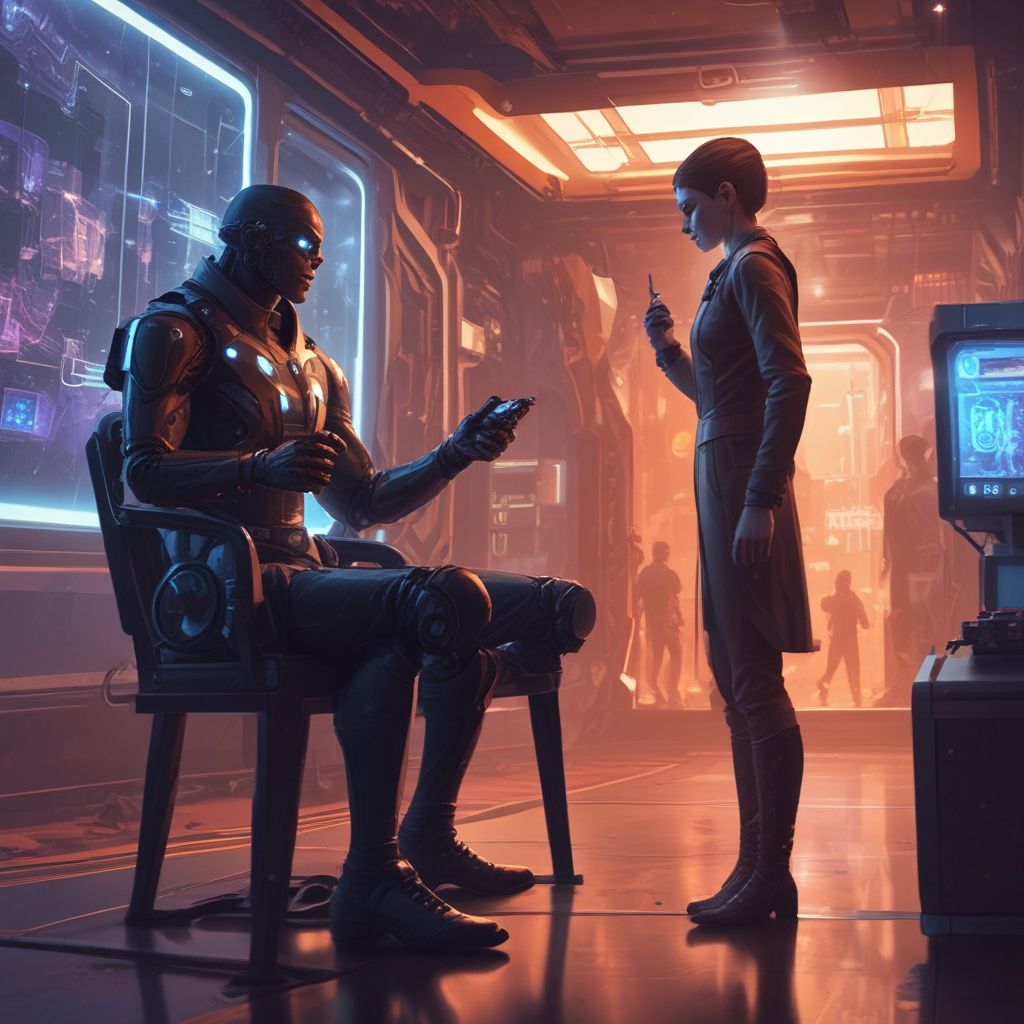
Indie studio Vesper Labs showcased a prototype called “Echoes of the Fallen,” featuring an NPC named Liora who remembers every player interaction. Using a hybrid RL‑NLP pipeline, Liora adapts her dialogue style and quest offers based on whether the player prefers stealth or open combat. When the player chooses to betray Liora early on, subsequent encounters reflect mistrust, and a redemption quest line becomes available if the player proves loyalty through subsequent actions. This prototype demonstrates how tightly coupled learning and narrative generation can yield emergent storytelling.
Challenges in Building Truly Autonomous Storylines
1. Computational Constraints
Real‑time learning demands significant GPU resources. Many current systems rely on cloud servers to offload heavy computations, which introduces latency and raises privacy concerns. Edge‑AI techniques—compressing models and running them locally—are promising, but balancing accuracy and speed remains a key hurdle.
2. Narrative Coherence and Player Agency
While randomness can surprise players, it can also break immersion if plot threads feel disjointed. Developers must design robust narrative scaffolds that guide emergent content within thematic boundaries. Hybrid approaches, where high‑level story arcs are hand‑crafted and lower‑level interactions are autonomous, help maintain coherence.
3. Ethical and Social Implications
As NPCs become more empathetic, they may mirror or amplify real‑world biases present in training data. Ensuring diversity, inclusivity, and respectful representation requires careful curation of datasets and continuous monitoring. Additionally, the emotional attachment players form with autonomous characters raises questions about manipulation and consent.
Looking Forward: The Future of Adaptive Game Worlds
In the coming years, we can expect:
- Multimodal Learning: NPCs that learn not just from dialogue but from visual cues, body language, and environmental context.
- Federated Learning: Decentralized training that respects player privacy while improving AI models across the player base.
- Cross‑Genre Integration: Autonomous NPCs in non‑action games—strategy, simulation, or even educational titles—leveraging adaptive narratives to enhance engagement.
These developments will blur the line between scripted entertainment and living, breathing virtual communities, offering players unprecedented depth and personalization.
Conclusion
Autonomous NPCs powered by AI are redefining storytelling in games. By learning from player choices in real time, they create storylines that feel unique, emotionally resonant, and deeply connected to the player’s journey. Though challenges remain—computational, narrative, and ethical—ongoing research and creative experimentation promise a future where game worlds adapt as organically as real life.
Ready to experience a world that evolves with you? Dive into titles that showcase autonomous storytelling and step into a living narrative that reacts to your every move.