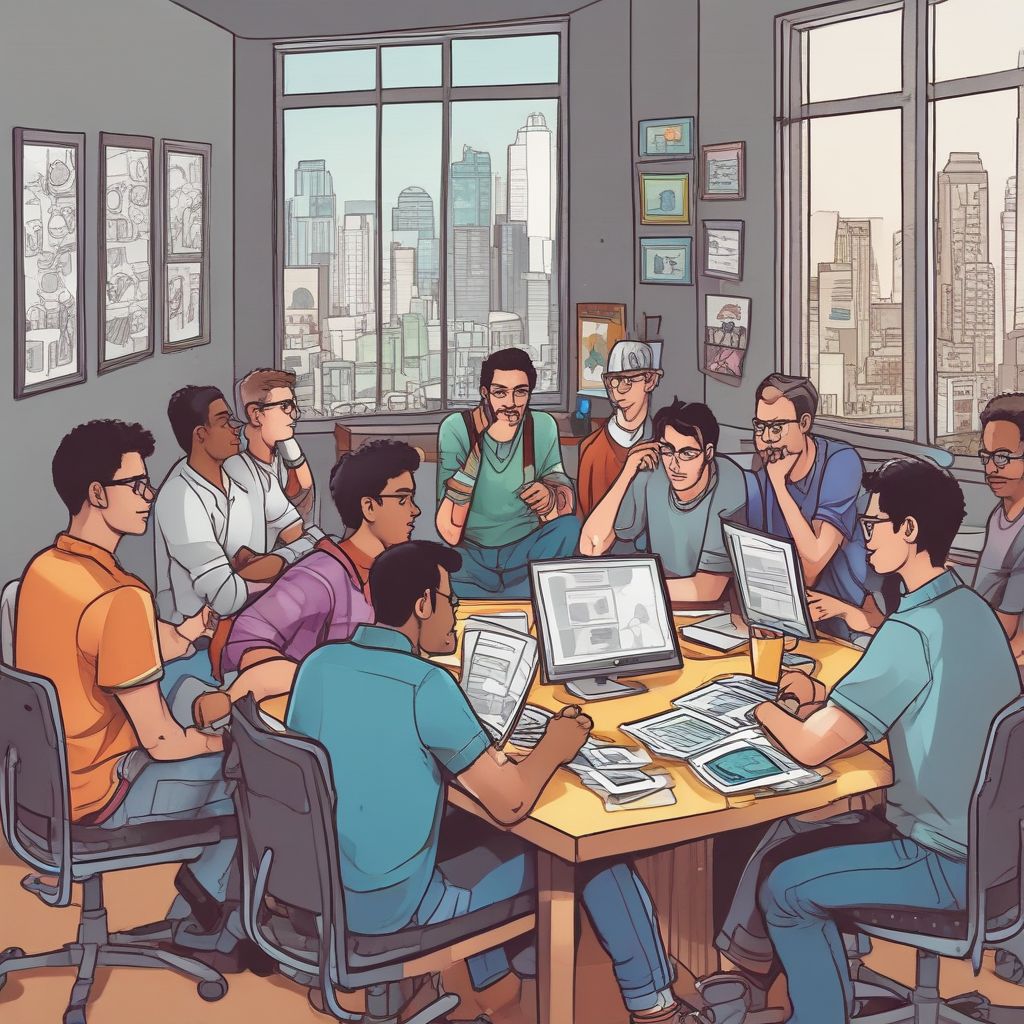
Patchwork Stewardship has emerged as a practical response to maintainer burnout and supply‑chain risk in open source: by organizing small, distributed microteams supported with lightweight governance, micro‑grants, and intentional developer rotation, communities can keep essential libraries secure and maintainable without centralized bureaucracy. In this piece, we’ll unpack what patchwork stewardship looks like in practice, why it works, and how projects of any size can adopt these patterns to reduce single‑point failures and scale community contribution.
Why the traditional maintainer model is breaking
Many critical open source libraries are still maintained by one or two volunteers who carry the full load of triage, releases, security patches, and user support. That fragile model leads to burnout, slow response times for critical issues, and concentrated institutional risk when maintainers step away. Patchwork stewardship reframes maintenance as a stitched quilt of small teams and practices so responsibility can be shared, rotated, and sustainably funded.
Core components of patchwork stewardship
1. Lightweight governance
Lightweight governance is about setting clear norms and decision paths without heavyweight processes. A simple governance doc or CONTRIBUTING.md that defines:
- Who can make release decisions for minor vs. major changes
- How security issues are reported and escalated
- How microteams are formed and dissolved
This reduces ambiguity while keeping the barrier to contribution low, allowing the project to evolve while preserving accountability.
2. Distributed microteams
Instead of a single, monolithic core team, patchwork stewardship organizes contributors into small cross‑functional microteams—typical size: 3–6 people—each owning a specific domain like security patches, documentation, CI, or packaging. Microteams have short lifespans (months) or clear maintenance goals (e.g., “stabilize v2.3 release”). Benefits include:
- Faster context switching: smaller groups move quickly
- Redundancy: knowledge is shared across multiple team members
- Clear scope: teams own specific tasks, avoiding overlap
3. Micro‑grants to fund core work
Micro‑grants are small, time‑boxed financial awards (weeks to a few months of funding) for maintainers or microteams to focus on high‑impact work: emergency security fixes, hardening CI, or refactoring risky code paths. They’re easier to approve and distribute than large grants and can be matched by sponsors who want predictable, measurable outcomes.
4. Developer rotation and onboarding
Rotation policies reduce knowledge silos and spread institutional memory. A healthy rotation model includes:
- Staggered onboarding: new contributors co‑maintain with experienced members for one release cycle
- Defined handover docs and checklists
- Regular “catch‑up” sessions where outgoing maintainers transfer context
Rotation turns the project into a learning organization: contributors gain experience while the project gains resilience.
Putting patchwork stewardship into practice
Adopting these ideas doesn’t require rewriting your governance or raising a large endowment. Here are practical steps to start:
Step 1 — Charter a microteam
- Create a one‑page team charter: scope, timeline, desired outcomes, and point people.
- Announce the team in the project’s communication channels and invite contributors to join.
Step 2 — Offer targeted micro‑grants
- Define acceptance criteria (what success looks like) and a short application template.
- Use transparent micro‑grant review that prioritizes urgent maintenance and security work.
Step 3 — Document handovers and create onboarding recipes
- Simple checklists for common maintainer tasks (releases, security triage, CI fixes).
- Pair new contributors with a mentor for the first two weeks of a rotation.
Step 4 — Automate and instrument
Automation reduces cognitive load: automated tests, dependency scanners, issue templates, and label conventions (e.g., “security-triage”, “needs-release”) help teams focus human attention on the highest-value work. Instrumenting response times and patch latency creates metrics you can improve with microteams and micro‑grants.
Realistic safeguards and tradeoffs
Patchwork stewardship is not a panacea. Common challenges and mitigations include:
- Coordination overhead — mitigate with short, asynchronous status updates and a single lightweight roadmap.
- Fragmented ownership — mitigate by ensuring each microteam publishes ownership boundaries and cross‑team liaisons.
- Funding instability — mitigate by diversifying micro‑grant sources (foundations, sponsors, community donations) and funding small predictable windows of work.
Measuring success
Track simple metrics to prove the model works: mean time to patch critical vulnerabilities, number of active maintainers per release, issue backlog age, and contributor retention across rotation cycles. Improvements in these areas suggest the patchwork approach is increasing project health and resilience.
Case vignette: a hypothetical critical library
Imagine a critical parsing library used across dozens of projects. Under patchwork stewardship, a three‑month microteam focuses on triage automation and a micro‑grant funds two part‑time maintainers to overhaul tests and CI. Developer rotation pairs an experienced maintainer with two newcomers, and documentation checklists reduce onboarding time. Within a release cycle, critical vulnerabilities are closed in hours instead of weeks, contributors have clearer roles, and the project’s bus factor improves materially.
Getting started: practical checklist
- Write a one‑page governance summary that fits on a single README screen.
- Define 1–3 microteam charters and publish them publicly.
- Set up a simple micro‑grant process (application + 2‑week review).
- Create rotation and handover checklists and pairings for the next release.
- Automate triage and label issues for microteam assignment.
Patchwork Stewardship reframes maintenance as a social and organizational design problem as much as a technical one: small teams, modest funding, and intentional rotation stitch together a durable safety net for critical open source projects.
Conclusion: By embracing distributed microteams, lightweight governance, micro‑grants, and developer rotation, projects can reduce single points of failure, shorten vulnerability response times, and keep maintainers healthy and engaged. Start small, measure impact, and iterate—resilience grows one microteam at a time.
Ready to pilot patchwork stewardship on your project? Start by drafting a one‑page microteam charter this week and invite three contributors to join.