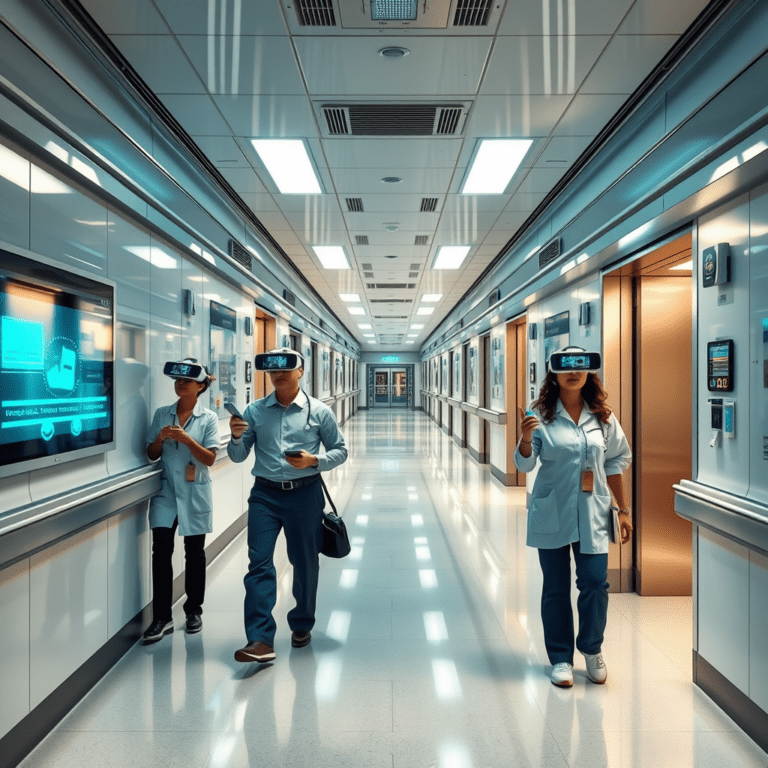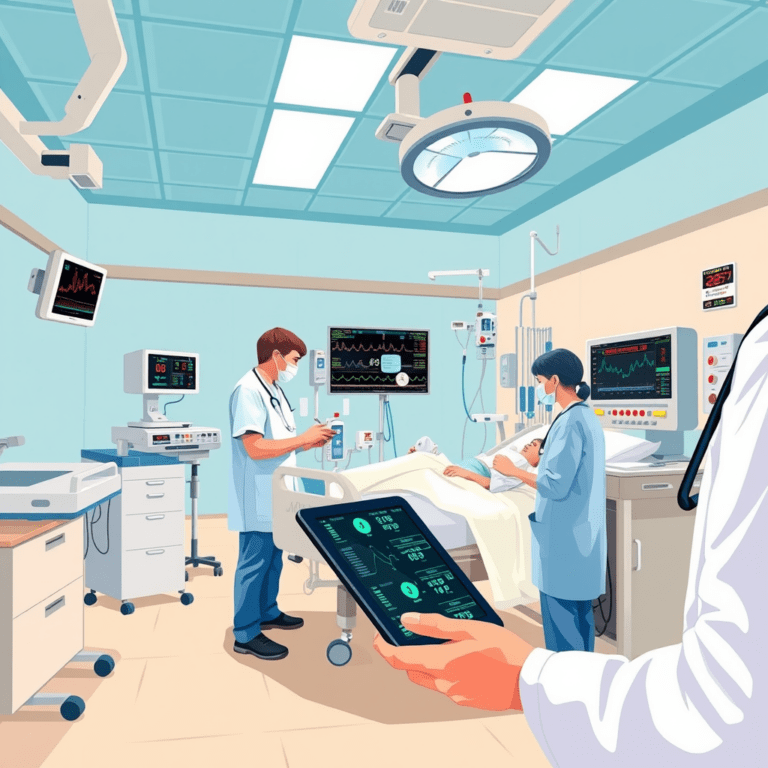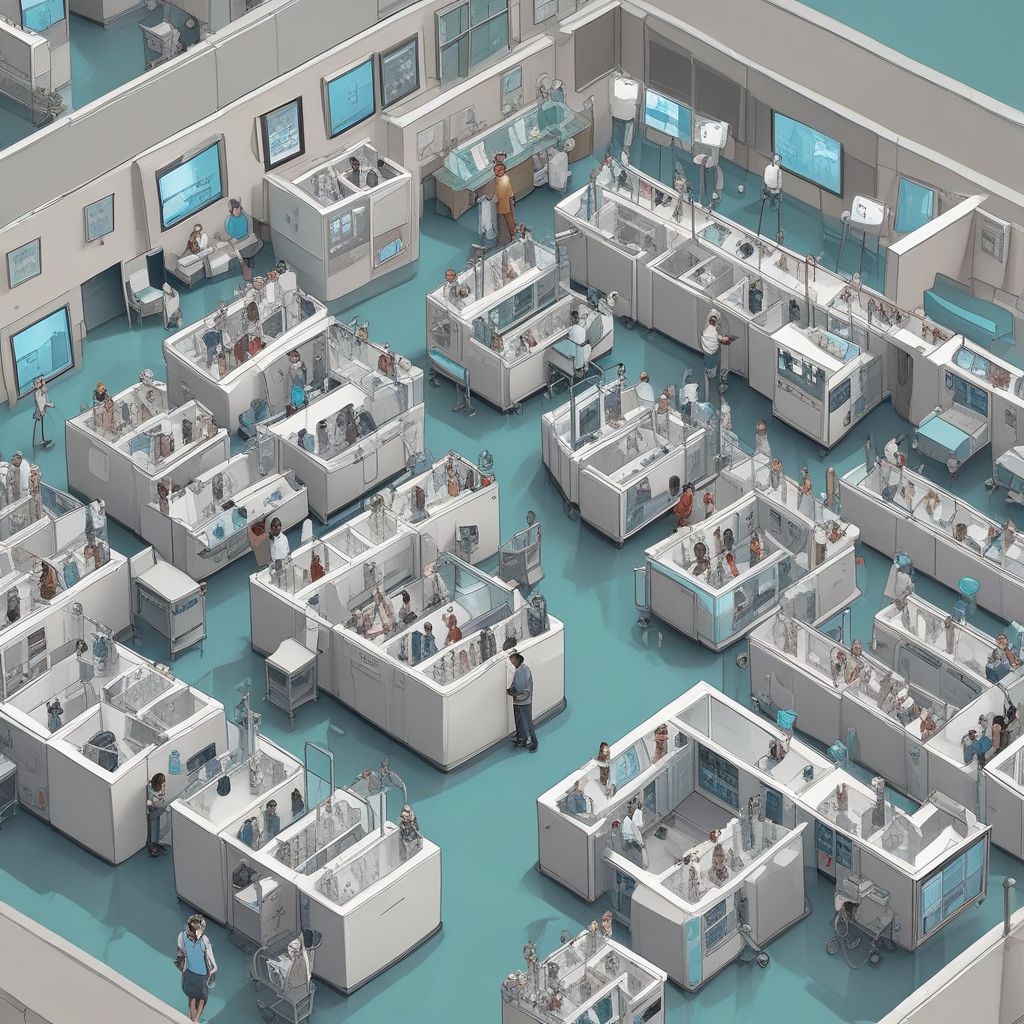
The promise of Digital Twin Hospitals is transforming how health systems anticipate surges and manage capacity; by combining IoT sensors, live EHR streams, and simulation-as-a-service, hospitals can predict overcrowding, reduce emergency department boarding, and lower operational costs. In this article we unpack the architecture, practical workflows, measurable benefits, and implementation steps that make the main keyword — Digital Twin Hospitals — a pragmatic tool for resilient care delivery.
What is a Digital Twin Hospital?
A Digital Twin Hospital is a dynamic, virtual replica of a healthcare facility that mirrors physical assets, patient flow, and operational processes in real time. It integrates three core data streams: Internet of Things (IoT) telemetry from devices and environmental sensors, live Electronic Health Record (EHR) feeds about patient status and throughput, and external signals such as regional epidemics or scheduled elective procedures. Simulation-as-a-service runs continuous models on these inputs to forecast near-term states and recommend actions.
Why hospitals need digital twins
- Anticipate surges: Short-term forecasts (30–360 minutes) allow staff to open surge capacity or redirect ambulances before queues form.
- Reduce boarding: Predictive patient disposition modelling reduces the time patients wait for inpatient beds by triggering early discharge planning and bed swaps.
- Optimize patient flow: Simulated process changes test the impact of staffing adjustments, triage rules, and fast-track lanes without disrupting live operations.
- Lower costs: Avoiding unnecessary overtime, reducing length of stay, and minimizing ambulance diversions saves both money and reputation.
Core components and how they work together
1. IoT layer — real-world state capture
IoT sensors track bed occupancy, stretcher locations, queue lengths, HVAC and room readiness, and device utilization. Low-latency telemetry (seconds to minutes) feeds the twin so the virtual model knows where bottlenecks are physically happening.
2. Live EHR streams — clinical and administrative context
HL7/FHIR streams provide patient arrival times, triage levels, test orders/results, discharge summaries, and staffing schedules. Coupled with IoT, EHR data ensures the twin understands both patient clinical state and the downstream resources they require.
3. Simulation-as-a-Service — scalable forecasting and what‑if analysis
Cloud-hosted simulation engines ingest the combined telemetry and run queueing, discrete-event, and agent-based models continuously. Operators receive probabilistic forecasts (e.g., 85% chance of ED crowding within 3 hours) and prescriptive recommendations (e.g., open 10 surge beds, reassign two nurses to triage).
Operational workflows enabled by digital twins
Digital Twin Hospitals enable a set of practical workflows that blend human decision-making with automated orchestration:
- Early surge alerts: Push notifications to command centers and bed managers when forecast thresholds are breached.
- Automated resource reallocation: Trigger ancillary services (housekeeping, transport) to prepare beds or discharges before demand peaks.
- Clinical prioritization rules: Suggest patients eligible for accelerated discharge or outpatient transitions based on predicted acuity and bed needs.
- Capacity drills and planning: Run scenario exercises (e.g., mass casualty, seasonal flu spike) with near-real inputs to test operational resilience.
Example scenarios — real outcomes
Scenario 1: A weekend ED spike — With a rising trend in arrivals and diminishing inpatient turnover, the twin forecasts ED crowding within 90 minutes. The bed manager pre-clears two inpatient beds and opens a fast-track area; boarding time drops by 40% and ambulance diversions are avoided.
Scenario 2: Diagnostic bottleneck — Simulation detects MRI backlog causing extended stays. The hospital runs a what‑if adding a late-evening imaging shift; length of stay shortens by one day for 12 patients, saving thousands in bed costs.
Measuring success: KPIs and ROI
Key performance indicators for Digital Twin Hospitals include:
- Average ED boarding time
- Time-to-bed assignment
- Ambulance diversion hours
- Average length of stay and bed turnover rate
- Staff overtime and agency usage
Return on investment combines direct savings (reduced overtime, fewer diversions, shorter stays) and indirect benefits (improved patient satisfaction, better throughput for elective surgeries). Most pilot programs realize measurable operational savings within 6–12 months when models are tuned and workflows adopted.
Implementation checklist — a pragmatic roadmap
- Map priority use cases (ED overcrowding, OR scheduling, discharge flow).
- Assess data readiness: IoT endpoints, FHIR feeds, and any gaps in time-series coverage.
- Select a simulation-as-a-service partner with healthcare modelling expertise and compliance (HIPAA/GDPR as applicable).
- Run phased pilots tied to clear KPIs, starting with one department (usually ED or med-surg).
- Embed change management: train bed managers, charge nurses, and command center staff to trust and act on twin insights.
- Iterate and scale across the enterprise once validated.
Common challenges and mitigation
- Data quality: Incomplete or delayed EHR streams reduce model fidelity — mitigate with data validation, buffering, and fallback heuristics.
- Staff adoption: Decision fatigue and mistrust can derail benefits — mitigate with clear alerts, explainable recommendations, and short feedback loops.
- Privacy and security: Ensure de-identification where possible, secure pipelines, and contractual protections with cloud simulation providers.
Future outlook
As sensor networks expand and EHR interoperability improves, Digital Twin Hospitals will move from departmental pilots to enterprise-grade capacity planners that coordinate across networks, integrate community-level signals (EMS status, nearby hospital loads), and support real-time payment and staffing optimization. The next wave will add AI-driven therapy routing and automated scheduling that further compresses response time.
Conclusion: Digital Twin Hospitals offer a practical, data-driven path to prevent overcrowding, optimize patient flow, and reduce costs by fusing IoT telemetry, live EHR streams, and simulation-as-a-service into continuous operational intelligence. When implemented with clear KPIs and strong change management, the twin becomes an essential tool for resilient, patient-centered care.
Ready to see how a digital twin could transform your hospital’s flow and finances? Contact a simulation partner and run a focused ED pilot today.